
Look at the ingredient list of any cosmetic, and you’re likely to see a lot of words you don’t recognize.
Often, this isn’t as scary as it seems. For example, a famous parody notes the dangers of “dihydrogen monoxide,” which can be found in tumors and is potentially fatal if accidentally inhaled. The problem? “Dihydrogen monoxide” is actually H2O—also known as “water.”

Still, many look at the ingredients in what they eat, or what they put on their face, and aren’t too thrilled with what they find.
While fears about ingredients are legitimate, others are overhyped. In fact, one user on TikTok says that consumers’ lack of knowledge about manufacturing processes is inspiring companies to push out misleading marketing based on fear. Now, she’s calling out a brand she says is specifically doing just that.
What’s Wrong With This Native Body Wash Ad?
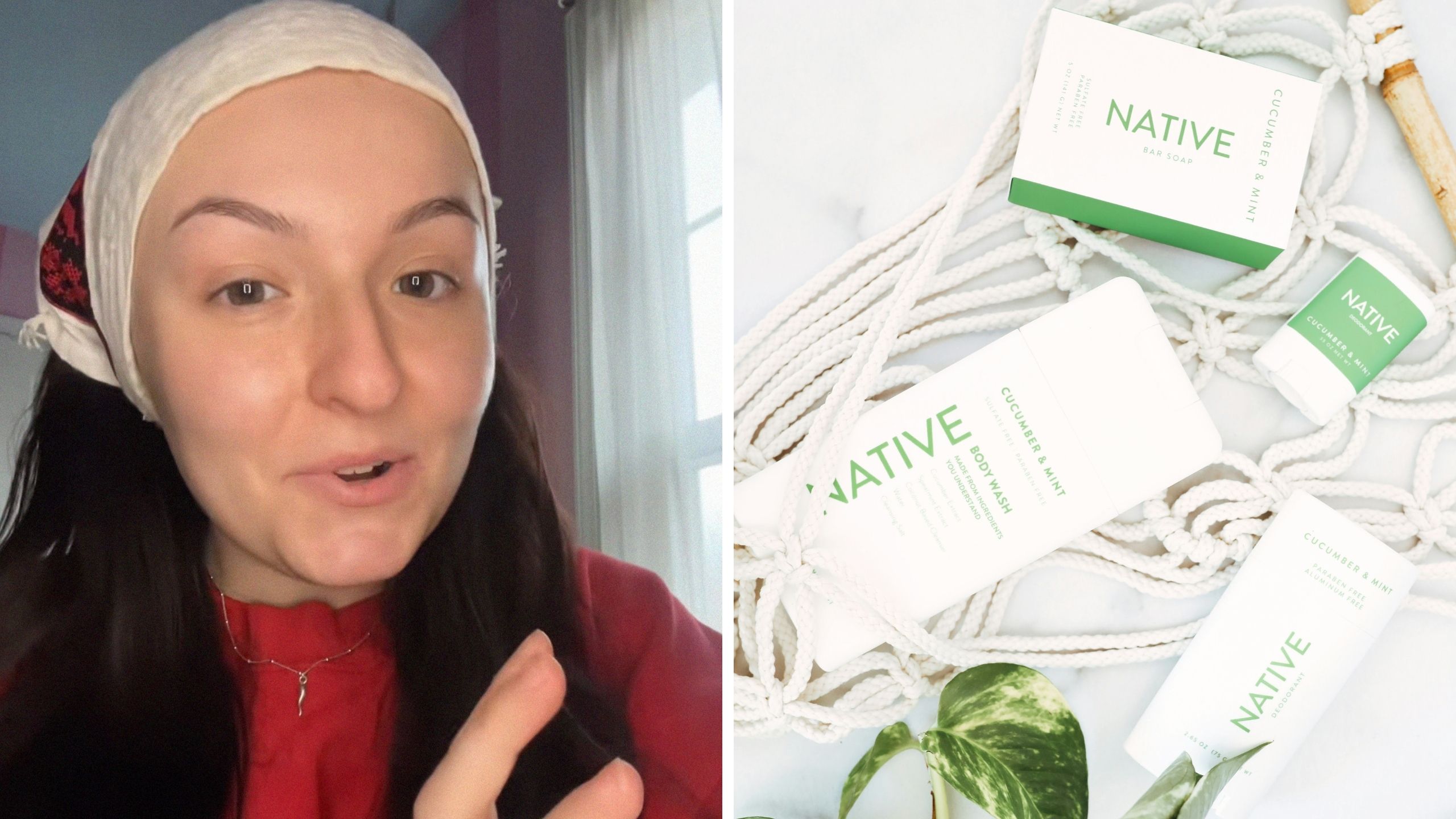
In a video with over 74,000 views, TikTok user Lydia Rose (@theegeminiglow) overlays herself on a Native ad. The advertisement shows a hand being covered in a thick, brown substance.
“Why put crude oil on your skin,” the ad reads. The advertisement then shows a Native product, which is advertised as being “petrolatum-free.”
“Native, the body wash brand, is straight up lying to you,” Lydia starts. “Native is spreading misinformation—like, straight up misinformation—to fearmonger you into buying their products.”
Lydia’s main issue is with the claim that “crude oil” is somehow synonymous with petrolatum, also known as petroleum jelly.
“Is [petrolatum] a byproduct of petroleum? Yes. Is it you applying crude oil to your skin? No,” Lydia summarizes. “Petroleum jelly, petrolatum, goes through an incredibly, incredibly strong refining process which makes it safe for human use.”
In fact, Lydia notes that petrolatum has been tested and declared safe not only in the United States, but in Canada and the European Union as well.
It’s Not Just Petroleum Jelly
This sort of fearmongering, Lydia says, is pretty easy to do. To demonstrate this, she details several other common products that go through refining processes to become more familiar, everyday household products.
For example, vinegar is commonly used in both cooking and cleaning. However, “the original compound for vinegar, acetic acid, is not safe for you at all.”
“During the process of some vinegars, sugar turns to ethanol, and then the ethanol turns into acetic acid,” Lydia states. “Have you passed away from eating vinegar yet? Probably not.”
She adds that untreated water is also dangerous, and that fluoride—which is present in both drinking water and toothpaste—is harmful until it’s refined into its safe-to-consume form.
“Science matters. Accurate science matters. These brands are relying on the fact that you do not know things, and that you aren’t going to Google things that are basic,” the TikToker concludes. “Shame on you, Native.”
Is This True?
Lydia is correct in saying that petrolatum, also known as petroleum jelly, is widely accepted as safe. Many doctors, medical organizations, and other professionals all wholeheartedly recommend its use in skincare.
Despite this, some have concerns about petrolatum use. However, these concerns seem to be rooted in fears about poorly refined or unrefined petroleum-derived material, which can contain aromatic hydrocarbons and PAHs associated with carcinogenicity. As petrolatum is regulated and well-refined, many experts say applying these fears to petrolatum is inaccurate and ill-advised.
Speaking with VeryWell Health, dermatologist Alan Durkin, MD, summed up the situation thusly: “[petrolatum] contains a very small amount of polycyclic aromatic hydrocarbon molecules. These molecules can be harmful if swallowed or consumed in large quantities. However, the amount present in [petrolatum] is extremely low, and it is not absorbed through the skin when applied topically.”
Durkin further notes that there are no documented cases of someone getting cancer from petroleum jelly use.
Commenters Agree That The Fear Is Overblown
In the comments section, many users said that the comparison to crude oil was unjustified and misleading.
“Mind you, they’re only doing this because people use apps like Yuka. Those apps do NOT take into account compounds and concentrations, ONLY the raw ingredients,” shared a user. “That app has ruined the food and skincare industries.”
“CRUDE oil by definition is unrefined, it’s in the name,” offered another. “their statement is more than misinformation, it is factually incorrect, because I guarantee there is not a single body lotion on this planet with crude oil as an ingredient.”
“Chewing gum is also made with a VERY processed byproduct of petroleum! The fear mongering needs to be STOPPEDDDDDDDD,” stated a third.
The TikToker Responds
In an email, Lydia said that Native has not reached out to her about her video.
“I would love to speak to the team and have them lead in EDUCATION vs fear mongering,” she wrote.
She added that brands using marketing of this nature should face consequences.
“I absolutely believe there should be legal ramifications for this level of mis/disinformation,” Lydia shared. “Unfortunately, that means losing money for a lot of these ‘clean’ brands, so we probably won’t see any type of clap back soon.”
For the time being, Lydia says that brands need to be more honest about their products, especially given the “clean beauty” trend.
“I think brands need to tell their audience that ‘clean beauty’ DOESN’T follow any regulations, because it’s NOT regulated. Many of these brands market in a way that is ‘beating the system’ when in turn we do have regulations that keep us safe,” she wrote. “We are seeing a huge divide in people begging others to listen to science, then we have brands and people who make claims that don’t apply to human biology at all. Brands don’t want that nuance because then it’s not that easy to sell.”
@theegeminiglow @Native shame on you #lying #misinformation #nativebodywash #science #foryoupage ♬ original sound – Theegeminiglow
The Mary Sue reached out to P&G and Lydia via email.
Have a tip we should know? [email protected]