Get all your news in one place.
100’s of premium titles.
One app.
Start reading
The Guardian - US
The Guardian - US
World
Harriet Barber in Medellín

Colombian president accuses Ecuador after ‘27 charred bodies’ found near border

Colombian President Gustavo Petro speaking at podium with national flag behind him.
Gustavo Petro, the Colombian president, earlier this month. Photograph: Anadolu/Getty Images

President Gustavo Petro has accused Ecuador of bombing targets inside Colombian territory, saying later that the burned remains of nearly 30 people had been found near the border, in a sharp deterioration in relations between the two neighbouring countries.

The Colombian leader said on Tuesday that an attack which had left “27 charred bodies” did not appear to have been carried out by Colombia’s own forces or any illegal armed groups which he said do not have armed planes.
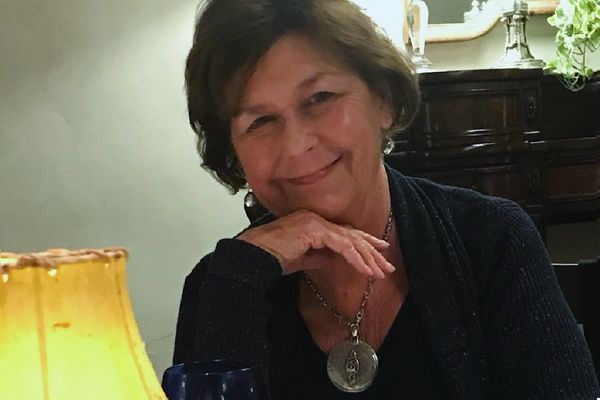
“The explanation isn’t credible,” he said, later adding that an unexploded bomb dropped from an aircraft was found “100 meters from the home of an impoverished peasant family”.

Petro had earlier linked recent strikes to intensifying US-backed counter-narcotics operations in the region. “We are being bombed from Ecuador,” he said late on Monday.

Ecuador’s president, Daniel Noboa, denied the accusations, insisting his government’s security forces were operating strictly within national borders. “We are acting in our territory, not yours,” he said.

He added that Ecuador was “fighting narco-terrorism in all its forms” and “bombing places that serve as hideouts for those groups, of which many [groups] are Colombian”.

The exchange marks the latest in a series of increasingly public clashes between the two ideologically opposed leaders.

Noboa, a close ally of Donald Trump, has repeatedly blamed Colombia for failing to prevent criminal groups operating along their porous shared border. On Tuesday, he said Colombia had allowed these groups “to infiltrate our country due to neglect of its border”.

In January, the Ecuadorian president imposed a 30% “security tax” on Colombian imports, citing what he described as insufficient action against drug trafficking. Colombia retaliated with tariffs of its own and cuts to electricity exports.

Ecuador is grappling with a surge in drug-related violence as rival cartels battle for control of strategic coastal ports that have become key transit points for cocaine bound to the United States. An estimated 70% of the cocaine produced in Colombia and Peru now passes through Ecuador.

In 2024, Noboa declared the country was in a state of “internal armed conflict”, dramatically expanding the role of the military in domestic security. Yet despite an aggressive crackdown targeting drug traffickers – in which dozens of high-profile leaders have been captured – violence has persisted.

According to Ecuador’s interior ministry, the country recorded its highest homicide rate in decades last year, reaching approximately 50.9 murders per 100,000 residents.

Earlier this month, joint operations between US and Ecuadorian forces were carried out inside Ecuador, and the military reported sinking a “narco-sub” near its northern border. Last week, the two countries signed an agreement formalising the opening of the first office of the Federal Bureau of Investigation in Ecuador.

More than 75,000 police and military personnel have also been mobilised across Ecuador’s four most violent provinces, which are under a nightly curfew. The interior minister, John Reimberg, told local residents: “Stay home. We are at war.”

Petro, a former member of a leftwing guerrilla group, has increasingly questioned the effectiveness of the militarised “war on drugs”, calling for a shift toward crop substitution and rural development over militarised enforcement.

Of the recent attack, Petro said that munitions were found “near families”, many of whom “have peacefully decided to replace their coca leaf crops with legal crops.”

Petro added that he had appealed last week to Trump to intervene diplomatically.

“Take action and call the president of Ecuador because we do not want to go to war,” he said he told the US president.

Sign up to read this article
Read news from 100’s of titles, curated specifically for you.
Already a member? Sign in here
Related Stories
Top stories on inkl right now
One subscription that gives you access to news from hundreds of sites
Already a member? Sign in here
Our Picks
Fourteen days free
Download the app
One app. One membership.
100+ trusted global sources.