Get all your news in one place.
100's of premium titles.
One app.
Start reading
The Independent UK
The Independent UK
World
Justin Rohrlich

‘We don’t rent to you people’: Marriott in Ohio turned away Black guest, lawsuit says

A youth football coach in Ohio booked a short stay at an area hotel when his furnace went down on Super Bowl Sunday, but was turned away after the front desk manager saw that he was Black, according to a federal lawsuit obtained by The Independent.

LeRon “Rocky” Turner, a Dayton resident who earns his living as a long-haul trucker, is a “proud rewards member” of the multinational hotel chain and has never had any issues there previously, his complaint states.
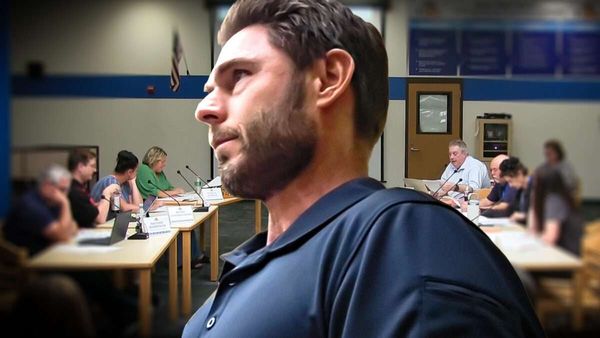
The 46-year-old Turner reserved a room with two beds and a small kitchen at a nearby TownePlace Suites by Marriott in nearby Beavercreek so that his partner and two children would be “comfortable, warm and enjoy dinner during the Super Bowl,” the complaint maintains. He booked the room for four days “to ensure that his family had options if the temperatures remained below freezing,” it says.

However, the complaint contends, Turner – who had already checked in with his family and had gone out briefly to pick up some food – was informed upon his return that his reservation had been unilaterally canceled.

“Turner asked for additional explanation as to why his reservation was not being honored,” the complaint goes on.

In response, the manager allegedly told Turner that “you people” were problem guests who liked to “‘smoke weed,’ ‘drink,’ and ‘do drugs,’” the complaint continues.

Turner “next had to face his family and tell his children that their reservation was not being honored because they committed the ‘crime’ of being Black in Beavercreek, Ohio.

Ohio resident LeRon Turner claims in a new lawsuit that he was rejected by a nearby Marriott because he is 'local,' but claims the turned him away for being Black (Getty Images)

He ended up booking a smaller, less comfortable and more expensive room elsewhere, according to the complaint.

In a comment provided to The Independent by attorney Jacob Davis, Turner said, “It hurts to even think about that day and the humiliation that I felt in not being able to provide a hotel room to my family for no other reason than the color of my skin. Explaining the hotel's cancellation to my family is something I hope no other father endures. My family and I look forward to having our day in court.”

Davis, who is representing Turner with co-counsel Damek Mitchell, said, Mr. Turner and his family simply wanted what most American families want – to watch the Super Bowl in a warm and safe environment,” Davis said. “The actions of [Marriott] in this matter made that impossible for no other reason than the race of Mr. Turner and his family.”

Mitchell, for his part, called Turner’s treatment “unacceptable,” and said it was “precisely the type of discrimination which the Civil Rights Acts were passed to prevent.”

Many hotels do forbid locals from staying at properties within 50 miles of their residence, for fear that people who live in the area will use hotel rooms for things they would rather not do at home, i.e. parties, sex, drugs. The decision is generally left to individual managers, and such a policy does not run afoul of public accommodation laws as long as it is applied evenly, and is not based upon race or other protected characteristics.

Some properties, such as a Hampton Inn in North Carolina, lay out the rule in lobby signage: “This hotel reserves the right to refuse occupancy to those who reside within 50 miles. Exceptions are as follows: natural disaster, inclement weather, or power outage which creates hazardous conditions. Any exceptions must receive management evaluation for approval.”

At the same time, elderly couples have been denied rooms in their own cities, as have people who needed a place to stay while their own homes were being remodeled, according to reports. In 2019, a Black local who booked a room at a Marriott in Portland, Oregon sued after she claimed she was forced to sign a “no party” pledge to check in, but that white guests were not.

An employee who picked up the phone on Thursday at the hotel that allegedly turned Turner away said it would be “no problem” for a local to book a room there.

Marriott officials did not respond to requests for comment.

LeRon Turner says he was simply trying to book a comfortable place for his family to watch Super Bowl LX after their heat went out (Getty Images)

On Super Bowl Sunday 2026, Turner woke up to “issues” with his HVAC system at home, according to his complaint, which was filed this week in Dayton federal court.

“The local temperatures on the day in question remained below freezing for most of the day, and a repair of the HVAC system was unlikely as it was Super Bowl Sunday,” it states.

So, Turner reserved a room at TownePlace Suites by Marriott in Beavercreek, a city whose population is between 2 and 3 percent Black, about 10 miles east of Dayton, which is 40 percent Black. He booked one with two beds and a small kitchen, for four days, so that his partner and two children would be “comfortable, warm, and enjoy dinner during the Super Bowl,” and would have a place to stay until their heat was back on, the complaint says.

“Plaintiff Turner reserved the room without issue,” the complaint contends. “He went to a local store and purchased food for the evening. As Plaintiff Turner arrived at the Subject Property, he was notified [by the manager] that his reservation was cancelled.”

When Turner asked for “additional explanation,” the complaint says the manager told him: “‘You people’ are not allowed to reserve rooms; ‘You people’ and ‘Dayton people like you’ smoke weed, do drugs, and drink heavily. [The manager] made explicitly clear that Black people from Dayton were not allowed to lodge at the Subject Property.”

Dayton, Ohio, is 40 percent Black, as opposed to Beavercreek's 2 percent, according to LeRon Turner's lawsuit against Marriott, which alleges he was turned away from a hotel in the city due to the color of his skin (AFP via Getty Images)

Turner pushed back, telling the manager that he had never done such a thing at any Marriott, reiterating that he is a rewards member and that it would be an easy thing to check. In response, the manager called the police, the complaint states.

When officers arrived – an interaction Turner captured on video, which subsequently went viral – the manager said he was simply abiding by hotel policy that forbade locals, according to the complaint.

The manager told the cops that hotel officials “don’t want people from Dayton,” which Turner took to mean “Black,” the complaint states, adding, “At no point did police accuse… Turner of doing anything wrong.”

Still, the officers asked Taylor to leave the premises “to ensure that the tense situation did not escalate,” and he did.

“Turner was embarrassed and humiliated by the treatment he received for simply attempting to stay at a hotel with his family,” the complaint says. “[He] was able to secure lodging at another local hotel at a higher cost; however, they were unable to secure a kitchen or comparable room on such short notice.”

Turner is now seeking a declaration by the court that Marriott’s policy is a violation of federal and state law, an injunction permanently forbidding Marriott from barring local guests from its properties, mandatory civil rights training for all Marriott employees, chain-wide adoption of a non-discrimination policy specific to Dayton residents, and compensatory and punitive damages in an amount to be determined by a jury.

Sign up to read this article
Read news from 100's of titles, curated specifically for you.
Already a member? Sign in here
Related Stories
Top stories on inkl right now
One subscription that gives you access to news from hundreds of sites
Already a member? Sign in here
Our Picks
Fourteen days free
Download the app
One app. One membership.
100+ trusted global sources.