
Get all your news in one place.
100's of premium titles.
One app.
Start reading
The Conversation
The Conversation
Environment
Tian Li, Senior Research Associate, Bristol Glaciology Centre, University of Bristol

We built an AI model that analysed millions of images of retreating glaciers – what it found is alarming

BEST-BACKGROUNDS / shutterstock / NASA

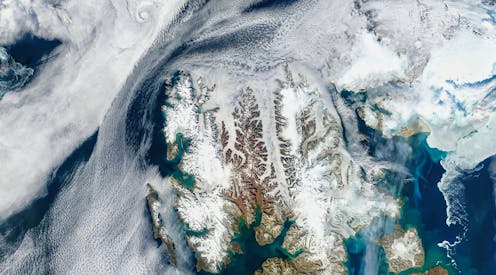
The Arctic has warmed nearly four times faster than the global average since 1979. Svalbard, an archipelago near the northeast coast of Greenland, is at the frontline of this climate change, warming up to seven times faster than the rest of the world.

More than half of Svalbard is covered by glaciers. If they were to completely melt tomorrow, the global sea level would rise by 1.7cm. Although this won’t happen overnight, glaciers in the Arctic are highly sensitive to even slight temperature increases.

Sign up to read this article
Read news from 100's of titles, curated specifically for you.
Already a member? Sign in here
Related Stories
Top stories on inkl right now
One subscription that gives you access to news from hundreds of sites
Already a member? Sign in here
Our Picks
Fourteen days free
Download the app
One app. One membership.
100+ trusted global sources.







