Get all your news in one place.
100's of premium titles.
One app.
Start reading
InsideEVs
InsideEVs
Technology
Andrei Nedelea

VW’s Electric Polo Is Expensive. But After Driving It, It's Not Hard To See Why

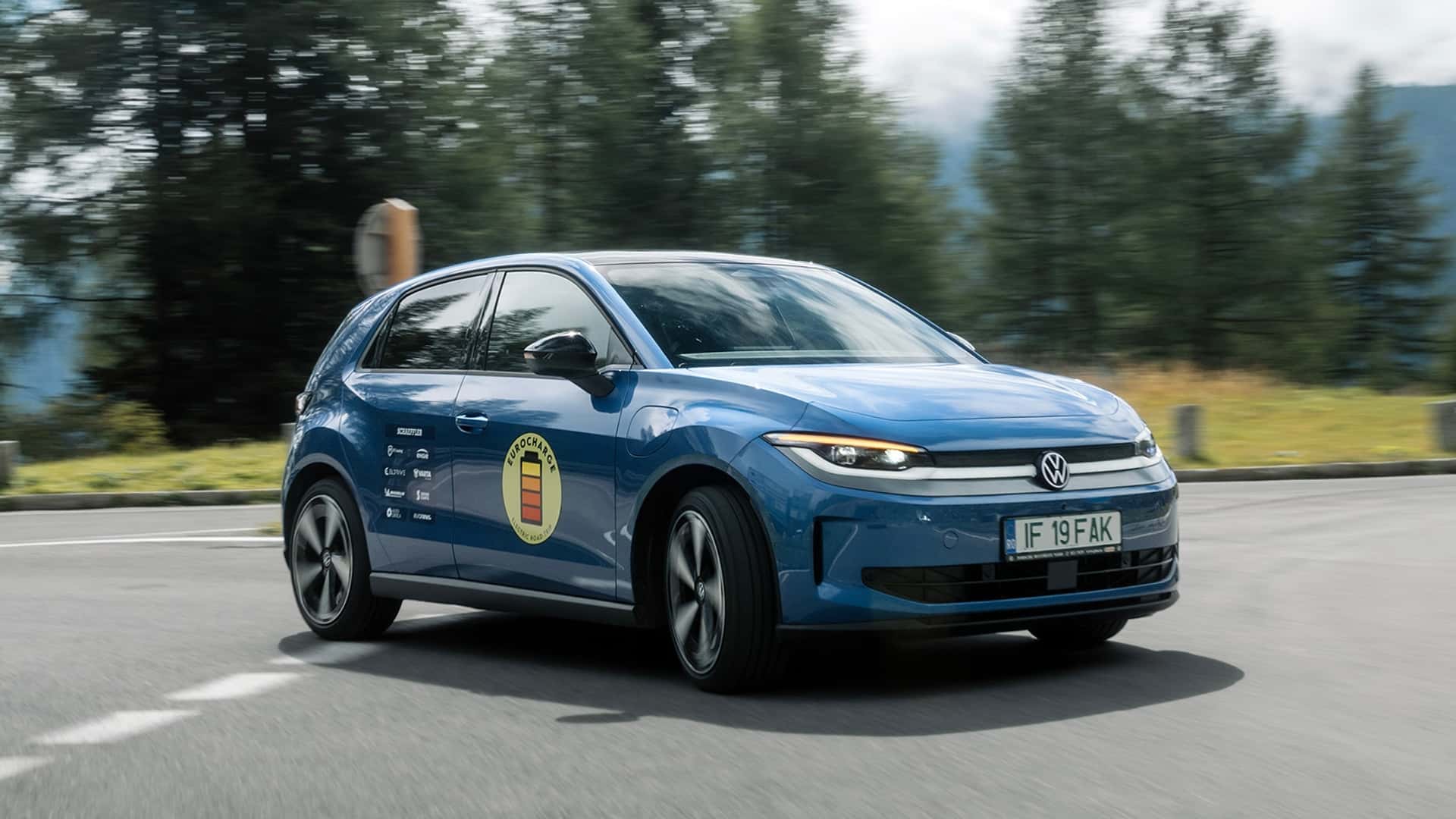
A nearly €40,000 Volkswagen Polo needs a pretty good explanation. That’s roughly how much you would have to pay to get yourself an ID. Polo like the one I drove for a day during the Eurocharge by Schaeffler EV grand tour, a cross-Europe electric car road trip. And sure, the ID. Polo is pricey, but while driving it, I found myself searching for excuses to justify it.

This little hatchback feels so effortless that judging it by its size alone seems a bit unfair. It really made me question whether going larger meant you were buying a better car or simply more car.

Eurocharge tour took us from Romania across Europe to the sources of the Danube and back, with mountain roads and long motorway stretches along the way. The electric Polo racked up 4,468 kilometers, or about 2,776 miles, and on the day I drove it, we covered 507 km (315 miles) from Enzklösterle, Germany, to Hohe Salve, Austria.

What made my ID. Polo drive particularly interesting (and revealing) was having the Renault 5 E-Tech along for the trip. We could compare not only how they drove subjectively over many types of roads, but we could also measure their efficiency along the same routes.

The R5 is undeniably efficient, and on one day, it almost managed to achieve its WLTP range in real-world driving conditions. It also makes a stronger first impression, rocking its retro design with the confidence.

The ID. Polo is more restrained, with familiar proportions and enough sharp detailing to look modern without requiring an explanation of what you’re looking at. You know what you’re looking at, and it is certainly a more premium presence in the electric supermini segment.

Inside, the ID. Polo has more than you’d expect to find in a vehicle this size. Our Style tester had pretty much all the options boxes ticked, so it came with electric front seats with memory. The driver’s seat feels like a little armchair, and the steering wheel’s generous reach adjustment helped me get properly comfortable.

There are pleasant materials where your hands naturally land, too. Sure, you can find hard plastic and plenty of it. But you can also find it in cars that cost considerably more and carry premium badges.

More encouragingly, though, VW has rediscovered buttons. The ID. Polo gets real steering wheel controls, physical climate buttons, and four individual switches for four windows. That may sound weird to praise, but after the earlier ID. cars, it feels like VW has finally listened to the feedback and is making its cars nice to be in again.

The retro instrument display, meanwhile, is a lovely little nod to old Volkswagens. The needle in the power gauge moves slightly erratically, like the rev counter in an older car would, adding to the charm. You can also choose a retro theme for the central screen, which turns your media player icon into a cassette player, and you can actually see the tape going from one side to the other as your track progresses.

The battery charge meter also looks analog in this mode, and when you plug the car in, a very retro-looking green light comes on to let you know it’s charging. These little details made me happy in this car, and I kept the two screens retro throughout my day with it.

As impressive as it may be when it’s static, the bigger surprise comes once you get going. At 130 km/h (81 mph), the Polo feels entirely at ease. The ride has a composure that makes long motorway stretches feel like a normal part of its job. It’s really good, and not just for a small car.

It feels more comfortable and grown-up than its Renault rival, even with a more basic rear suspension setup. The VW’s slightly longer wheelbase helps too.

Its suspension absorbs bumps well and does its job quietly, with no major noticeable thumps even over larger road imperfections. The Polo’s refinement helps sell the impression that you’ve accidentally been given something from the class above. It also quiets down wind noise better than the Renault.

This is definitely the best-feeling VW ID model I’ve ever driven, although I’ve yet to try the ID.7, and that should feel even better. What makes this even more impressive is that it rides on the cheaper front-wheel-drive version of the MEB platform, and it somehow feels better than the ID.3.

However, the steering gave me less confidence. Driving down Austria’s stunning Hochtannbergpass, I had a moment when the front tires started to run wide through a corner, with no feedback through the wheel to tell me they were losing their grip. The Renault is unquestionably the more fun car to drive on a twisty road, with more mechanical grip and more feel.

Maybe the GTI version of the ID. Polo will address this and prove a real rival to the Alpine A290, the hot hatch version of the R5.

What was also interesting to observe was how these two vehicles used their electricity. Both have the same 52 kilowatt-hours of usable battery capacity, but the ID. Polo proved more efficient on all but one day when it tied the R5.

It was more efficient while also having considerably more muscle than the Renault 5. Its motor produces 208 bhp and 290 Nm (214 lb-ft) of torque, compared with the Renault’s 148 bhp and 245 Nm (181 lb-ft). That gives the Volkswagen an extra 60 bhp and 45 Nm (33 lb-ft).

It can hit 100 km/h (62 mph) in a claimed 7.1 seconds, nine-tenths quicker than the R5. Its average efficiency at the end of the tour was 15.2 kWh/100 km, compared with 16.6 kWh/100 km for the Renault. That’s around 4.1 miles/kWh versus 3.7 miles/kWh, or an 8% advantage to the VW.

These figures came from rotating crews on a real trip driving the speed limit along the same route on the same day. Not quite a laboratory verdict, but still useful to give you an idea of which car uses its electrons more efficiently.

On the day I drove the Polo, we covered 507 kilometers (315 miles) with just one 17-minute charging stop, which took the battery from 30% to 81%. We’d started the day almost fully charged to 99% and reached the hotel with 10% remaining. That’s a full day of traveling with a charging break barely long enough to get a coffee and drink it, and it made the Polo’s small battery feel like less of a limitation than you might expect.

The Polo’s quoted 105-kW DC peak is modest, although Volkswagen’s approximately 24-minute 10% to 80% claim is respectable, and its charging curve is decent.

But no matter how good I think the ID. Polo is, its success will depend on whether enough people will actually buy it. Our Romanian-market Polo costs €39,500 all-in, against €34,200 for the Renault 5 Roland-Garros. That’s a €5,300 gap. The Volkswagen’s efficiency advantage won’t make that difference disappear in a hurry, although these are the prices of the particular high-spec press test fleet cars we tested, not their best-value versions.

You really have to want what the Polo does better. I’d still choose the Renault for its looks and enthusiast appeal, plus I’d also keep the change. But the Volkswagen’s comfort, equipment, and motorway manners make a compelling case for someone who wants a small electric car that can handle the big journeys, too.

Gallery: VW ID. Polo

Click here to see all articles with lists of the best EVs
Sign up to read this article
Read news from 100's of titles, curated specifically for you.
Already a member? Sign in here
Related Stories
Top stories on inkl right now
One subscription that gives you access to news from hundreds of sites
Already a member? Sign in here
Our Picks
Fourteen days free
Download the app
One app. One membership.
100+ trusted global sources.