
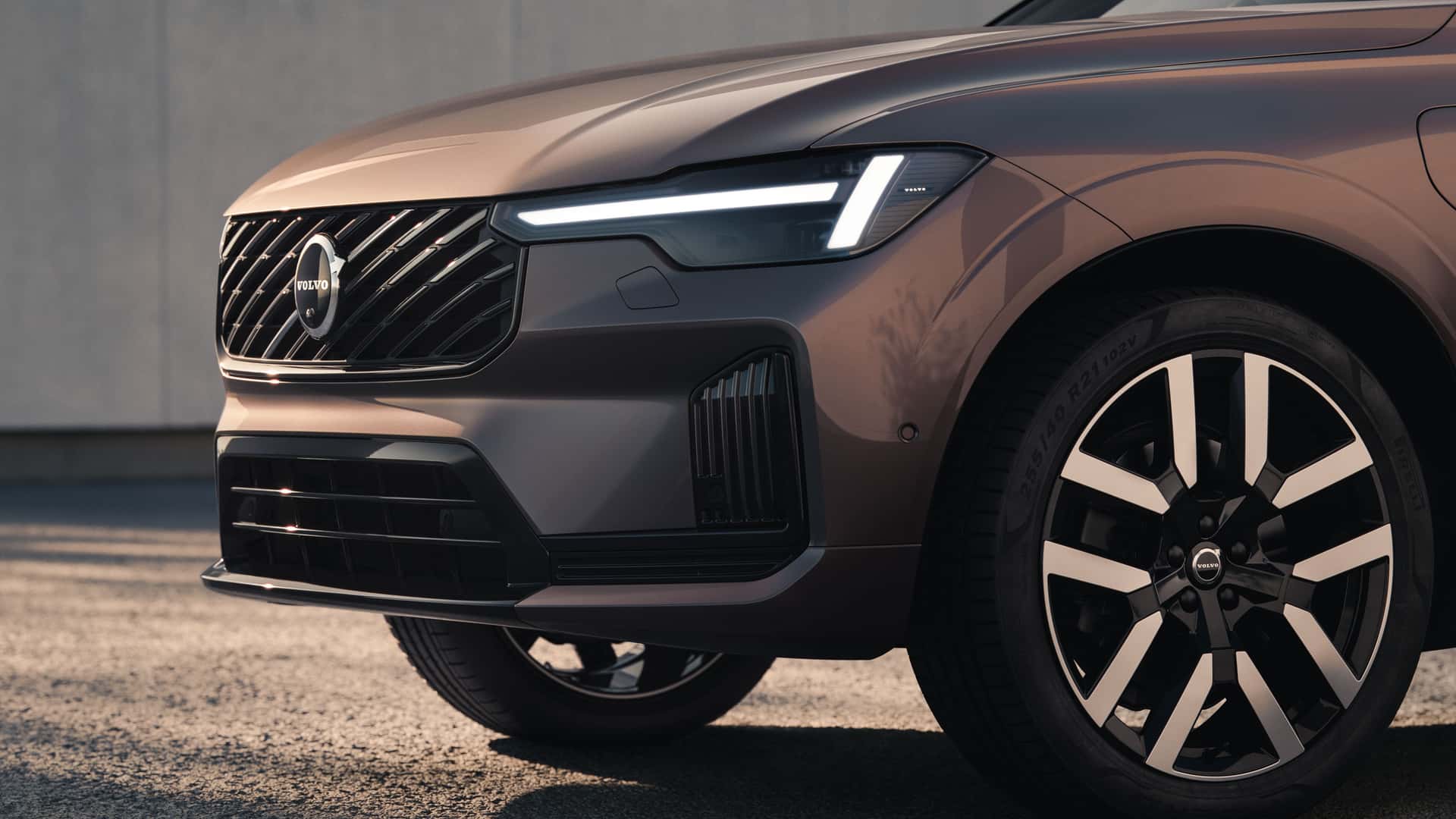
- Volvo pulled its sales guidance for the entire year after sales took a dive in China and the U.S.
- In the third quarter, the Swedish automaker saw global sales decrease by 10.7% compared to last year.
- In the U.S., Volvo sold fewer than 24,000 cars this past quarter, with EVs taking a huge dive.
Volvo is facing significant headwinds in China and the United States, where sales have gone down once again this past quarter. As a result, the company decided to pull its full-year sales volume and cash flow guidance, sending shares down as much as 4% in early trades. Since the beginning of the year, Volvo Cars’ shares have lost roughly 50% of their value.
“An increasingly challenging market situation and deteriorating near-term market outlook has resulted in lower-than-expected sales and a weaker full year outlook for Volvo Cars,” the company said in a statement. “Therefore, Volvo Cars will not fulfill the previous full-year 2026 outlook statements on volume and cash flow.”
During the third quarter, the Swedish automaker sold 141,609 cars globally, a 10.7% decrease over the same period last year. Mild hybrids led the drop with 23.6% fewer units sold, followed by plug-in hybrids with an 18% decrease over Q3 2025. Meanwhile, all-electric models kept the company from dropping even more, with a striking 28.6% increase year over year, totaling 45,060 units finding new owners across the world from July through September.
China was the region where Volvo lost the most ground, with 20,284 cars sold, resulting in a 40.6% drop compared to last year. In the United States, the company moved 23,766 cars, 8.7% fewer than last year, with fully electric models tumbling 41.1%. According to the automaker, “weaker consumer sentiment, increased SUV competition, and softer electrified-vehicle demand” impacted its results stateside.
Europe is the only region where the car manufacturer has seen good numbers this past quarter. Sales totaled 90,548 units, up 2% year-over-year, with EVs reaching 40,466 new customers, 51% more than last year.
Volvo’s previous guidance, released in July, predicted much stronger sales in the second half of the year and strong positive cash flow toward the end of 2026.
Things should start to change for the better once the new EX60 electric SUV starts hitting U.S. dealerships, which have had an aging lineup to contend with for the past few years. The EX30 entry-level electric crossover was on sale for a very short period of time and had a much higher price tag than originally anticipated, the EX40 was a little too expensive for its own good and was ultimately discontinued, and the flagship EX90 failed to make inroads after a rocky launch and a high price tag.
Now, though, Volvo is bringing the highly competitive EX60, as well as the refreshed XC60 and XC90 plug-in hybrids with a lot more electric range than before. More models are also slated by the end of the decade, when Volvo still hopes to see margins improve to 8%, up from 3.5% in 2025.
A new CEO, poached from the Volkswagen Group’s Skoda brand, is also coming on board to try and sort things out for the Swedish brand that (still) has a reputation for dependability and safety.