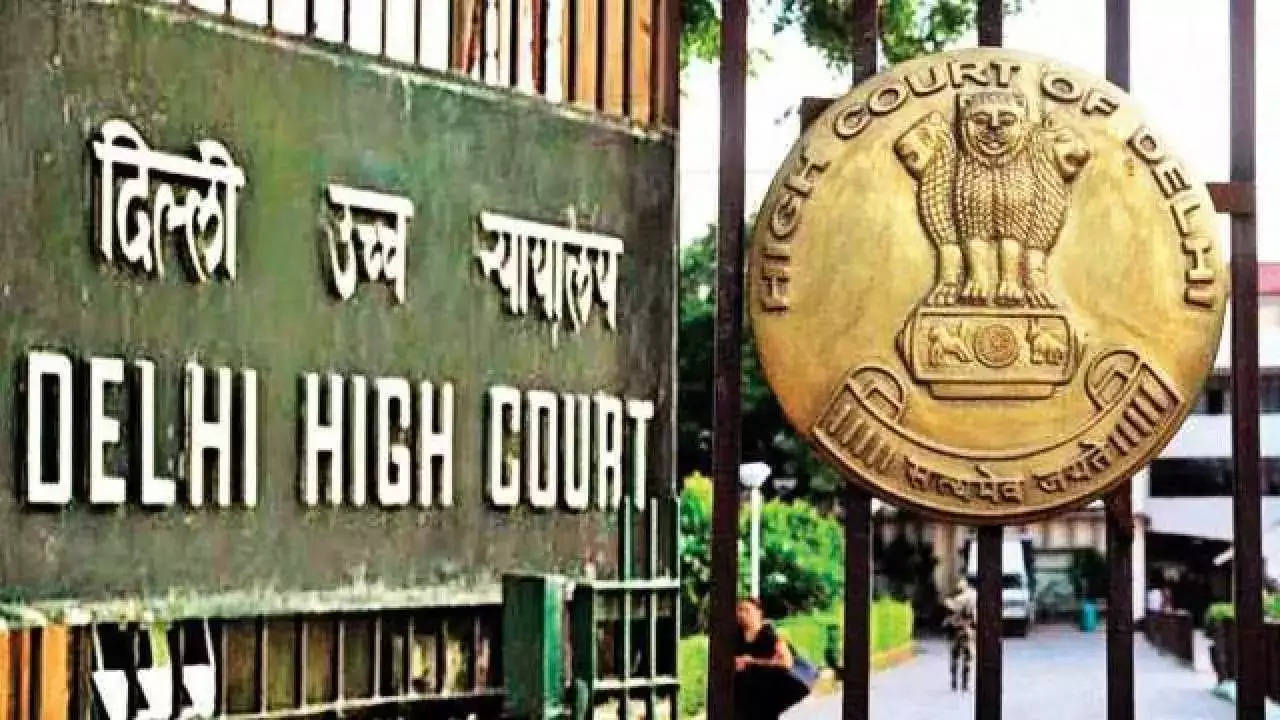
NEW DELHI: Despite being one of the earliest to shift to holding hearings through videoconferencing due to the Covid-19 pandemic in March 2020, the Delhi high court lags behind three other high courts in the country in terms of number of cases heard virtually.
However, district courts of Delhi lead the country in conducting the maximum number of virtual hearings.
Union law minister Kiren Rijiju informed Parliament earlier this week that since the pandemic began in March 2020, high courts and district courts all over the nation have performed a total of 1.92 crore virtual hearings.
As per the statistics shared by the ministry, the Delhi high court conducted 3,17,209 hearings between March 22, 2020 and April 30, 2022. The Karnataka high court is at the top of the list with its judges conducting a total of 7,80,305 virtual hearings during the same period. It is followed by the Madhya Pradesh high court, which saw 6,64,649 virtual hearings. The Punjab and Haryana high court dealt with 5,81,047 hearings through videoconferencing.
In terms of the number of virtual hearings conducted at district courts, Delhi is in first place, followed by Uttar Pradesh and Bihar. While 29,96,145 virtual hearings took place at the district courts in Delhi, 28,79,359 and 18,05,852 such hearings were conducted in UP and Bihar, respectively, according to the figures shared with Parliament.
The Karnataka high court also emerged as a pioneer in ensuring transparency in the justice delivery system when it started live streaming of hearings last year. Proceedings in the courts of chief justice and other senior judges can be accessed by the public through a dedicated YouTube channel of the HC.
In contrast, several courtrooms in the Delhi high court have stopped providing videoconferencing links on the website since reverting to physical mode. On July 18, court number 1 of Delhi Chief Justice, which hears many cases of public importance like PILs and others, limited the facility to concerned litigants or lawyers on demand and disabled the access link for public that was earlier displayed on the daily causelist.
However, five other division benches and a few single bench judges still make available the links to the general public.
The Delhi high court had first moved to the virtual system in March 2020 following the outbreak of Covid-19, and subsequently, a few benches had started holding physical courts everyday on rotation basis. In between, it alternated between fully virtual and hybrid mode before cautiously opening the courts to lawyers only.
The Union law ministry furnished the figures in response to a query on establishing e-courts and number of videoconferencing hearings conducted by high courts and district courts.
Soon after the pandemic forced the courts to shut down physically, the Supreme Court on April 6, 2020 gave legal sanctity and validity to virtual hearings and a five-judge committee framed rules that were circulated to all the high courts for adoption after local contextualisation.