Vice President JD Vance is urging federal prosecutors to investigate Minnesota Governor Tim Walz and Attorney General Keith Ellison, alleging they failed to curb extensive social services fraud. This move intensifies worries that the Trump administration intends to deploy a newly established Justice Department division to target political adversaries.
Vance, who is spearheading the Trump administration's anti-fraud initiatives and is seen as a potential 2028 presidential contender, referenced a report from the Republican-controlled House Oversight Committee in his letter to the Justice Department. The report claims that Walz and Ellison were long aware of widespread misuse of government programs and allowed it to persist.

The Justice Department did not immediately comment on Tuesday regarding a potential investigation.
It remains uncertain what, if any, federal legal violations could justify a probe into the Democratic Minnesota officials. Both Walz and Ellison have defended their actions against fraud, dismissing a separate Justice Department inquiry involving state leaders as politically motivated.
Minnesota has long been under a microscope for staggering amounts of fraud in programs for children and other social services, with dozens of defendants charged under the administrations of President Joe Biden, a Democrat, and President Donald Trump, a Republican. Vance’s referral for an investigation into state leaders, however, marks an escalation in the Trump administration’s stated “war on fraud” that officials have said would not be political or partisan.
Vance is seeking an investigation by a new Justice Department division that has drawn intense scrutiny over the potential for political influence given its close relationship with Trump’s White House. The White House announced the division's formation in January and initially said its leader would answer directly to the president instead of the typical Justice Department command.
Walz spokesperson Teddy Tschann derided the House committee as “nothing more than a joke” that continues to “re-hash COVID-era fraud.”
“Governor Walz is glad to see fraudsters are going to prison,” Tschann said in an email. “If the committee is concerned about corruption, they should investigate why President Trump continues to let fraudsters out of prison.” Trump has granted clemency to numerous defendants convicted of financial crimes, including a man sentenced to 50 years in prison for orchestrating a more than $200 million Medicare fraud scheme.
Ellison called the allegations unfounded and dismissed Vance’s referral as “a political stunt from an administration that uses the machinery of government to target its perceived opponents while extending leniency to those aligned with its interests.”
“It is deeply troubling to see official powers and public resources diverted away from serving the people and instead aimed at pursuing political adversaries,” Ellison said in a statement. “That is not what government is for, and it diminishes public trust in our institutions.”
The House committee alleges that “fraud warnings were elevated to the most senior levels of the Minnesota state government" and payments continued “long after credible signs of fraud emerged.” In his referral, Vance wrote that officials in Minnesota or anywhere else in the country “must be held accountable” if they facilitated fraud, prevented officials from stopping it or retaliated against whistleblowers who tried to report it.
“Minnesota state officials are not above the law,” Vance wrote in a post on X.
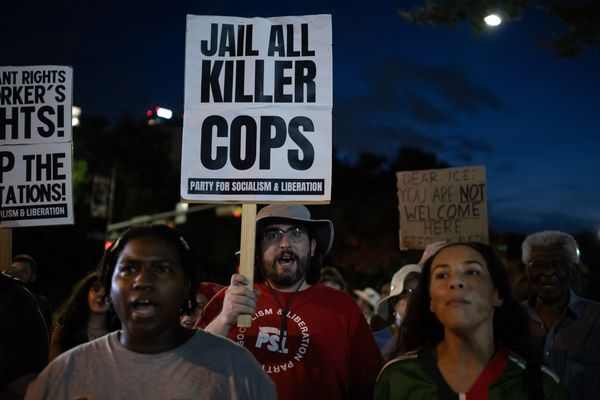
The Trump administration has clashed repeatedly with Minnesota officials not only about fraud but also the massive federal immigration crackdown that swept across the Minneapolis-St. Paul area and other communities and led to widespread protests.
The Justice Department in January served grand jury subpoenas to Minnesota officials as part of an investigation into whether they obstructed or impeded federal law enforcement through public statements they made. The status of that investigation is unclear.
The Trump administration has touted the creation of the National Fraud Enforcement Division as a crucial step in its efforts to prevent the misuse of taxpayer dollars. The division's leader, Assistant Attorney General Colin McDonald, is a veteran prosecutor who has vowed to pursue cases “without fear or favor."
Critics, however, have questioned the administration's motives behind the new division given that fraud was already prosecuted by the agency's Criminal Division, which last year announced the largest coordinated takedown of healthcare fraud schemes in Justice Department history.