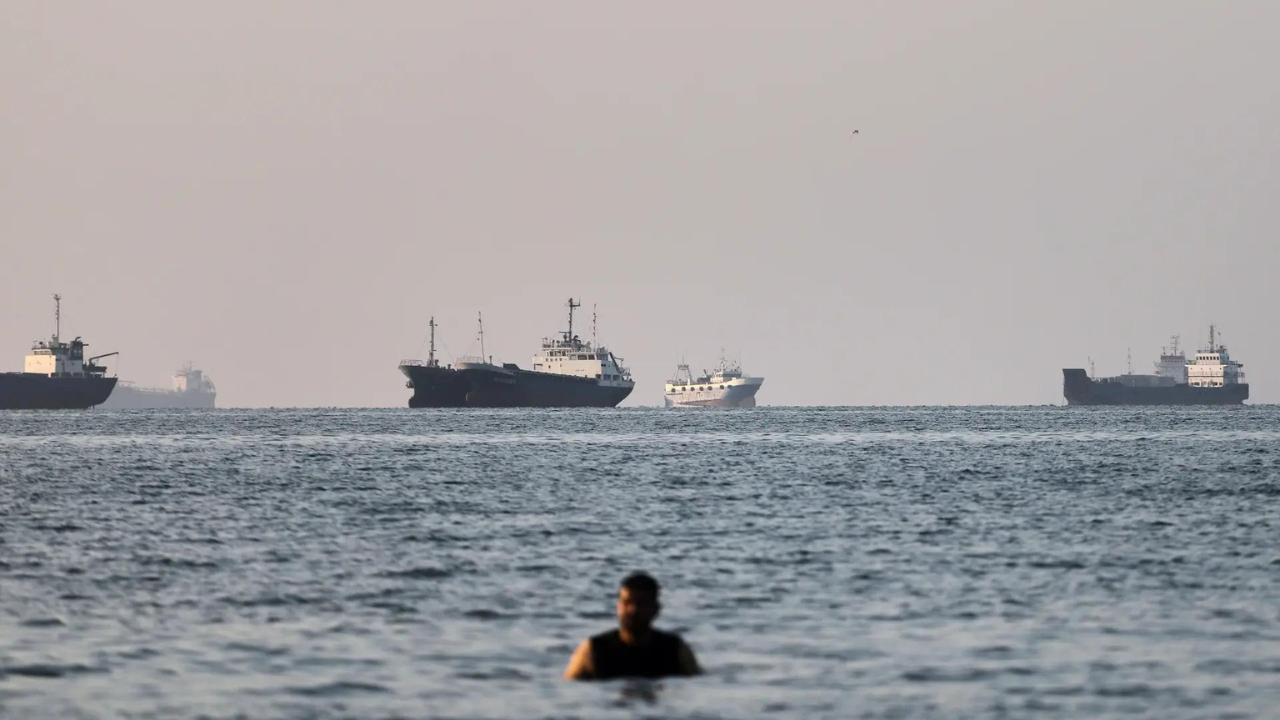
The United States has reportedly been running a covert offshore oil-transfer network near the Strait of Hormuz, adopting a tactic long associated with Iran to keep Gulf crude flowing despite Tehran's blockade of the strategic waterway.
Get breaking news anytime, anywhere. Download the TOI app now!

The operation, launched in early May, involves transferring oil between vessels off the coasts of Oman and the United Arab Emirates before it is loaded onto larger tankers for export, Reuters reported, citing shipping data, satellite imagery and more than a dozen sources familiar with the arrangements.
The report estimated that about 90 million barrels of crude oil and petroleum products may have moved through the offshore network since early May, though that remains well below the roughly 20 million barrels that passed through the strait daily before the conflict.
At least 92 ships have participated in this operation, which depends on vessels travelling with transponders switched off and lights dimmed; methods commonly used by Iran's so-called "dark fleet" to evade sanctions and conceal cargo movements.
The transfer network emerged after Iran effectively shut access through the Strait of Hormuz during the conflict, disrupting one of the world's most critical energy chokepoints. The waterway typically handles around a fifth of global oil consumption.
Sources told Reuters that the US military has coordinated surveillance, compliance screening and transit monitoring for participating vessels, though there was no indication American personnel were directly involved in the transfers themselves.
The operation has enabled Gulf producers to continue exporting crude despite heightened security risks, but analysts warned the system remains vulnerable. "You just don't know when Iran might just decide to start using drones or even gunboats in order to prevent even those ships from transiting the strait," Noam Raydan, a senior fellow at the Washington Institute who reviewed Reuters' findings, said.