Anti-graft watchdog Transparency International (TI) has warned that corruption is worsening in democracies worldwide and said the United States had fallen to its lowest-ever score on the 2025 Corruption Perceptions Index.
The Berlin-based TI said the global average score had fallen to its lowest level in more than a decade.

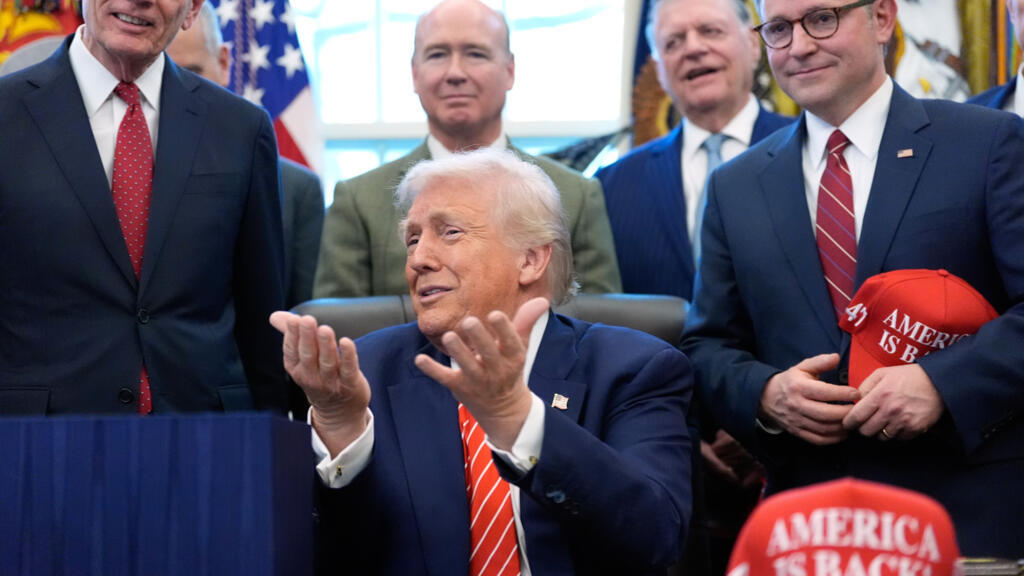
US President Donald Trump, since returning to the White House early last year, has upended domestic and foreign politics while ramping up pressure on institutions ranging from universities to the Federal Reserve.
Fed Chairman Jerome Powell is currently under investigation by Trump's Department of Justice after resisting pressure from the president to reduce interest rates.
TI raised concerns over "actions targeting independent voices and undermining judicial independence" in the US.
"The temporary freeze and weakening of enforcement of the Foreign Corrupt Practices Act signal tolerance for corrupt business practices," the watchdog's research says.
The Trump administration's gutting of overseas aid has also "weakened global anti-corruption efforts", it added.
The group's index assigns a score between zero (highly corrupt) and 100 (very clean), based on data reflecting the assessments of experts and business executives.
Data sources have previously included the World Economic Forum and the Economist Intelligence Unit.
One year of Trump: the 'far-right revolution’ testing America and the world
Global average lowest in a decade
Overall, the number of countries scoring above 80 has shrunk from 12 a decade ago to just five this year.
In particular, there is a worrying trend of democracies seeing worsening perceived corruption – from the United States (64), Canada (75) and New Zealand (81), to various parts of Europe, like the United Kingdom (70), France (66) and Sweden (80).
The global average score was 42, its lowest level in more than 10 years.
"The vast majority of countries are failing to keep corruption under control," the report said, with 122 countries out of 180 posting scores under 50.
The US case illustrates a trend in democracies experiencing a "decline in performance" in battling corruption, according to the report, a phenomenon it also said was apparent in the UK and France.
While such countries are still near the top of the index, "corruption risks have increased" due to weakening independent checks, gaps in legislation and inadequate enforcement.
"Several have also experienced strains to their democracies, including political polarisation and the growing influence of private money on decision-making," the report noted.
France accused of restricting protests and eroding democracy
Protecting civic space
The report also pointed out that corruption tends to be tackled better in countries where civic space is guaranteed and protected.
"Those where the freedoms of expression, assembly and association are duly safeguarded are generally more resilient against corruption and score better on the CPI," the report said.
But countries where these freedoms are lacking are more likely to lose control of corruption: 36 of the 50 countries where the CPI scores have significantly declined have also seen a reduction in civic space.

The worst-performing countries in the European Union were Bulgaria and Hungary, both scoring just 40.
The report said the government of Hungary's nationalist leader Viktor Orban, in power since 2010 and facing a tough battle for re-election in April, "has systematically weakened the rule of law, civic space and electoral integrity for over 10 years".
"This has enabled impunity for channelling billions – including from European Union funds – to groups of cronies through dirty public contracting and other methods," the report said.
The watchdog noted that the government of Prime Minister Robert Fico in neighbouring Slovakia, with a score of 48, is "weakening investigations of corruption and organised crime, especially those involving senior officials".
EU strips Hungary of €1bn in frozen funds over corruption concerns
Denmark top of the class
The highest-ranked nation in the index for the eighth year running was Denmark with a score of 89.
Among the more positive stories of progress in the report was Ukraine, which scored 36.
The government of President Volodymyr Zelensky has faced widespread public anger over graft allegations against those close to him, even as the country is hammered by Russian attacks.

However, TI noted that "the fact that these and many other scandals are being uncovered ... shows that Ukraine's new anti-corruption architecture is making a difference".
It hailed the "civil society mobilisation" last year, which prompted Zelensky to backtrack in an attempt to curb the independence of anti-graft bodies.
At the bottom of the index, the countries scoring below 25 are mostly conflict-affected and highly repressive countries, such as Venezuela (10) and the lowest scorers, Somalia and South Sudan, which both score nine.
(with AFP)