Get all your news in one place.
100's of premium titles.
One app.
Start reading
Tom’s Hardware
Tom’s Hardware
Technology
Jowi Morales

US Navy signs deal with AI firm for training underwater drones to detect mines in Strait of Hormuz — $100 million would allow drone minesweepers to update their detection algorithms in days instead of months

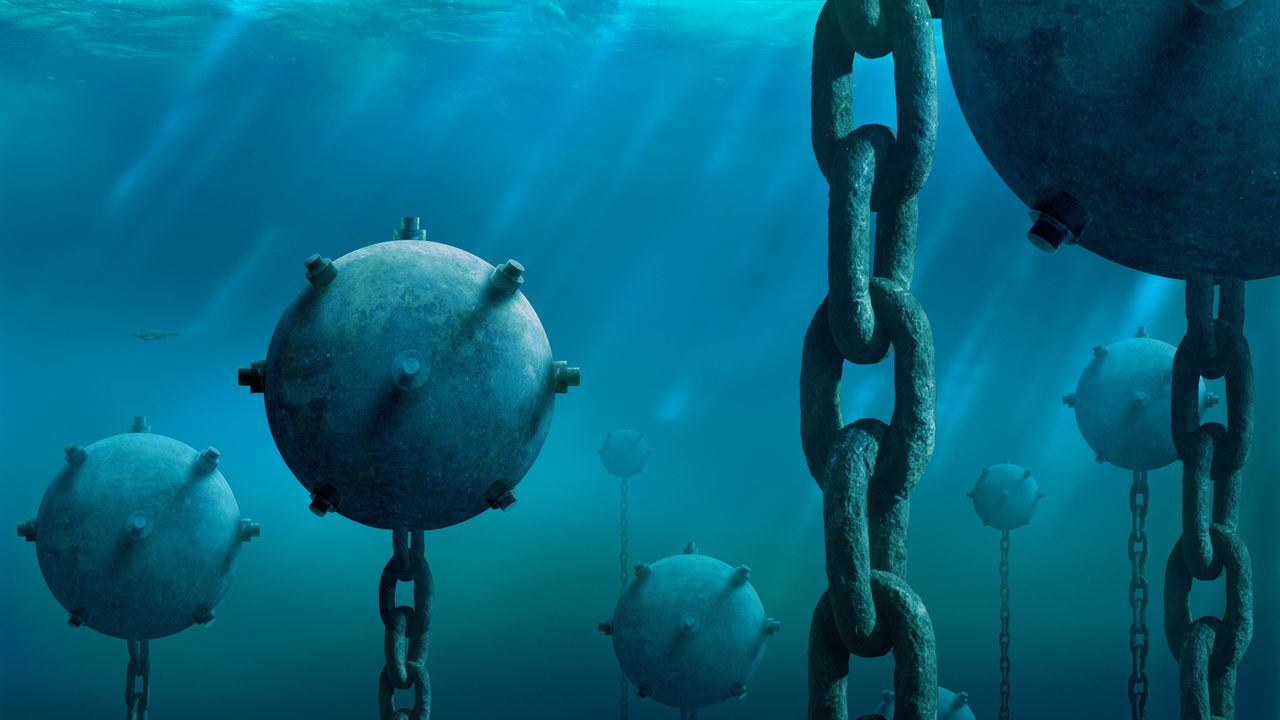
Underwater mines.

The U.S. Navy just signed a $99.7 million deal with Domino Data Lab, a San Francisco-based startup, to develop AI tech that would allow its undersea minesweepers to learn about new and unseen mines in days instead of months. Reuters reports that this new technology is intended for use in the Strait of Hormuz, a key chokepoint in global sea lanes that Iran has mined to limit the movement of oil and cargo ships since the start of the U.S.-Iran war earlier this year.

The software will use multiple sensor suites, such as side-scan sonar and visual imaging systems, to monitor various other AI detection models operating in the field. This should allow operators to identify failures and push corrections as it operates, rather than sending information back to a lab and waiting for AI developers to train a new model to handle novel threats.

"Mine-hunting used to be a job for ships. It's becoming a job for AI. The Navy is paying for the platform ​that lets it train, govern, and field that AI at a speed required for contested waters ​that block global trade and imperil sailors,” Domino CEO Thomas Robinson told the news outlet. "If there were UUVs (unmanned underwater vehicles) in the Baltic Sea trained on Russian ⁠mines, ​and then they needed to be deployed to the Strait ​of Hormuz to detect Iranian mines, with Domino's technology, the Navy could be ready in a week rather than a year."

The Pentagon has increasingly been turning towards AI to bolster its capabilities, with the Department of War announcing deals with seven AI tech companies — namely SpaceX, OpenAI, Google, Nvidia, Reflection, Microsoft, and Amazon Web Services — to deploy LLMs across its classified networks. These tools are designed to sift through large volumes of data and identify patterns that are simply impossible for people to process in such a short time, thereby speeding up data analysis and decision-making. DARPA, its independent research arm, has also called for proposals to develop the next-generation deep-sea underwater drone that can be built quickly.

The U.S. and Iran have had an on-again, off-again ceasefire in place for several weeks now. This makes mine-clearing operations in the Strait of Hormuz high-risk, especially since strikes could occur at any moment and without warning. Deploying AI technology on undersea drones will reduce this risk, especially by making mine detection and removal much faster.

Sign up to read this article
Read news from 100's of titles, curated specifically for you.
Already a member? Sign in here
Related Stories
Top stories on inkl right now
One subscription that gives you access to news from hundreds of sites
Already a member? Sign in here
Our Picks
Fourteen days free
Download the app
One app. One membership.
100+ trusted global sources.