
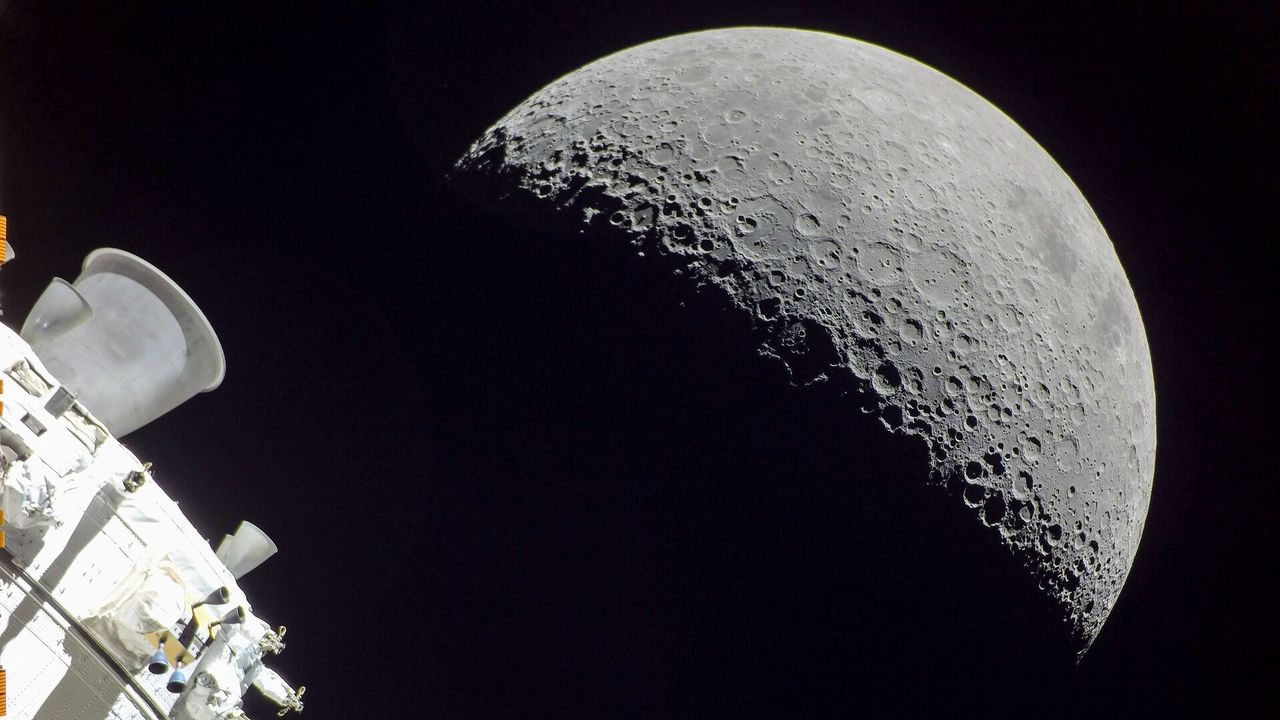
As the moon becomes the center of the new space race, the United States military is looking for new ways to keep track of spacecraft and other objects flying close to or from lunar space.
The Defense Advanced Research Projects Agency (DARPA) has issued a contract solicitation for new ways to process optical signals that allow for continuous space-based detection and tracking of objects in cislunar space. Cislunar space is a vast region of space influenced by the gravitational forces of both Earth and the moon. Because most tracking systems are designed for keeping tabs on satellites and spacecraft operating from low Earth orbit to geosynchronous orbit (GEO), there is a gap in the United States' ability to detect and track objects much farther away, especially near the moon.