Get all your news in one place.
100’s of premium titles.
One app.
Start reading
The Independent UK
The Independent UK
John Bowden

US energy chief has dire prediction about gas prices under Trump

Donald Trump’s energy secretary has warned that the Iran war could likely last for several more weeks and deflected a question about whether it was possible that oil prices could hit $200 a barrel.

Chris Wright appeared on several programs on Sunday as he presented the Trump administration’s domestic response to a war in Iran that despite the president’s proclamations seems far from over just yet.
Speaking on NBC’s Meet the Press, Wright was questioned by moderator Kristen Welker about a prediction from Iranian officials that oil would soon reach $200 per barrel.

“I would pay no attention to what Iran says, but, there is a lot of energy that flows through the Strait of Hormuz,” Wright responded. “And depending upon the timing and the manner upon which this conflict comes to an end, we’re going to see some elevated pricing until we get there.”

The Trump administration is contending with two public image issues surrounding its war with Iran, launched with the stated intention of inflicting regime change and destroying the country’s nuclear program: an unclear perception of the administration’s goals and whether they’re being achieved, and the impacts of yet another expensive military campaign in the Middle East.

Wright addressed the latter Sunday as he responded to the sharp spike in gas prices over the last two weeks as Iranian forces have mined the Strait of Hormuz and closed off the key waterway for commercial shipping vessels, strangling the global oil supply and driving prices past $100 per barrel for the first time in years.

He insisted in multiple interviews across NBC, ABC, Fox and CNN that disruptions to the U.S. oil supply would last “weeks” not “months” and insisted that even the Trump administration’s “worst-case” scenario saw the conflict being wrapped up in the immediate days ahead.

But he also admitted that in war, nothing is certain.

“You never know exactly the timeframe of this, but in the worst case this is a weeks, this is not a months thing,” he told CNN’s Jake Tapper.

“There's no guarantees in wars at all,” he added on ABC’s This Week. “This is short-term pain to get through to a much better place.”

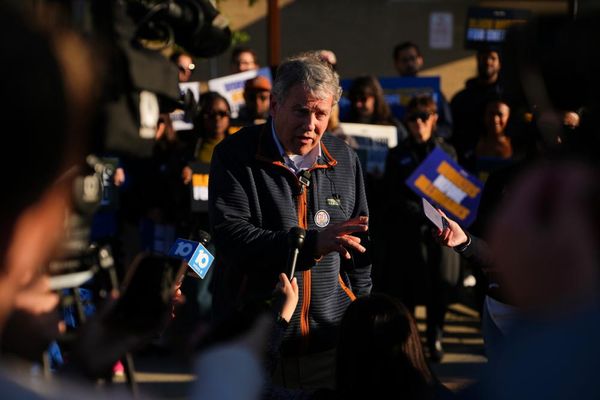
Energy Secretary Chris Wright predicted on March 15that the Iran war could drag on for several more weeks (NBC - Meet the Press)

The Trump administration still hasn’t laid out the parameters by which it is judging whether its military objectives have been completed.

Whether American forces will be deployed to the region also remains unclear, as Republicans briefed on the administration’s plans in Congress have only ruled out a large-scale invasion, but not a limited troop presence.

In an interview with NBC News on Saturday, Trump said that he wasn’t open to ending the war just yet.

“Iran wants to make a deal, and I don’t want to make it because the terms aren’t good enough yet,” he told NBC’s Kristen Welker.

He added that he wouldn’t lay out his terms for a potential peace agreement in public.

Donald Trump said he isn’t ready to end the war with Iran after declaring it was ‘very complete’ days earlier (Getty Images)

White House and Cabinet officials continue to insist that the U.S. Navy will soon be able to forcibly reopen the Strait of Hormuz, though Wright couldn’t give a timeframe for that effort either during an interview on Thursday.

“It'll happen relatively soon, but it can't happen now. We're simply not ready,” he said.

Wright repeatedly pointed to measures the Trump administration is taking to reduce oil prices in the short term while the military operation in Iran continues. Those measures have included the temporary suspension of some sanctions on Russia and a dip into the U.S. Strategic Petroleum Reserve, overseen by Wright’s agency.

The secretary was pressed in one interview on why the U.S. would reduce sanctions on Russia at this time, given news reports indicating that Russia is aiding Iran in targeting U.S. troops across the Middle East. Wright claimed that those reports were unverified.

Experts agree that the short-term ability of the administration to bring down gas prices is limited.

The real deciding factors could likely be the ability of the U.S. to unrestrict traffic in the Strait of Hormuz, either through military or diplomatic means. The long-term goal of the Trump administration to see Venezuelan oil production capacities increased would also have an effect on global markets.

Some Republicans took to lecturing Americans this past week, as their party is only months away from defending twin majorities in the midterms, about the need to accept short-term economic pain to achieve the administration’s foreign policy objectives.

“Freedom is not free,” Kansas Sen. Roger Marshall said on CNN. “Americans are gonna have to make some sacrifices,”

Polling indicates that more than half of Americans oppose Trump’s war with Iran, while about four in ten support it.

Sign up to read this article
Read news from 100’s of titles, curated specifically for you.
Already a member? Sign in here
Related Stories
Top stories on inkl right now
One subscription that gives you access to news from hundreds of sites
Already a member? Sign in here
Our Picks
Fourteen days free
Download the app
One app. One membership.
100+ trusted global sources.