
Get all your news in one place.
100’s of premium titles.
One app.
Start reading
Creative Bloq
Creative Bloq
Technology
Tammy Coron

How to use Disney's 12 principles of animation

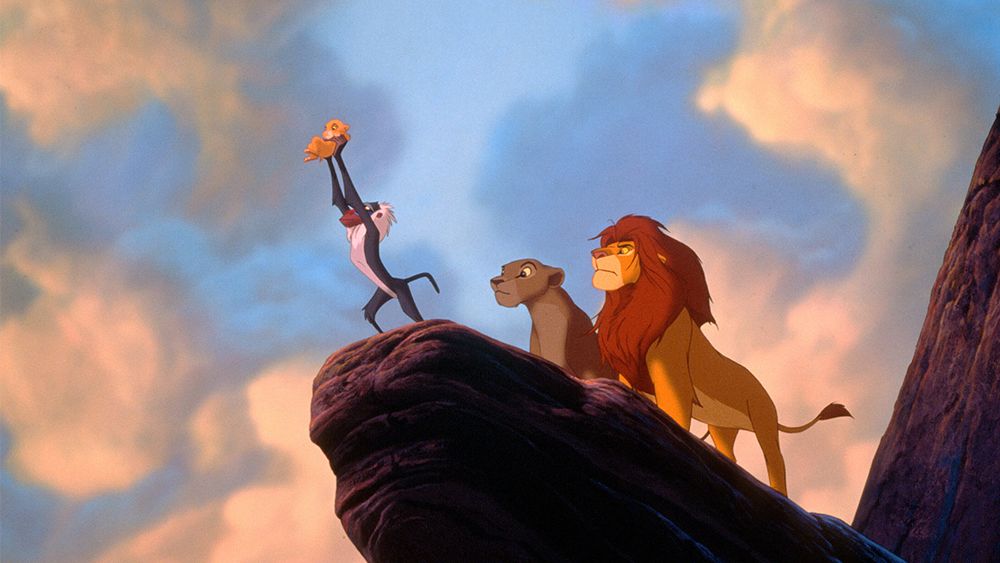
An image from The Lion King demonstrating one of the 12 Disney principles of animation.

The Disney 12 principles of animation can be considered as a basis for all animation. These rules of animation may have been discovered decades ago, but they remain just as relevant today for everything from movies and cartoons to motion graphics and video games, despite technological changes (see our pick of the best animation software).

Disney's principles of animation were first laid out in 1982 in the book The Illusion of Life: Disney Animation. The animators Ollie Johnston and Frank Thomas combed through the work of leading Disney animators from the 1930s onwards and broke down their approach to identify 12 basic principles.

Over forty years later, these guiding concepts are still worth considering as a starting point, no matter which of the best animation styles you're using. Whether you're working with physical media or using one of the best laptops for animation, these simple principles could help you on your way to becoming the next Walt.

For general principles that apply to all kinds of creative work, make sure you're familiar with Pixar's storytelling rules.

Disney's 12 principles of animation in action

The Disney animation principles can bring even the most basic and mundane of objects to life. To illustrate that, this article features animations by Vincenzo Lodigiani showing examples of the Disney principles applied to the animation of a simple cube.

Vincenzo also made the short video The Illusion of Life (below), which features all of the 12 Disney principles of animation in action, showing how they can work together to create immersive and dynamic animation.

Disney's 12 rules of animation

01. Squash and stretch

The Squash and stretch animation principle is one of the most important (Image credit: Vincenzo Lodigiani)

The first Disney principle of animation is often cited as the most important, as it also influences some of the other 12 rules. Squash and stretch can give animated characters and objects the illusion of gravity, weight, mass, and flexibility, which makes them feel more believable.

Think about how a rubber ball may react when bounced: the ball stretches when it travels up and down, and squishes when it hits the ground. When using squash and stretch, it's important to keep the object's volume consistent. So when you stretch something, it needs to get thinner, and when you squash something, it needs to get wider.

Sure, in the real world, characters don't really squash and stretch as they do in many cartoons. In animation, we exaggerate real-world physics to make actions more expressive. How far you choose to exaggerate squash and squish it will depend on your animation style. You might aim for more realistic movement, but the principle of squash and stretch remains important to be aware of.

Read our list of the best animated films of the 1950s to see where this rule began.

02. Anticipation

Anticipation helps create realistic action in animation (Image credit: Vincenzo Lodigiani)

Anticipation helps prepare the viewer for what's about to happen. When applied, it makes the object's action more realistic.

Consider what it might look like if you jumped in the air without bending your knees first, or threw a ball without first pulling your arm back. It would look really unnatural (it might not even be physically possible to jump without bending your knees!). In the same way, animating movements without a flicker of anticipation will also make your motion look awkward, stale, and lifeless.

You'll see this in practice before characters jump in many Disney films, such as how Tarzan squats before jumping to high branches (we can also see 'squash and stretch' at work here). This is another of the most important animation principles because, as well as making animation look natural, it can also be used to create an emotional effect on the audience.

Sometimes the anticipation of movement is drawn out to create a moment of apprehension, as when Simba hesitates before leaping across a chasm in The Lion King. See how this rule was used in the best cartoons of the 1990s, including this movie.

03. Staging

Staging is like composition and helps guide viewers' eyes (Image credit: Vincenzo Lodigiani)

Staging in animation is a lot like composition in artwork. You should use motion to guide the viewer's eye and draw attention to what's important within the scene. Keep the focus on that, and keep the motion of everything that's not important to a minimum.

Sometimes, staging will change within a scene. Think about the famous Simba birth scene in The Lion King when Rafiki holds the newborn cub up at the edge of Pride Rock for everyone to see (pictured at the top of this post). Initially, the characters on the rock are the focus, but the camera pulls out, bringing in more elements and allowing the viewer to take in the heir's kingdom and the enormity of the moment.

04. Straight ahead action and pose to pose

Both of these animation techniques have their place (Image credit: Vincenzo Lodigiani)

There are two ways to handle drawing animation: straight-ahead and pose-to-pose. Each has its own benefits, and the two approaches are often combined. Straight-ahead action involves drawing frame by frame from start to finish. If you're looking for fluid, realistic movements, straight-ahead action is your best bet.

With the pose-to-pose technique, you draw the beginning frame, the end frame, and a few key frames in between. Then you go back and complete the rest. This technique gives you a bit more control in the scene and lets you increase the dramatic effect of the motion.

Read our list of the best animated films of the 1960s for examples.

05. Follow through and overlapping action

The fifth principle of animation is that movement should follow through (Image credit: Vincenzo Lodigiani)

When an object comes to a standstill after being in motion, different parts of the object will stop at different rates. Similarly, not every part of an object will move at the same rate. This forms the essence of the fifth of Disney's principles of animation.

If your character is running across the scene, their arms and legs may be moving at a different rate from their head. This is an overlapping action. Likewise, when they stop running, their hair will likely continue to move for a few frames before coming to rest – this is follow-through. These are important principles to understand if you want your animation to flow realistically.

Follow-through is particularly important when it comes to clothing and hair. Look at the hair of characters like Mulan or Elsa from Frozen for great examples of this. Their hair continues to sway after the main movement has stopped, making it look more realistic. But the amount of movement needs to correspond to the force of the movement and the hair's size and weight. Hair often has less follow-through when it's short, very long, or tied back.

06. Slow in and slow out

Easing in and out makes movement smoother and more believable (Image credit: Vincenzo Lodigiani)

The best way to understand slow in and slow out is to think about how a car starts up and stops. It will start moving slowly, then gain momentum and speed up. The reverse will happen when the car brakes.

In animation, this effect is achieved by adding more frames at the beginning and end of an action sequence. Apply this principle to give your objects more life. You can see examples of this rule in some of the best animated films of the 1980s.

07. Arc

Like many of Disney's animation principles, this is about respecting the laws of physics (Image credit: Vincenzo Lodigiani)

When working in animation, it's best to stick with the laws of physics. Most objects follow an arc or a path when they're moving, and your animations should reflect that arc. For example, when you toss a ball into the air, it follows a natural arc as the effects of the Earth's gravity act upon it. In The Little Mermaid, Ariel's swimming tends to form arcs.

08. Secondary action

This animation principle helps add more dimension (Image credit: Vincenzo Lodigiani)

Secondary actions support or emphasise the main action in a scene. Adding secondary actions helps add more dimension to your characters and objects.

Secondary action can be as subtle as a facial expression. There's a scene in Beauty and the Beast where Belle is reading (her primary action), and she also makes expressions (secondary action) that show her engagement in the book.

These gestures make the scene more engaging while also revealing more about the character. Just remember that the secondary action shouldn't distract from the primary one. It needs to feel natural and relevant.

09. Timing

Timing is essential in animation (Image credit: Vincenzo Lodigiani)

A classic Disney moment when Snow White dances with the animals in the 1938 film Snow White and the Seven Dwarfs. Like any choreography, timing was an essential element.

If you move an object more quickly or slowly than it would naturally move in the real world, the effect won't be believable. Using the correct timing allows you to control the mood and the reaction of your characters and objects. That's not to say you can't push things a little (especially if you're creating an imaginary world) – but if you do, be consistent.

10. Exaggeration

This one is where we get to bend the rules of physics a little! (Image credit: Vincenzo Lodigiani)

Too much realism can ruin an animation, making it appear static and boring. Instead, add some exaggeration to your characters and objects to make them more dynamic. Find ways to push the limits just beyond what's possible, and your animations will pop.

The principle of exaggeration can, in turn, be applied to other animation rules; for example, films like The Lion King and Snow White, where animators use Exaggeration to heighten emotional impact and Follow Through & Overlapping Action to make movements feel fluid.

11. Solid drawing

The concepts of drawing apply even if you're using digital software (Image credit: Vincenzo Lodigiani)

You need to understand the basics of drawing. This includes knowing how to draw in three-dimensional space and understanding form and anatomy, weight and volume, and lights and shadows.

While you can push the limits here, too, it's important to remain consistent. If your world has wonky doors and a warped perspective, keep that perspective throughout the entire animation. Otherwise, things will fall apart.

12. Appeal

The 12th animation principle is more subjective (Image credit: Vincenzo Lodigiani)

Finally, we have what I think is the most important principle of animation. Your characters, objects, and the world they live in need to appeal to the viewer. This includes having an easy-to-read design, solid drawing, and a personality.

There is no formula for getting this right, but it starts with strong character development and being able to tell your story through the art of animation. And remember that appeal is necessary for all characters, even villains (see our expert character design tips).

Disney's 12 rules of animation: frequent questions

Do the Disney principles of animation still apply?

The Disney animation principles were codified over four decades ago, when most animation was still done by hand using the cel animation technique. Since the late 90s, major technological advances have led most studios to transition to digital animation software, while 3D animation has become increasingly popular.

However, in most cases, the principles of animation still apply, including to 3D animation. Many basic animation principles involve respecting the laws of physics (which might seem surprising, given how many animated stories seem to break them!). These natural laws still apply today as much as they did in the 1930s and the 1980s, and respecting them can make any form of animation feel more natural and realistic.

That said, some have proposed new, additional principles for 3D animation, including cinematography and lighting, the feasibility of visual styling, blending motion from different sources, for example, animation and live action, and facial animation.

Which is the most important principle of animation?

All of the Disney principles of animation are important, but the first – squash and stretch – is cited as the most fundamental in Illusion of Life. This principle gives characters and objects a sense of mass, with realistic weight and volume that respect physical forces. Without it, animation can look uncanny and unbelievable.

Squash and stretch create a broader range of emotional expression for characters and also provide the foundation for other principles, such as anticipation, timing, and follow-through. That makes it a key part of the language of many cartoons and even video game animations, like in Cuphead.

However, squash and stretch may not be the most important animation principle for every style of animation. Some animators may aim for more realistic movement. For example, rotoscoping uses real live-action footage to create animation.

I would argue that one of the most universally important principles of animation is appeal. Without this, an audience is unlikely to find interest in your animation, no matter how well the other principles are applied.

Do other animation studios use Disney's principles of animation?

Yes, whether consciously or not, the Disney principles of animation are widely applied across the industry, from cartoons to corporate explainer videos and even video game animation.

That said, thereis the old adage that rules are made to be broken. Not all animations use all of the principles all of the time. There should always be a reason for applying or not applying a rule, and that will depend on the story that you're telling in your animation.

Why are the 12 principles of animation important?

These principles help animators create motion that feels natural, expressive, and engaging. They guide how objects move, how characters express emotion, and how scenes maintain visual clarity. Without these rules, animation can appear stiff or unrealistic.

Can the principles of animation be applied to 3D or digital animation?

Absolutely. Modern 3D animation, motion graphics, and even UI/UX motion design all rely on the same fundamental principles. For example, Squash and Stretch can make 3D characters feel more dynamic, and Timing is crucial for believable movement in game animations or cinematic sequences.

How can beginners practice the 12 principles of animation?

Start with simple exercises, like animating a bouncing ball to practice Squash and Stretch or a character waving to explore Secondary Action. Online tutorials, animation apps, and short daily sketches can help reinforce the concepts. The key is repetition and observation of real-world motion.

What’s the difference between Timing and Slow In/Slow Out?

Timing controls how fast or slow an action occurs, affecting the weight and realism of objects or characters. Slow In and Slow Out refers specifically to easing movements at the start and end of an action to make them feel more natural. Both principles work together to create smooth, believable animation.

Can animation principles be used outside traditional animation?

Yes. Motion designers, video editors, UI/UX designers, and game developers use these principles to improve clarity, engagement, and emotional impact. For example, Arcs can guide the user’s eye in an app, and Anticipation can signal interactions in interface animations.


For more on how Disney, see our roundup for Disney animation secrets and these shocking original Disney character designs. We've also seen plenty of Disney character design conspiracy theories, including a theory about why Disney characters wear white gloves.

Sign up to read this article
Read news from 100’s of titles, curated specifically for you.
Already a member? Sign in here
Related Stories
Top stories on inkl right now
One subscription that gives you access to news from hundreds of sites
Already a member? Sign in here
Our Picks
Fourteen days free
Download the app
One app. One membership.
100+ trusted global sources.