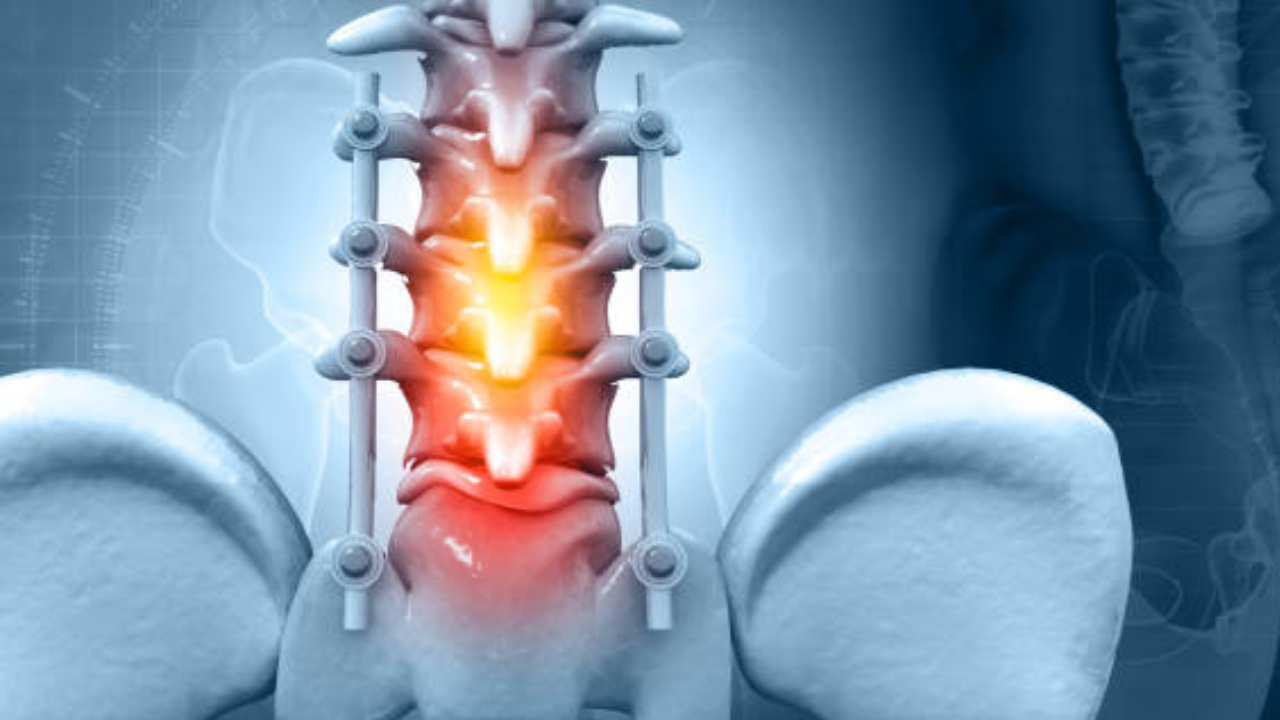
Before knowing about symptoms of spinal stenosis we need to know about what spinal stenosis is. To simplify it the word stenosis means narrowing. So this is a disease condition where the diameter or area of the spinal canal becomes narrow through which the neural elements like the spinal cord and nerve roots go through. As the canal becomes narrow neural elements that were supposed to pass freely get compressed. Now, the question arises as to why such a thing happens, why automatically the spinal canal becomes narrower by itself. The answer is, that it is a degenerative or age-related process where gradual changes happen to spinal bone and ligaments as time progresses, which is similar to changes that happen in other bones and joints e.g. knee joint. However, as spinal bones and ligaments are closely associated with the spinal canal these changes cause the narrowing of the spinal canal.
Now come to symptoms of spinal stenosis. It depends on which area or segment of the spine is affected e.g. neck(cervical spine), upper back(thoracic spine), or lower back(lumbar spine). Involvement of the thoracic spine is extremely rare. So let's discuss about lumbar and cervical spine out of which lumbar is more common. In 20 percent of cases, both the lumbar and cervical spine are affected otherwise known as tandem stenosis. Symptoms also depend on the severity of the disease process that is the amount of spinal compression the patient is having along with the duration of the disease process.
Lumbar canal stenosis typically presents as neurogenic claudication with or without back pain. Neurogenic claudication is a medical term that needs to be explained for a better understanding of common people. Here patient complains of gluteal buttock pain, and calf muscle pain in either one leg or both legs. Numbness of either one or both lower limbs more specifically over feet. Typically all these symptoms either start or aggravate by standing or walking. Because of numbness patient may feel like walking over the cotton wool surface, and his or her footwear may come out during walking because of loss of grip. All these symptoms are relieved by bending forward or sitting on a chair for a few minutes and again after standing and walking. As symptoms get relieved by bending forward patients usually tend to walk in stooped forward posture. However, in neglected cases patient may come with weakness in the foot. Bowel bladder disturbances like increased frequency of urination, and loss of control over micturition can happen.
Cervical stenosis initially presents with hand symptoms and gait disturbances. So now come to what are all hand symptoms. Patients find it difficult to use their hands for fine-skill activities like buttoning shirts, writing, playing piano, using fingers to eat food, etc. Handwriting may change significantly with time. It may be easy for the patient to hold a spoon and eat but tearing roti or chapati with one hand and mixing dal with rice and eating with one hand may be difficult for him or her, because these activities need fine coordination among fingers which is lost by spinal cord compression in the spine. He or she may have numbness of both hands. The patient may find it difficult to walk because of muscle tightness in both lower limbs. Initially, the patient may walk with the help of a stick or walker support but may become wheelchair bound, bedridden with weakness or paralysis of all four limbs along with bowel bladder disturbance.
The importance of knowing all these symptoms is to make common people aware of the disease process at an early stage when surgical intervention has a better outcome. Results after early surgery are always better than late at least in terms of speed of recovery. With advances in technology and improvements in surgical skills, these kinds of surgeries are being performed very safely and the results are good. Surgeries for Lumbar canal stenosis are being performed in a very minimally invasive way with the help of a spinal endoscope or microscope. Patients may get discharged from the hospital within 24 hours after the endoscopic procedure of the lumbar spine. They can even join their regular activities soon after the operation.
(Author: Dr Ananda Kumar Behera - Orthopedic and Spine Surgeon, Manipal Hospital Bhubaneswar)