
If you had told me five years ago that everyone would be drinking martinis, I would have thought you were crazy.
Not because martinis aren’t good. They are. But for most of my life, they felt like the domain of grandfathers, finance bros and people who knew what vermouth was without having to Google it. Now, they’re everywhere. The espresso martini had its moment, but lately, it’s the dirty martini that’s taken over. People are ordering them dirtier, dirtier still, and in some cases, more olive brine than alcohol.
And honestly? As your friendly neighborhood Italian American, I’m thrilled to see olives getting their time in the spotlight.
Olives were like candy to me as a kid. While other children were reaching for fruit snacks, I was sneaking handfuls of Castelvetranos from the appetizer tray. So watching the rest of the world finally catch up feels a little vindicating.
If you’ve found yourself dipping into the current martini craze, you may find yourself with a decent bit of olive juice leftover. So what happens after you’ve skewered the last little green fruit?
Most people pour the leftover brine down the drain without a second thought. Which is a shame, because olive juice isn’t just salty water. It’s seasoning. It’s packed with salt, acidity and concentrated olive flavor that can add depth to everything from marinades to bread dough.
I’m here to prove that dirty-ing is not just for martinis. Here are some of my favorite ways to use olive brine.
Dirty martini toast
If you’re taking a break from drinking — or simply trying to avoid turning every social gathering into a three-martini situation — dirty martini toast might be the next best thing.
Inspired by a recipe that’s been making the rounds on social media, it captures the flavor profile of a dirty martini without the alcohol. Think whipped ricotta and blue cheese on crisp oil-toasted sourdough, topped with muddled olives, garlic, lemon and orange zest, fresh basil, olive brine, and a little red pepper flake.
Suddenly you’ve got something that feels sophisticated enough for a wine bar but easy enough for lunch by the pool.
It’s salty, creamy, herbaceous and just a little briny, the exact qualities that make a dirty martini so appealing in the first place.
Marinade, marinade, marinade
I mentioned this trick in my treatise on not wasting pickle juice, and the same logic applies here.
Olive brine is already packed with salt and acidity, which means it’s doing a lot of the heavy lifting required for a good marinade. A splash mixed with olive oil, garlic and herbs creates a flavorful bath for chicken, pork or shrimp.
My favorite application is chicken, especially if I’m planning to bread and fry it or throw it in the air fryer. The brine helps keep the meat tender and juicy while adding a subtle savory quality that people notice without necessarily identifying.
It’s one of those ingredients that makes everyone ask, “What did you do differently?”
The Bloody Mary that makes me crave tomato juice
I have a confession: I have never been much of a Bloody Mary person.
Something about tomato juice before noon has always felt like a personal challenge rather than a cocktail.
But a dirty Bloody Mary? That’s a different story.
Adding olive brine to a Bloody Mary introduces the same savory complexity that makes a dirty martini so addictive. It cuts through the richness of the tomato juice and gives the drink a briny, salty backbone that balances everything else.
The result is a cocktail that’s less one-dimensional and far more interesting.
Let’s just say Miss Mary and I are on much better terms these days.
Dirty martini pasta
When I started seeing this on Instagram, I thought it was ridiculous. “There’s no way this tastes good,” I said. But I bought the ingredients anyway. And was happily proven wrong.
The basic formula combines pasta with olives, olive brine, lemon, garlic and a creamy cheese like feta or blue cheese. Some versions even add a splash of gin or vermouth after draining the pasta, leaning fully into the martini inspiration.
And somehow, against all odds, it works.
The olive brine acts almost like a finishing seasoning, bringing acidity and salinity that brighten the entire dish. It’s bold, a little funky, and exactly the kind of recipe that makes people either immediately intrigued or deeply skeptical.
In my experience, the skeptics usually come around after the first bite.
Bean Salad for my unbothered friends
Every person should have a “too tired to deal with dinner” recipe.
This has quickly made its way onto my rotation.
Open a few cans of beans. Add chopped olives. Maybe even some pickles? Toss in whatever herbs are threatening to wilt in your refrigerator. How about red onion, cherry tomatoes or that half a shallot that’s threatening to turn into a plant in the back of your fridge?
Make a quick dressing with vinegar, olive oil and a generous splash of olive brine.
Done.
It’s the ideal lazy-girl dinner, fridge-cleanout meal, or “I need to use everything before it goes bad” situation. The brine ties everything together and gives the salad a punchy Mediterranean flavor that makes it feel more intentional than it actually is.
Dirty. Martini. Dip.
If you’ve ever wondered what would happen if a dirty martini and a cheese board had a baby, this is your answer.
At its core, dirty martini dip combines olives, cheese and olive brine into one highly scoopable spread. Cream cheese is traditional, but cottage cheese and Greek yogurt work beautifully if you’re looking for a higher protein option.
The olive brine is what makes the whole thing sing. It adds tang, salinity, and helps loosen the dip to your ideal consistency.
Serve it with pita chips, potato chips, crackers, vegetables or, frankly, a spoon.
Olives and cheese are a match made in heaven. This dip simply gives them the platform they deserve.
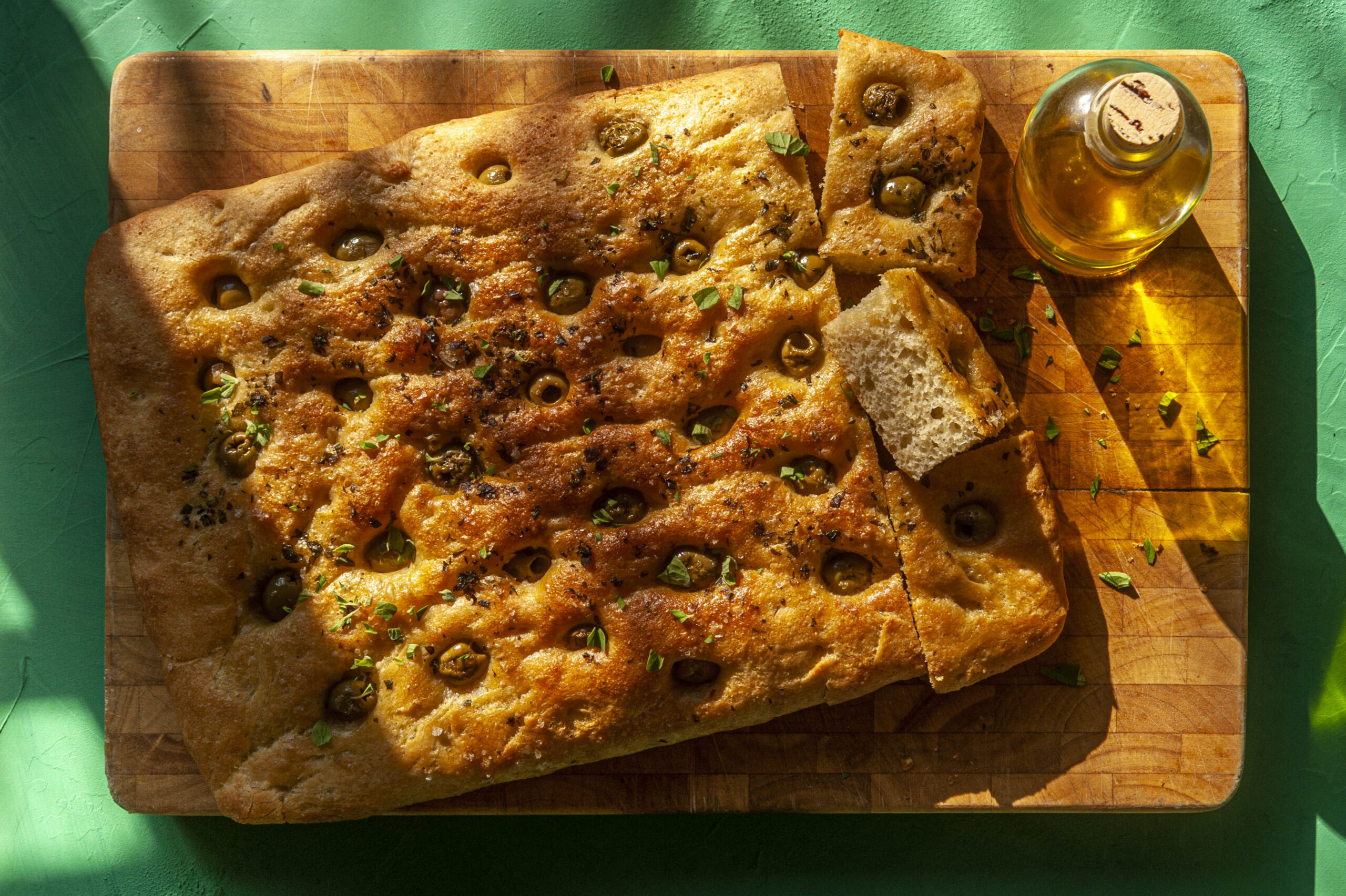
Focaccia: a classic blank canvas recipe
In my house, focaccia is almost a catch-all format for any ingredient I’m craving or trying to get rid of. The fluffy, airy bread is quick, easy, and malleable.
Remember what I said about using sun-dried tomato oil in focaccia dough?
The same principle applies here.
Replace some of the water in your focaccia dough with olive brine and you’ll end up with bread that’s subtly seasoned from the inside out. The olive flavor becomes more pronounced, the dough develops extra character, and every bite feels a little more savory.
Top it with sliced olives, flaky salt, and crumbles of blue cheese if you’re feeling ambitious.
The result tastes like the world’s best olive bar transformed into bread.
Which, when you think about it, is a pretty compelling argument for not pouring that jar down the drain.
The dirty martini trend may eventually fade. Food trends always do.
But olive brine has been quietly seasoning dishes long before social media discovered martinis, and it will continue doing so long after the next cocktail craze arrives. The next time you finish a jar of olives, don’t think of the liquid at the bottom as leftovers.
Think of it as your next ingredient.