Summary
It is just past 9pm in Kyiv. Here’s where things stand:
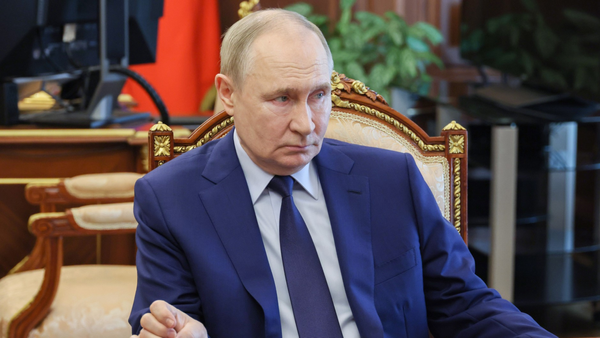
The European Commission on Friday urged EU member states to reassess the terms on which they grant visas to Russian travellers and to root out applicants that pose a security threat. “We should not be naive, Putin’s aim is to destroy the EU and he would like to attack us where we are weakest,” warned EU home affairs commissioner Ylva Johansson.
Russia said on Friday it was dispatching reinforcements to the Kharkiv region in eastern Ukraine where Kyiv’s forces have announced robust gains as part of a broader counter-offensive. State media broadcast footage of columns of Russian tanks, support vehicles and artillery travelling along paved roads and dirt tracks, emblazoned with the letter “Z”, the symbol of Moscow’s invasion.
The general staff of the Ukrainian armed forces said on Friday that it had pushed back against Russian attacks near 10 settlements, the Kyiv Independent reports. It added that Russian forces had launched more than 12 missiles and more than 12 airstrikes on Ukrainian territory in the last 24 hours.
Shelling has destroyed power infrastructure at the Ukrainian city of Enerhodar where staff operating the Russian-held Zaporizhzhia nuclear power plant live. The shelling posses a growing threat to the plant, the UN nuclear watchdog said on Friday.
EU finance ministers on Friday supported a €5bn ($5bn) loan for Ukraine to help maintain the country’s schools, hospitals and other needed operations in the midst of Russia’s invasion. The €5bn loan agreed on Friday, which will be backed by guarantees of EU member states, is part of an overall €9bn package announced in May.
The EU executive pledged on Friday to devise unprecedented measures in the coming days to address an energy price shock as a result of Russia’s war on Ukraine, including a controversial gas price cap that could further anger the Kremlin. European energy ministers tasked the European Commission with working through the weekend to draw up legal texts that will include emergency funding for consumers struggling to afford soaring bills.
The International Atomic Energy Agency said on Friday conditions at Ukraine’s Zaporizhzhia nuclear power plant are increasingly precarious and that a safety zone around it needs to be established immediately to prevent a nuclear accident. IAEA director Rafael Mariano Grossi said that there is minimal chance of re-establishing reliable offsite power lines to the plant and its Ukrainian operator is considering shutting down the only remaining operating reactor.
A Russian-appointed official in Ukraine’s Kharkiv region announced on Friday that civilians are being evacuated from three of the region’s Russian-controlled territories that have come under threat from a Ukrainian counteroffensive.
Updated
The European Commission on Friday urged EU member states to reassess the terms on which they grant visas to Russian travellers and to root out applicants that pose a security threat.
“We should not be naive, Putin’s aim is to destroy the EU and he would like to attack us where we are weakest,” warned EU home affairs commissioner Ylva Johansson, Agence France-Presse reports.
Johansson warned that civilians could act as spies, saboteurs or provocateurs and alleged that some Russian travellers had sought to harass and humiliate Ukrainian refugees, who have been granted protected status within the EU.
“We can not exclude that people are coming with the aim to provoke, to try to get some social unrest, or to provoke violence or riots or things like that or to try to use propaganda,” she said.
On Friday, the EU formally suspended a 2007 visa facilitation pact that had made it easier and cheaper for Russians to travel to Europe, but stopped short of the full travel ban demanded by some member states.
Johansson said the new rules would still allow passage to vetted dissidents, journalists and humanitarian cases, but that applications for simple tourist and business visas should be “reassessed.”
Just under a million Russians already hold visas for the EU’s Schengen travel area, and the commissioner said member states should also reassess these existing travel documents.