Get all your news in one place.
100's of premium titles.
One app.
Start reading
The Guardian - US
The Guardian - US
World
Joseph Gedeon in Washington

Trump’s Iran war messaging is not winning over Americans – or their representatives

people hold signs that read 'defund this reckless war' and 'we must make our dissent impossible for them to ignore'
Demonstrators hold a protest against the war on Iran next in Times Square in New York City on 22 March 2026. Photograph: Selcuk Acar/Anadolu via Getty Images

Donald Trump has two things to say about his war with Iran. The first is that it’s already over. And second, a symbolic congressional vote to end it – carried by four members of his own party – is a stab in the back that could derail the peace talks he’s conducting for the war that’s already over.

By a 215-208 margin on Wednesday, the US House of Representatives voted to direct the president to withdraw US forces from hostilities with Iran, the first time either chamber has passed such a measure in the little over three months since Operation Epic Fury began on 28 February. By Thursday morning, Trump was on Truth Social calling the vote “unpatriotic” and blaming it on “Trump Derangement Syndrome”.
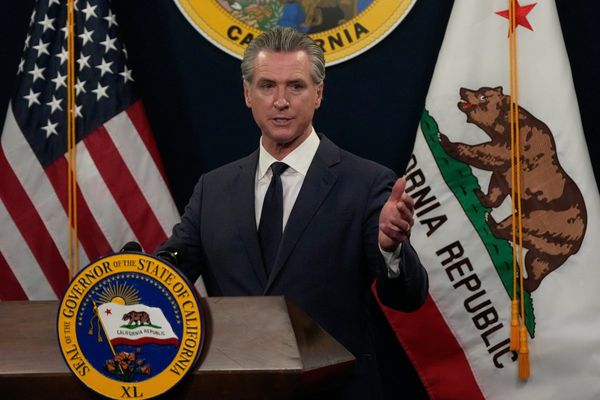
The four Republicans who crossed the aisle, each with different ideologies, don’t exactly fit the bill for such a diagnosis.

Thomas Massie of Kentucky is a libertarian-leaning constitutionalist who has opposed the war from day one, lost his primary to a Trump-backed challenger, and has, in Trump’s estimation, nothing left to lose. Warren Davidson of Ohio is a West Point graduate, former army ranger, and ex-Freedom Caucus member who voted against the war alongside Massie in March, but flipped back until recently.

Brian Fitzpatrick of Pennsylvania, a former FBI agent representing Philadelphia’s suburbs, is well known as a moderate who framed his vote in the plainest possible terms “You either follow the law, or you change the law,” he said. “You can’t violate the law. That’s not an option.”

Tom Barrett of Michigan voted in March against a war powers resolution, saying Trump had “earned the opportunity to resolve this conflict quickly”. By May, however, he had changed his mind, citing the economic pain hitting his constituents. All four lawmakers coalesced for last night’s vote.

But none of this has stopped the administration from declaring, with some confidence, that the war is already over. Marco Rubio, the US secretary of state, told Congress this week that Operation Epic Fury had “concluded”. The Trump administration insists the US is now only conducting “completely defensive” strikes.

And yet gas prices are averaging close to $4.24 per gallon nationwide, per AAA, and nearly $6 in California. The strait of Hormuz, through which roughly 20% of the world’s oil normally flows, remains effectively closed, three months after the first strikes on Iran.

Trump’s own Truth Social post – in which he condemned Wednesday’s vote as unpatriotic – describes active “final negotiations to end the War with the Islamic Republic of Iran”. The war that has concluded is, apparently, still being negotiated to a conclusion.

The absurdity of calling anyone out for noticing the contradiction as disloyal does not appear to be winning over most Americans. A May Economist/YouGov survey found 59% disapproved of Trump’s handling of Iran, while only 31% approved. About two-thirds of Americans told Reuters/Ipsos that rising gas prices had hurt their household finances, and Moody’s Analytics estimates the conflict has cost US households roughly $100bn in aggregate through higher energy costs.

Now attention turns to the Senate, where four Republicans have already broken rank with the administration to advance a similar war powers measure, and a final vote still looms. And should it pass, it would require Trump’s signature.

The Senate reached the simple 50-vote majority after Bill Cassidy, a senator of Louisiana, flipped his vote to yes, days after Trump helped defeat him in the Louisiana GOP primary. The Texas senator John Cornyn, who has since lost in the primary to Trump-endorsed Ken Paxton, is one of three Republicans who have so far sat out the vote, alongside Alabama senator Tommy Tuberville and retiring North Carolina senator and Trump critic Thom Tillis.

Wednesday’s House vote is, as the White House correctly notes, largely symbolic. But symbols have a way of accumulating. In the Senate, the math is moving. The war remains unpopular. The strait of Hormuz is still closed.

Trump is insisting the conflict is over and, in the same breath, that talking about it is unpatriotic. For a growing number of Americans, and their representatives on Capitol Hill, this is not a winning message.

Sign up to read this article
Read news from 100's of titles, curated specifically for you.
Already a member? Sign in here
Related Stories
Top stories on inkl right now
One subscription that gives you access to news from hundreds of sites
Already a member? Sign in here
Our Picks
Fourteen days free
Download the app
One app. One membership.
100+ trusted global sources.