
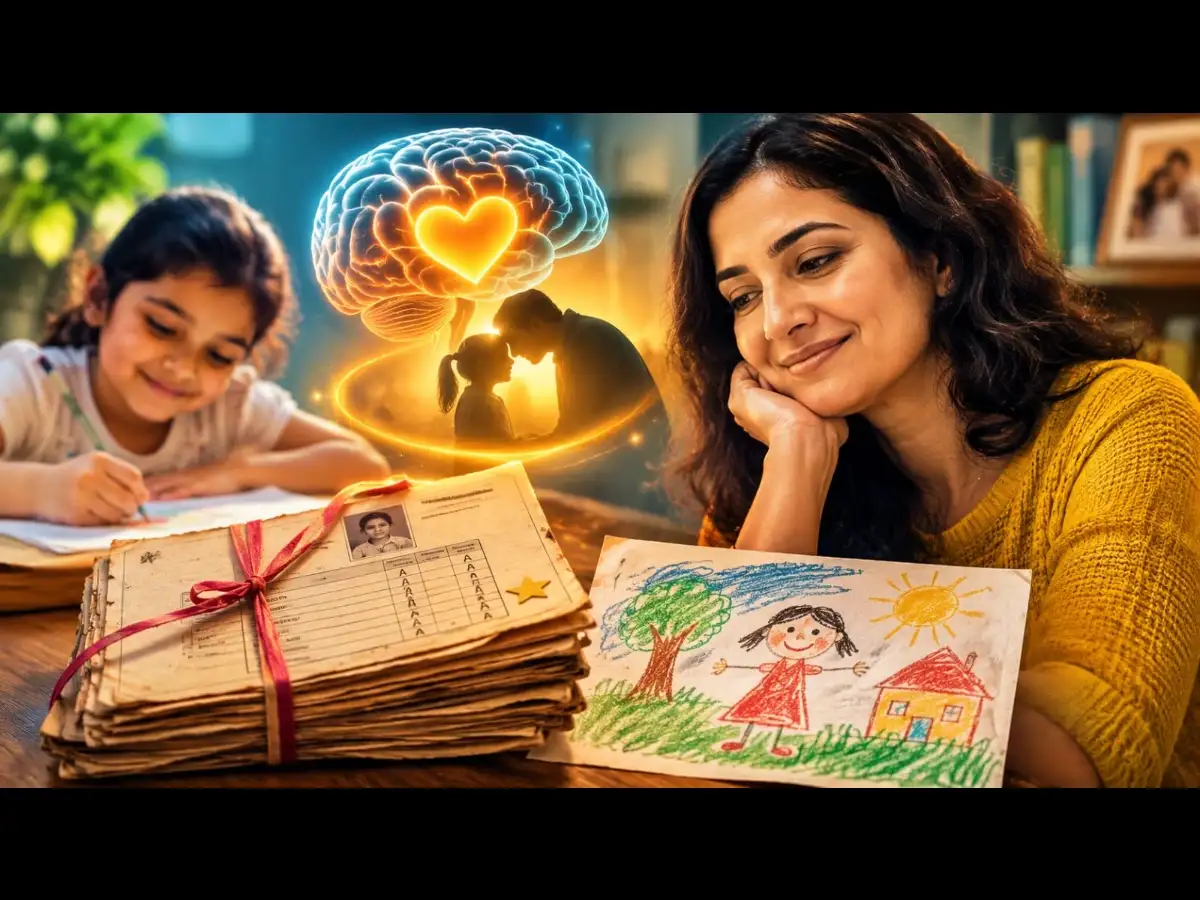
A faded report card, a drawing made with uneven crayons or a tiny handwritten note can look completely ordinary to everyone else. Yet many parents find it surprisingly difficult to throw these things away. Years after a child has grown up, a folder of school papers may remain tucked inside a cupboard, while old drawings continue to occupy refrigerator doors, memory boxes or desk drawers. Psychology suggests that this behavior may involve much more than simple sentimentality. Objects connected to emotionally significant periods can become powerful cues for autobiographical memory, identity and nostalgia.
For parents, these seemingly ordinary pieces of paper can represent not only what a child once created, but also a particular period of family life that cannot be experienced in exactly the same way again.













