The first flight of Donald Trump's new Air Force One was meant to showcase a modern presidential aircraft. Instead, it has reignited one of the biggest ethical and constitutional debates of his second term.
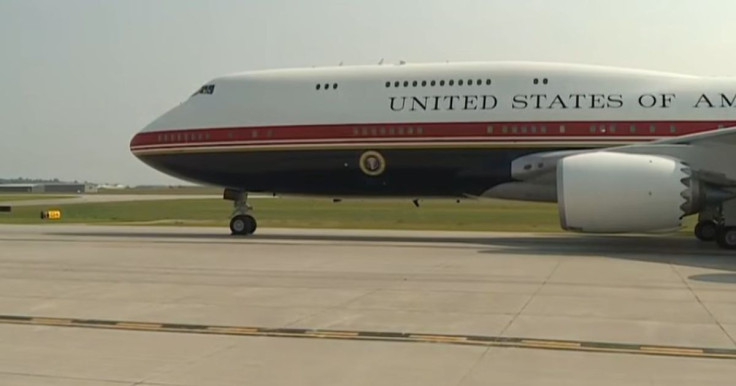
On Wednesday, the US president boarded a retrofitted Boeing 747-8 gifted by Qatar for an official trip to North Dakota, marking the aircraft's maiden voyage as Air Force One. The aircraft, reportedly worth around $400 million (£295.5 million) before modifications, immediately drew fresh scrutiny over whether accepting such a lavish gift from a foreign government sets a precedent that could reshape the limits of presidential power.

Trump dismissed the criticism before take-off, praising the aircraft as 'maybe the greatest commercial plane ever built' and arguing that rejecting the gift would have been foolish. Yet critics from both political parties argue that the arrangement blurs constitutional boundaries, raises conflict-of-interest concerns and could alter expectations about what future presidents may accept from foreign governments.
A 'Bridge' Aircraft With a $400 Million Price Tag
Officially, the aircraft is intended to serve as a 'bridge' Air Force One until Boeing delivers two replacement presidential jets, now delayed until at least 2028. The existing VC-25A fleet has been flying since the early 1990s, creating growing maintenance challenges and rising operating costs.
The Qatari Boeing 747-8 was extensively modified to perform presidential duties, although defence analysts note it still lacks some of the sophisticated communications and defensive capabilities found on the traditional Air Force One fleet. Even so, the aircraft represents a significant technological upgrade over the ageing planes currently in service.
Trump has repeatedly argued that accepting the aircraft was simply a practical decision. 'The country should be very proud of it,' he told reporters before boarding, insisting taxpayers paid only a fraction of what building a new aircraft would have cost.
Emoluments Clause Questions Refuse to Fade
The debate, however, is not centred on the aircraft's luxury or engineering.
Instead, legal experts continue to point towards the US Constitution's Emoluments Clause, which generally prohibits federal officeholders from accepting gifts from foreign states without congressional approval. Richard Painter, who served as chief White House ethics lawyer under President George W Bush, warned of the precedent being set.
'I certainly view this as inappropriate,' Painter said. 'It appears as if there's a quid pro quo of a gift from foreign interests to the president in return for a concession on tariffs, and once this precedent is set, we'll have other countries and industries offering the same. And this is a matter of grave concern for the United States.'
View this post on Instagram
The White House maintains that the arrangement complies with legal advice and federal procedures. Critics, however, argue that accepting such an expensive asset from another government creates an appearance of foreign influence regardless of legal technicalities.
Richard Briffault, a professor at Columbia Law School, highlighted a further complication. 'If the plane is transferred to Trump's presidential library after he leaves office, then it's not really a gift to the United States at all,' he said. Reports indicate the aircraft could eventually become part of Trump's presidential library foundation, a proposal that has fuelled accusations that public office is becoming increasingly intertwined with personal legacy-building.
Costs and Security Concerns Cloud the Gift
Another source of controversy is the aircraft's actual cost to American taxpayers.
Although Qatar donated the original aircraft, converting a civilian luxury jet into a secure presidential aircraft required extensive modifications. Estimates of the retrofit have varied widely, with some reports suggesting costs could approach $1 billion (£754.9 million) once security systems, communications equipment and structural upgrades are included. The administration disputes the higher estimates, saying overall costs remain substantially below what a completely new aircraft would require.
Security specialists have also debated whether a foreign-owned aircraft can ever fully match the protection standards built into the traditional Air Force One fleet. Richard Aboulafia, managing director at AeroDynamic Advisory, warned of the challenges involved in ensuring the aircraft's security.
'You can't rule out the presence of bad actors in this whole process inserting listening devices,' Aboulafia said. 'So basically, to be absolutely certain that there were no listening devices on board, you'd have to rip this plane down to its constituent elements.'
He also questioned the practicality of the arrangement. 'Just the whole idea that this would constitute a valid form of presidential transport is bizarre,' he said. 'Air Force One is not just a plain old jetliner donated by somebody. It is something that takes a massive level of systems integration and a high level of missionization.'