Get all your news in one place.
100's of premium titles.
One app.
Start reading
International Business Times UK
World
Christelle May Napiza

Trump Scores Major Supreme Court Victory as Judges Clear Plan to End Protective Status for Syrian and Haitian Migrants

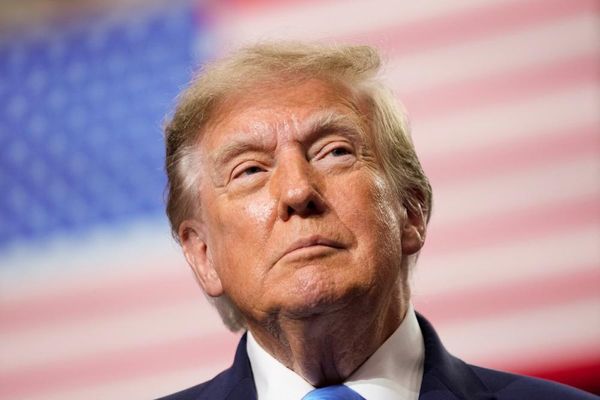
The United States Supreme Court has cleared the way for Donald Trump to strip Temporary Protected Status from more than 350,000 Haitians and 6,000 Syrians, in a ruling that hands the former president sweeping power over the future of hundreds of thousands of migrants living and working legally in America.

In a 6-3 decision along ideological lines on 25 June 2026, the conservative majority held in Mullin v. Doe that federal courts have no authority to review a president's decision to terminate TPS designations. The judgment ends a months-long legal battle in which two federal district courts had blocked the administration's plans, and leaves the White House's control over the programme largely insulated from judicial challenge.
The ruling means that the Trump administration can now move ahead with its plan to end humanitarian protections first granted after Haiti's 2010 earthquake and Syria's civil war, potentially pushing long‑settled families into illegal status, job loss and the threat of deportation.

A Programme Built After Earthquakes and War, Now Dismantled

Congress enacted the Temporary Protected Status programme in 1990, giving the Department of Homeland Security the power to designate a country's citizens as eligible to remain in the US and work if they cannot safely return home due to natural disaster, armed conflict or other extraordinary and temporary conditions.

Haiti received its TPS designation in 2010, shortly after a magnitude 7.0 earthquake struck the country, killing more than 300,000 people and causing catastrophic damage. Syria's designation followed in 2012, when then-Secretary of Homeland Security Janet Napolitano cited deteriorating conditions following Bashar al-Assad's crackdown on anti-government dissenters.

Both designations were repeatedly extended over the following decade. In 2025, then-DHS Secretary Kristi Noem announced the termination of both designations, saying that a new Syrian government was attempting to move the country toward stable institutional governance, and that there were no longer extraordinary and temporary conditions in Haiti that prevented Haitians from returning safely.

The Court's Ruling: Shielding Presidential Power From Review

Writing for the majority, Justice Samuel Alito grounded the decision squarely in statutory text. The TPS statute, he wrote, allows 'no judicial review of any determination with respect to the termination of a TPS designation' under 8 U.S.C. 1254a(b)(5)(A), and the term 'determination' covers both individual decisions and the entire process leading to a final decision, barring all of the challengers' non-constitutional claims.

Alito also rejected the Haitian plaintiffs' equal protection claim, finding that statements cited against the administration, including Trump's remarks accusing Haitians of eating people's pets, were not 'overtly racial' and were 'insufficient to show that the termination of Haiti's TPS designation was based on the race of the Haitian people.'

Alito pointed to an argument the challengers themselves had made as undermining their own discrimination claim: that the current administration had simply terminated every TPS designation that came up for renewal, offering a race-neutral explanation for the government's conduct.

The court's three liberal justices, Elena Kagan, Sonia Sotomayor and Ketanji Brown Jackson, dissented. Kagan wrote that the TPS beneficiaries had asked for only one thing: that they be allowed to remain in the country while they continued to litigate their claims, arguing they were entitled to that relief and should not instead be consigned to 'devastating, and indeed life-threatening, injury'. Kagan concluded that TPS beneficiaries 'may ... be put on the next plane.'

Lower Courts Had Branded Terminations Likely Unlawful

The ruling overturned decisions by two federal district judges who had each found serious legal problems with the administration's actions. In the Haiti litigation, US District Judge Ana Reyes wrote that former Secretary Noem was 'constrained by both our Constitution and the APA to apply faithfully the facts to the law in implementing the TPS programme,' and that the record showed 'she has yet to do that.'

A Washington-based judge concluded in February that Noem had failed to follow the correct procedures in terminating TPS for Haiti, and found evidence the decision was based on 'anti-black and anti-Haitian animus'. The judge pointed, among other things, to a post from Noem reading 'WE DON'T WANT THEM. NOT ONE,' as well as Trump's 2018 description of Haiti as a 'shithole country.'

The plaintiffs alleged further that the government had 'relied on a knowingly false statement' that Noem had consulted with the State Department before making her decision, when in fact she had not. Those procedural objections are now effectively foreclosed by the Supreme Court's ruling.

What The Decision Means For Hundreds Of Thousands

The ruling means the president can end the protected status of Haitians and Syrians without the possibility of judicial review. Migrants living legally in the US from those countries will likely revert to illegal status, meaning they will lose their jobs and face deportation, with many of them forced to leave their American-born children behind.

The State Department currently warns against travelling to either Haiti or Syria, citing widespread violence, crime, terrorism and kidnapping. Both countries, in other words, remain precisely the kind of places TPS was designed to protect people from.

According to advocacy groups, 200,000 Haitian TPS holders are in the US workforce, including 15,000 agricultural workers, 13,000 nursing assistants and 8,000 caregivers. TPS holders are estimated to generate approximately $5.9 billion for the US economy.

White House spokeswoman Abigail Jackson called the ruling a 'tremendous win', saying it 'affirmed what President Trump has always maintained: temporary protected status is, by definition, temporary.' House Representative Tom Tiffany of Wisconsin echoed that sentiment, saying 'over 14 years later, we are finally putting the 'T' back in TPS'.'

The cases now return to the lower courts, which must reconsider their rulings in light of the Supreme Court's decision, though the legal avenues available to TPS holders have narrowed dramatically.

Sign up to read this article
Read news from 100's of titles, curated specifically for you.
Already a member? Sign in here
Related Stories
Top stories on inkl right now
One subscription that gives you access to news from hundreds of sites
Already a member? Sign in here
Our Picks
Fourteen days free
Download the app
One app. One membership.
100+ trusted global sources.