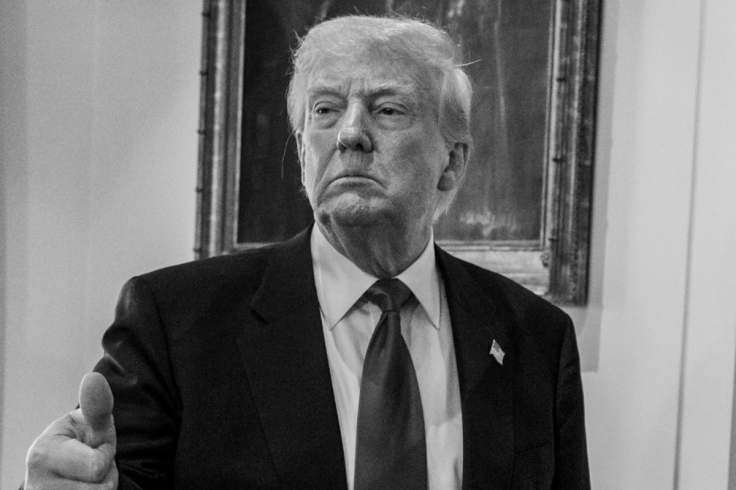
US President Donald Trump's hand movement during his September meeting with Ukrainian President Volodymyr Zelensky has prompted fresh health speculation as a forensic psychologist compared the movement to involuntary muscle contractions sometimes associated with stroke recovery.
Dr John Paul Garrison made the comparison in a video examining Trump's appearance at the United Nations General Assembly.
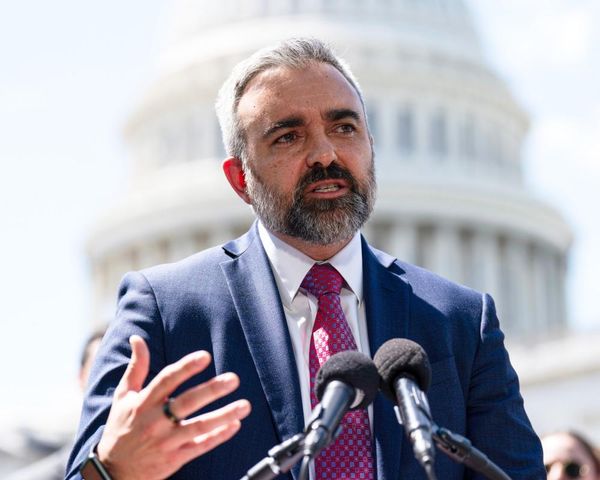
He suggested that the president's hand movement did not appear entirely voluntary. However, his interpretation is not a medical diagnosis. The available footage cannot establish whether Trump experienced a stroke or has an underlying neurological condition.
The meeting took place in New York on 22 September 2026, during the 81st UN General Assembly. Reuters footage shows Trump and Zelensky shaking hands during their bilateral meeting.
Garrison's comments have brought renewed attention to questions surrounding the president's physical movements. Yet distinguishing observable behaviour from medical conclusions remains essential.
Psychologist Examines Trump's Hand Movement
The footage Garrison discussed shows Trump making a distinctive movement with his right hand after shaking Zelensky's hand.
Garrison interpreted the movement as potentially involuntary rather than deliberate. He compared it with muscle contractions that can occur in certain neurological circumstances.
'Now, my interpretation is very different. To me, this does not look voluntary at all. To me, this looks like involuntary muscle contractions,' he said.
Garrison also suggested that certain movements following a stroke can affect the wrist and fingers. He argued that the movement visible in the footage resembled this pattern.
However, the comparison does not establish that Trump experienced a stroke. The footage also does not independently show that the movement resulted from a neurological condition.
Garrison also examined Trump's facial expression during the incident. He suggested that the president did not appear to be experiencing pain because he did not visibly wince.
The psychologist nevertheless interpreted Trump's subsequent behaviour as evidence that he appeared aware of his hand movement. He said Trump seemed to acknowledge something was happening before continuing with the meeting.
These observations remain Garrison's personal interpretation of the recording. Facial expressions and isolated movements cannot reliably establish an individual's medical condition.
The distinction matters because involuntary movements can have different explanations. A recording alone cannot determine their cause, particularly without a clinical examination and relevant medical history.
The footage therefore provides material for discussion, but not sufficient evidence for a medical conclusion.
Oval Office Footage Raises Further Questions
Garrison also discussed footage from a separate Oval Office appearance. He claimed Trump's left hand showed movements similar to those he identified in the UN recording.
The psychologist said the president appeared to have difficulty positioning or moving his fingers. However, this interpretation has not been independently established through medical assessment.
Garrison also noted Trump's right hand positioned beneath the Resolute Desk, described it as a change in behaviour, and suggested it deserved further examination.
Nevertheless, the position of a person's hand during a public appearance does not establish an underlying medical problem. The footage alone cannot determine whether the movement or positioning was intentional.
Garrison subsequently turned his attention to Trump's ability to maintain attention during conversations. 'Something that's been very apparent recently is that President Trump's ability to sustain attention is totally gone,' he said.
He argued that Trump often looked away when others began speaking. Garrison interpreted these moments as possible signs of difficulty maintaining attention.
He also suggested that the president appeared more engaged when discussions involved subjects that interested him. These comments represent Garrison's assessment of selected footage. They should not be interpreted as evidence of cognitive impairment or a neurological diagnosis.
Attention and concentration involve multiple cognitive processes. Assessing potential difficulties requires considerably more information than observing selected moments from public appearances.
What Official Medical Information Says
Questions surrounding Trump's health have previously attracted public attention. However, the available official medical information provides important context for assessing new claims.
On 29 May 2026, the White House published a memorandum detailing Trump's annual physical examination. The examination had taken place at Walter Reed National Military Medical Center on 26 May.
The president's physician described his neurological and overall physical function positively. The memorandum did not establish a diagnosis of stroke.
However, the examination occurred months before the September meeting with Zelensky. Its findings should therefore not be treated as a definitive assessment of every subsequent movement.
The distinction between official medical reporting and external commentary matters. Garrison's interpretation does not carry the same evidentiary weight as an examination conducted by qualified medical professionals.
His comments also raise questions about the limitations of analysing political figures through video recordings. Public appearances provide only brief glimpses of an individual's behaviour.
Camera angles, gestures, posture and the circumstances surrounding an interaction can influence how movements appear. Without additional clinical information, observers cannot reliably identify the cause.
The president's medical condition cannot be determined from the recordings discussed in Garrison's video. For now, the psychologist's comments remain an interpretation rather than a confirmed medical finding. The September footage shows Trump making a particular hand movement, but it does not explain why.
Any suggestion of a stroke or neurological disorder should therefore be treated cautiously unless supported by credible medical evidence.
The distinction is essential when reporting on public figures' health. Speculation can attract attention, but it should never be confused with an established diagnosis.