Get all your news in one place.
100's of premium titles.
One app.
Start reading
International Business Times UK
World
Marty Vergel Baes

Trump Asked XI To Buy US Weapons as Taiwan's $14BN Arms Deal Remains on Hold, Envoy Says

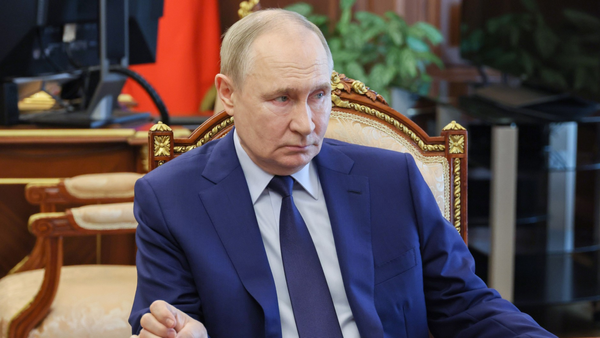
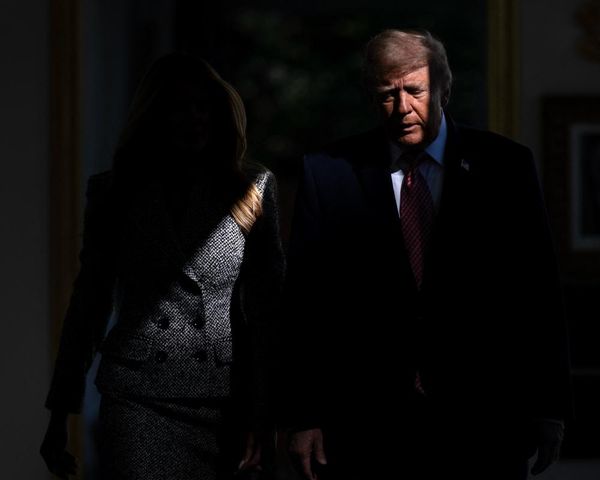
US President Donald Trump asked Chinese leader Xi Jinping whether Beijing would be interested in buying American weapons during their latest talks (Credit: The National Desk/YouTube)

US President Donald Trump asked Chinese President Xi Jinping whether Beijing would be interested in buying American weapons during their latest talks, according to US Ambassador to China David Perdue, an unusual exchange disclosed as Washington continues to hold back a roughly $14 billion (£10.5 billion) arms package for Taiwan.

Perdue's account, reported by the New York Post following Xi's three-day state visit to Washington, adds a striking detail to negotiations in which weapons have become one of the most sensitive issues between the world's two largest economies.
While Trump reportedly raised the prospect of China buying US military equipment, Taiwan is still waiting for his approval of weapons intended to strengthen the island amid growing Chinese military pressure.

The contrast comes after Trump and Xi concluded their Washington summit without announcing a major breakthrough on Taiwan.

Beijing claims the democratically governed island as Chinese territory and strongly opposes US weapons sales to Taipei, while Taiwan rejects Beijing's sovereignty claims. Washington maintains unofficial relations with Taipei and supports its ability to defend itself.

Trump Raised US Weapons With XI

Perdue disclosed the weapons conversation after the summit, saying Trump had asked Xi whether China wanted to purchase American military equipment.

The ambassador presented the exchange as part of the two leaders' broader discussions rather than an announced arms agreement, and there has been no indication that Beijing expressed interest.

The remark stands out because military sales are a major point of tension in US-China relations. Beijing has repeatedly demanded that Washington stop selling arms to Taiwan, which China regards as a core sovereignty issue.

Xi raised Taiwan during his Washington talks with Trump, telling the US president that he hoped Washington would maintain what Beijing describes as the 'correct position' of opposing Taiwanese independence. Perdue, however, has said US policy has not changed.

He said Washington wants peace across the Taiwan Strait, opposes coercion and does not support Taiwanese independence. The longstanding US 'one China' policy is guided by the Taiwan Relations Act, the three US-China Joint Communiqués and the Six Assurances.

Under the Taiwan Relations Act, Washington makes defence equipment and services available to help Taiwan maintain sufficient self-defence capabilities.

Taiwan's $14BN Arms Package Still Awaiting Trump

The immediate question for Taipei is what happens to its pending weapons package. Trump's administration approved an $11 billion arms sale to Taiwan in December 2025, described by Reuters as the largest ever, while a second package worth roughly $14 billion has remained in abeyance since Trump met Xi in Beijing in May.

Trump has not publicly committed to a timetable for approving the latest package. Perdue told Fox News after the Washington summit that he did not know when the sale would be signed, saying Trump 'has a schedule of his own'.

The delay has attracted particular attention because Xi was expected to push Trump to halt or further restrict US arms sales to Taiwan. Reuters reported before the summit that Beijing was preparing to invoke the 1982 US-China communiqué as part of that pressure.

Taipei Says Washington Understands the Threat

Taiwanese officials have sought to project confidence despite the delay. Deputy Foreign Minister Francois Wu said after the summit that supplying Taiwan with enough weapons to defend itself was in America's own interests, linking the island's security to its globally important semiconductor industry.

Taiwan is a major producer of advanced chips used in artificial intelligence and other technologies.

Taiwan Deputy Foreign Minister Chen Ming-chi said on Sunday that Washington 'very much' understands Taiwan's defence requirements and the military pressure it faces from China. Taipei has maintained continuous communication with US officials over the issue.

The stakes extend beyond the value of one weapons package. China has intensified military activity around Taiwan, while Taipei has been modernising its forces with drones, missiles and other systems designed to make an attack more difficult.

Recent Taiwanese exercises featured joint combat operations involving attack drones and conventional weapons for the first time.

For now, Trump's reported question about selling weapons to China has produced no known deal, while the far larger $14 billion package sought by Taiwan remains pending. That leaves Taipei waiting for a decision as Washington attempts to preserve relations with Beijing without formally changing its longstanding Taiwan policy.

Sign up to read this article
Read news from 100's of titles, curated specifically for you.
Already a member? Sign in here
Related Stories
Top stories on inkl right now
Our Picks
Fourteen days free
Download the app
One app. One membership.
100+ trusted global sources.