
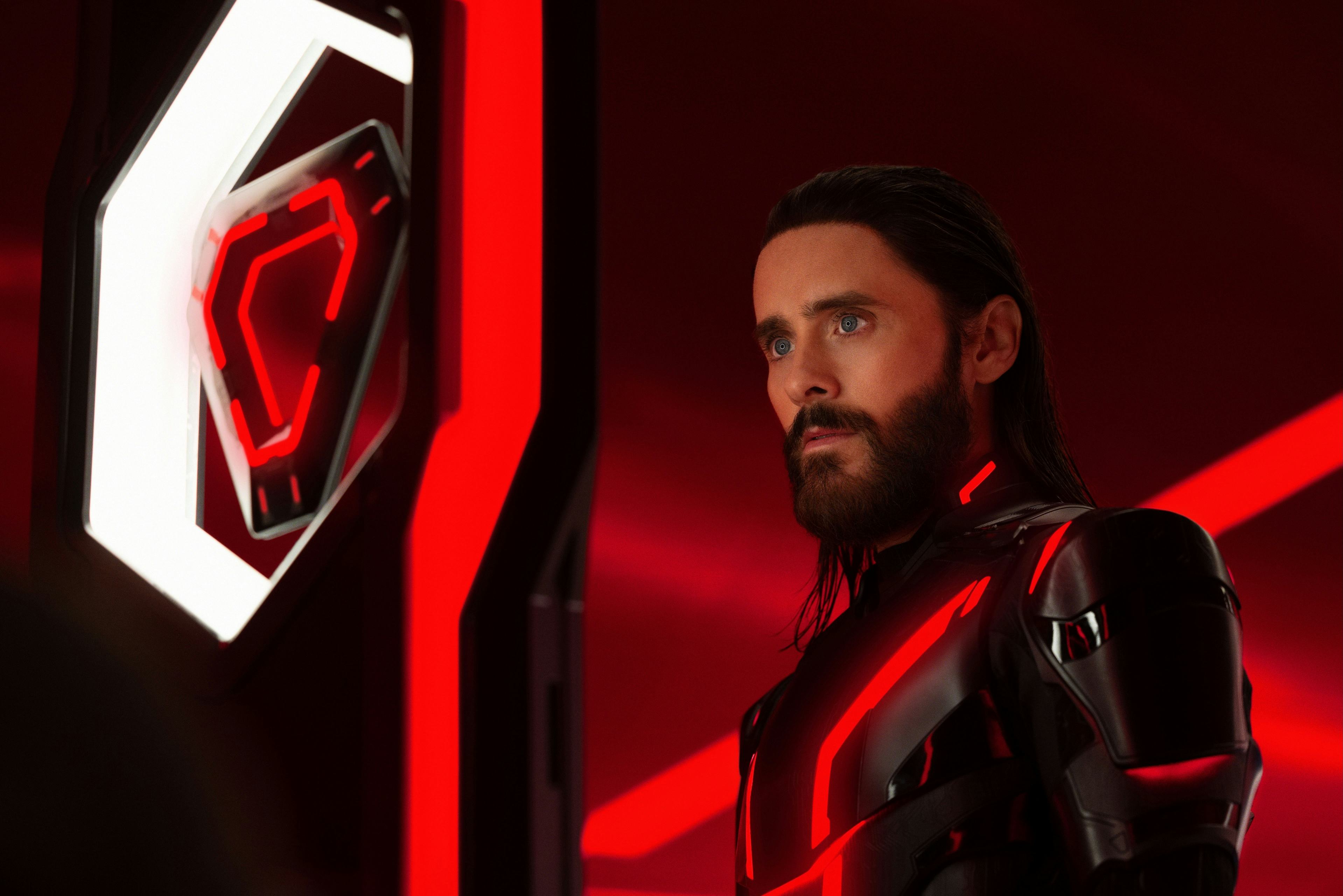
If you dislike spectacle for the sake of spectacle, you won’t like Tron: Ares. The propulsive new sequel, coming 15 years after Joseph Kosinski’s Tron: Legacy, and 43 years after the 1982 classic that started it all, is a very particular kind of modern cinematic beast. Director Joachim Rønning aims to please longtime fans. He aims to do something new with the franchise. And, it seems, Tron: Ares has a mind of its own, striving to be a modern blockbuster for normies that has something deep to say about artificial intelligence and our need to value the finite nature of life. Technically, the movie accomplishes all of these things, and it does so while being an in-your-face, action-packed thrill ride that doesn’t have a lot of time for nuance.
At one point in the movie, the titular AI Ares (Jared Leto) debates with another AI, Athena (Jodie Turner-Smith), about the difference between their directives and their purpose. Tron: Ares clearly has one directive: to put as much slick Tron-action on the screen as possible, while not worrying the audience too much with how or why it's happening. Does the film have a higher purpose beyond this? Did it need one?









