
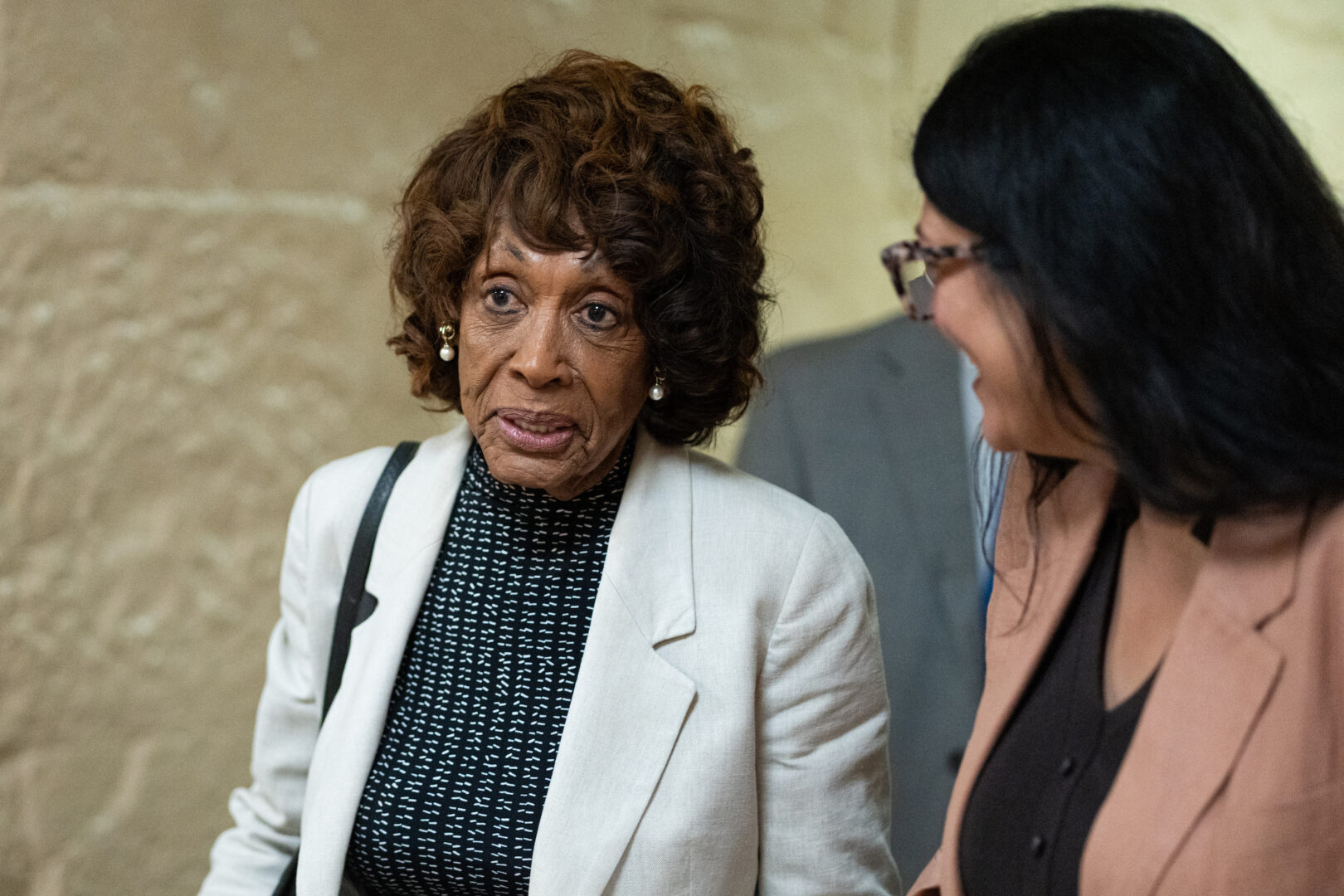
The two Illinois Democrats who may challenge Rep. Maxine Waters for their party’s top slot on the House Financial Services Committee in the new Congress would focus on issues that haven’t been traditionally front and center for that panel — namely climate change and artificial intelligence.
Younger voices within the Democratic Caucus have called for less deference to seniority on committees, especially when it comes to game-changing, generational policy issues like climate and AI.
But that’s not to say that Reps. Sean Casten, 54, or Bill Foster, 71 — the former’s hat is officially in the ring while the latter is still mulling it over — would have an easy time knocking off the 88-year-old Waters.
The veteran California Democrat, now in her 18th term, is the first Black lawmaker and the first woman to lead Financial Services. She enjoys strong support from the influential Congressional Black Caucus, and from committee Democrats up and down the dais — from senior members like Reps. Brad Sherman, a fellow Californian, and Emanuel Cleaver II of Missouri, to younger committee voices like Ritchie Torres of New York.
“At a moment when President Trump and his Administration are gutting housing programs, dismantling consumer protections, eroding the independence of our financial regulators, and engaging in widespread conflicts of interest, no Member is more experienced, more effective, or more prepared to lead our fight than Congresswoman Waters,” most of the committee’s Democrats wrote in a draft letter to colleagues dated Oct. 21.
If she wins another term as top Democrat, Waters has expressed interest in building on the bipartisan housing law enacted over the summer by substantially increasing federal spending on housing. She has been a vociferous defender of the Consumer Financial Protection Bureau and would likely advance legislation to bolster community development financial institutions.
Waters enjoys strong institutional support and will be difficult to beat, said James Maloney, a longtime financial services industry consultant who co-founded Tiger Hill Partners.
“It’s a tough road” for Waters challengers, said Maloney, who worked on Democratic congressional campaigns earlier in his career. “She has a strong record on accountability, consumer protection and housing matters.”
And while not traditionally a prolific fundraiser, typically lagging well behind her colleagues as a dues-paying member of the Democratic Congressional Campaign Committee, she’s done her fair share of fundraising for members of her party’s Frontline and “Red to Blue” programs.
According to an internal DCCC accounting in August, Waters had rounded up $642,000 on behalf of those vulnerable incumbents and candidates seeking to flip GOP seats, outperforming Foster and Casten at least at that point in the cycle.
Casten was alone among the three in exceeding his fundraising target on behalf of the DCCC, however, bringing in more than $750,000 and directing almost $194,000 to Frontline and Red-to-Blue candidates.
Foster and Casten have each outraised Waters overall through their personal accounts, bringing in about $2.5 million across their campaign committee and leadership PACs this cycle. That compares to a little more than $1 million for Waters through the most recent quarter ended Sept. 30, according to Federal Election Commission filings.
And each have contributed $380,000 directly to the DCCC, outpacing their required member dues. Waters had been lagging substantially behind her colleagues until earlier this month when she hit $350,000, Politico reported, though that’s still short of her goal as a senior committee Democrat.
Waters’ largest contributors, according to a tally from OpenSecrets.org, include employees with BlackRock, the massive $15 trillion-plus asset manager; America’s Credit Unions; the insurance agents group; insurer Aflac; and two housing groups, the National Multifamily Housing Council, which represents rental unit owners and developers, and the National Association of Home Builders.