Get all your news in one place.
100's of premium titles.
One app.
Start reading
The Economic Times
The Economic Times

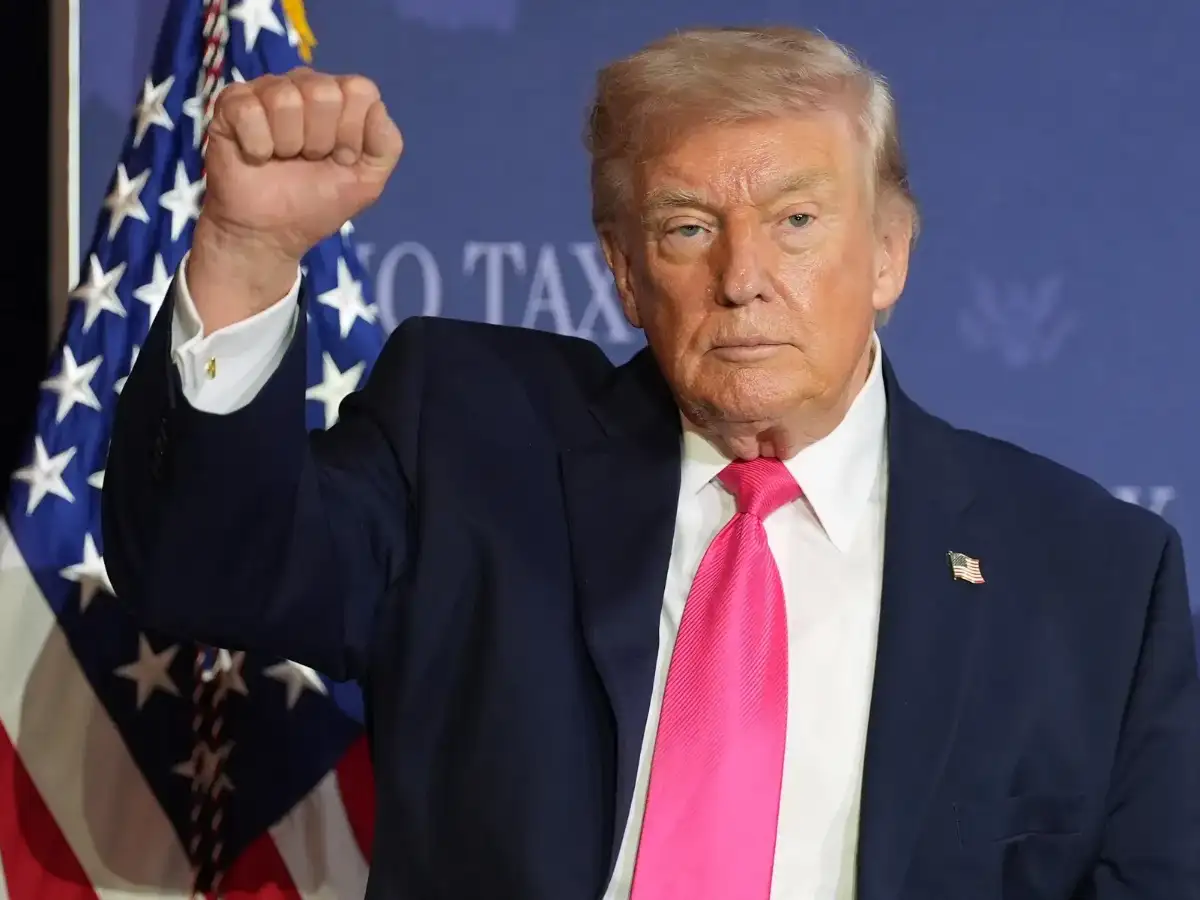
To the Situation Room, now! With new message, Trump stirs Iran cauldron again

US President Donald Trump said on May 29 that Iran must commit to never developing a nuclear weapon and ensure unrestricted shipping movement through the Strait of Hormuz, while indicating that discussions involving Tehran, Washington and international agencies were moving towards a possible understanding on key security issues in the region.

In a post on Truth Social, Trump said the Strait of Hormuz should remain open without any restrictions or tolls for commercial shipping traffic in both directions. He also claimed that naval restrictions imposed earlier in the region would be lifted, allowing stranded ships to resume movement.

Trump further said any water mines present in the strategic waterway would be removed or destroyed in coordination with Iranian authorities. He claimed that US naval operations had already neutralised several mines in the region.

Also read | US inflation rises to 3.8% in April, highest level in nearly 3 years

"The enriched material, sometimes referred to as “Nuclear Dust,” which is buried deep underground with virtually collapsed mountains, caused by our powerful B2 Bomber attack 11 months ago, sitting on top of it, will be unearthed by the United States (which, it is agreed, is the only Country, along with China, with the mechanical capability of doing so!), in close coordination and conjunction with the Islamic Republic of Iran, plus the International Atomic Energy Agency, and DESTROYED. No money will be exchanged, until further notice. Other items, of far less importance, have been agreed to," Trump's post read.

"I will be meeting now, in the Situation Room, to make a final determination. Thank you for your attention to this matter!" he signed off.

Responding to the post, Iranian news agency Fars, citing sources, said that Trump's comments are an "attempt to portray a fabricated victory". Fars rejected the comments about a possible agreement with Iran as a "mixture of truth and falsehood".

Iran's arrangements for reopening Hormuz could include monitoring and inspection of ships, provision of services and security measures, Fars said.

Trump's and Fars' remarks come amid heightened geopolitical tensions in West Asia and renewed global concerns over Iran’s nuclear programme, maritime security and crude oil supply disruptions.

The Strait of Hormuz remains one of the world’s most critical oil transit chokepoints, handling a significant share of global crude and LNG shipments.

Any disruption in the waterway has historically triggered volatility in international oil markets and raised concerns among major energy-importing nations, including India.

Also read | US goods trade deficit narrows in April on strong exports

Trump also referred to Iran’s enriched nuclear material, saying the stockpile buried underground after a previous US B-2 bomber strike would be excavated and destroyed under international supervision.

He said the process would involve close coordination between the United States, Iran and the International Atomic Energy Agency (IAEA).

According to Trump, no financial exchange would take place as part of the proposed arrangement until further decisions are taken.

He added that several other issues had also been agreed upon, though he did not elaborate on details.

The US president said he would meet officials in the Situation Room before taking a final decision on the matter.

The comments assume significance as tensions between the US and Iran have remained elevated over Tehran’s nuclear activities, sanctions and regional security concerns.

Recent developments in the Middle East have also intensified fears of escalation that could impact global trade routes and energy prices.

International crude oil markets have remained highly sensitive to developments surrounding Iran and the Strait of Hormuz. Analysts have warned that any prolonged uncertainty in the region could affect fuel prices, shipping costs and supply chains globally.

India, which imports a majority of its crude oil requirements, has been closely monitoring developments in the Gulf region as volatility in oil prices has direct implications for inflation, fuel costs and the country’s trade balance.

Sign up to read this article
Read news from 100's of titles, curated specifically for you.
Already a member? Sign in here
Related Stories
Top stories on inkl right now
One subscription that gives you access to news from hundreds of sites
Already a member? Sign in here
Our Picks
Fourteen days free
Download the app
One app. One membership.
100+ trusted global sources.