
Get all your news in one place.
100's of premium titles.
One app.
Start reading
Space
Space
Science
Sharmila Kuthunur

Tiny NASA satellite detects its 1st massive gamma ray burst

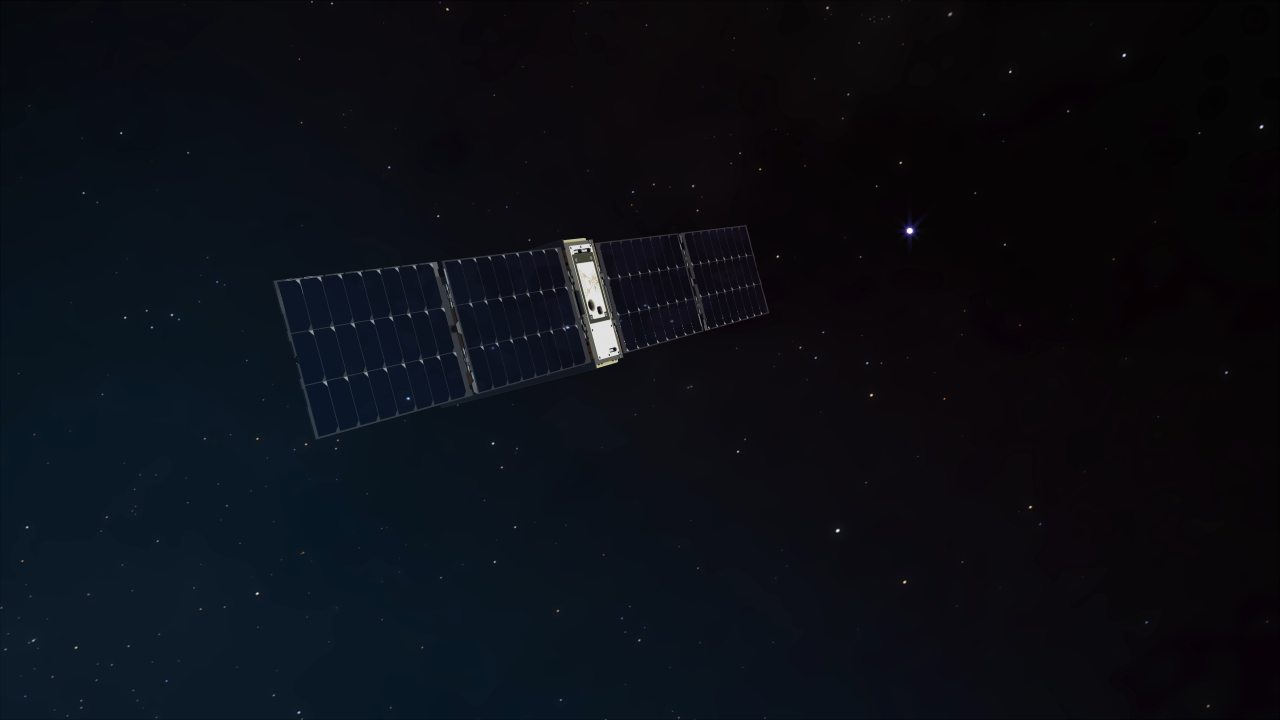
A slim rectangle is winged by two two-paneled solar panels floating in starry black space.

A NASA cubesat designed to search for the universe's most powerful and violent explosions has successfully detected its first massive burst, space agency officials announced earlier this week.

BurstCube, a shoebox-sized satellite placed into orbit in April to detect and study gamma-ray bursts, or GRBs, spotted a "mega blast" in the small, dim constellation of Microscopium in the southern sky. The cosmic blast occurred on June 29 and in less than two seconds shone a quintillion times brighter than the sun,  NASA said in a recent statement.

Sign up to read this article
Read news from 100's of titles, curated specifically for you.
Already a member? Sign in here
Related Stories
Top stories on inkl right now
One subscription that gives you access to news from hundreds of sites
Already a member? Sign in here
Our Picks
Fourteen days free
Download the app
One app. One membership.
100+ trusted global sources.







