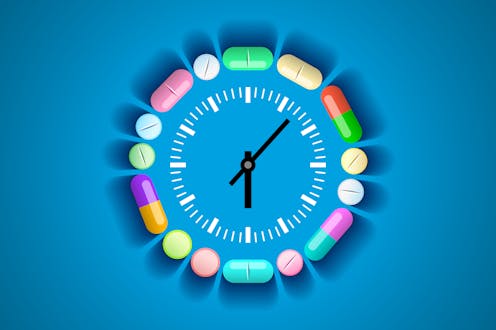
All living organisms on Earth are exposed to a 24-hour day-night cycle. This cycle is the reason why people rest during the darkness of night and are active during the light of day. Consequently, all human body functions also follow this daily rhythm, and the timing of behaviors like exercise or food intake can significantly influence your health. For example, eating at night can lead to weight gain over time because while daytime food intake is used for activities, food intake at night leads to increased fat storage because the body expects to be at rest.
When you take your medications is also influenced by your circadian rhythm. Many drug targets in the body follow a 24-hour cycle. This means that the specific proteins a drug is designed to modify can react differently to the medication over the course of a 24-hour time period. Because how the body responds to a medication can differ depending on whether it is taken during the day or at night, it logically follows that taking medications at specific times could help increase their effectiveness and reduce unwanted side effects.