
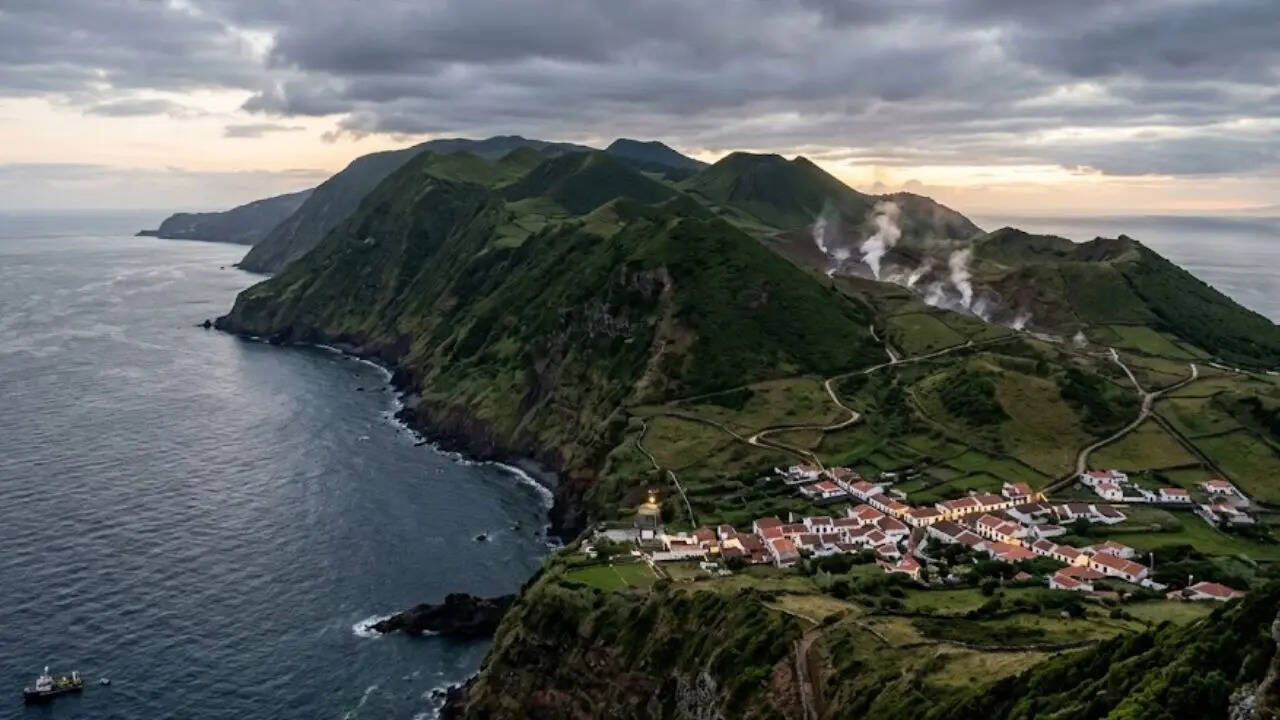
In March of 2022, there was an unexpected seismic crisis in Portugal's São Jorge Island in the Azores province, plunging residents into a state of confusion and fear. The recent publication of an international study in the journal Nature Communications has revealed that the seismic activity was caused by a rapid intrusion of magma at a depth of approximately 26 kilometres beneath the Earth's surface. This resulted in the magma rising to a depth of 1.6 kilometres below the surface of the island, as noted in a study at University College London.
The researchers used a combination of seismometers (both surface-based and seabed), satellite data, and GPS data to identify this ‘failed eruption’. The researchers believe that this event offers another example for volcanologists on how large geologic faults can serve effectively both as paths for magma to travel and as pressure-release valves in times when there are signs of active volcanism. Such a geological resilience highlights how pre-existing tectonic fractures can mitigate volcanic hazards by redirecting subterranean pressure, potentially preventing catastrophic surface explosions despite significant deep-seated magmatic movement.













