Get all your news in one place.
100's of premium titles.
One app.
Start reading
The Guardian - UK
The Guardian - UK
World
Kaamil Ahmed, Yassin Abdumonab, Anna Leach, Prina Shah and Pablo Gutiérrez

‘They showed no mercy’: mapping the Rohingya villages being erased by rebel forces

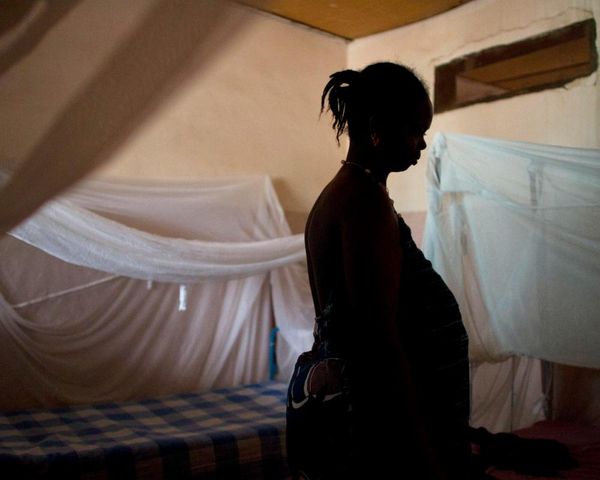
There are at least 10 camps like the one on the paddy fields at Hnget Thay, built after the insurgent Arakan Army (AA) took control of most of northern Rakhine state in 2024. These are where many Rohingya people in the state now have to live. Others hide in the mountains, or flee abroad to the refugee camps of Bangladesh or make deadly boat journeys to Malaysia.

The arrival of more than 155,000 Rohingya in Bangladesh since 2024, which amounts to 25% of the 600,000 estimated to still be in Myanmar, has raised concerns about the very survival of a people who now mostly live abroad as refugees.

The Rohingya are a mostly Muslim minority group from western Myanmar who have faced decades of persecution and clashes with Buddhist nationalists. The word translates as from Rohang – the district that is now Rakhine State. Speaking a language similar to the Bengali dialect of Chattogram (formerly Chittagong) in Bangladesh, they are reviled by many in Myanmar as a foreign people and are denied citizenship by the regime.
In a military crackdown from 2016 to 2017 that led to Myanmar being accused of orchestrating ethnic cleansing, most of the Rohingya population, about 700,000 people, sought refuge in neighbouring Bangladesh. The campaign of massacres unleashed against the Rohingya then is being investigated as possible genocide at the international court of justice (ICJ).

There are now 1.2 million Rohingya in Bangladeshi refugee camps. Since Myanmar’s civil war erupted in 2021, Rohingya remaining in the country have been caught in violence, forced displacement and oppression from both sides – the insurgent AA and government forces, which are fighting each other for control of Rakhine state.

Testimony received by the Guardian and reflected in recent UN reporting provides an insight into the “catastrophic” conditions that the UN human rights chief, Volker Türk, says Rohingya are facing, including torture, gender-based violence, arbitrary arrests, confiscation of land, displacement, forced labour and conscription.

Many of the Rohingya are confined to a makeshift camp, Hnget Thay, to which the AA forced some survivors to relocate after a massacre at Hoyyar Siri. Human Rights Watch documented hundreds of unarmed Rohingya being killed at the village by AA forces.

“This is the end of the Rohingya in northern Rakhine, there is no question about that. It might take time, but the Arakan Army is working quietly to ensure the community has no future there,” says a UN specialist on Myanmar, who requested anonymity as they were not authorised to speak.

“The Rohingya can stay in prison-like camps in appalling conditions for as long as they can bear it, but they will not be permitted to return home,” they say.

An internal UN report has identified at least 800 hectares (2,000 acres) in 23 Rohingya villages that have been seized and repurposed as camps, settlements for other communities or for military infrastructure since 2024, describing this dynamic as linked to the AA’s consolidation of territory under its control.

Muhammad Ares, 18, a Rohingya who now lives in Bangladesh, says: “They used bulldozers to clear out entire residential areas, turning our villages into completely flat, empty fields.

“They cut down all the trees and cleared away every trace of our community, leaving nothing but barren ground. In the areas where they demolished our houses, they cleared the debris and set up their own military camps and outposts.”

The changes in the Buthidaung area of Rakhine happened after the AA took control of much of the region and active fighting abated. Data from the independent conflict monitor Acled shows 12 battles in Buthidaung in 2025, compared with 103 in 2024.

Mohammed Sadik, 26, from Ywet Nyo Taung, says: “They ordered us to stop farming and declared that the land no longer belonged to us; they confiscated the agricultural fields entirely.”

“They forced us to clear roads, dig trenches, and perform heavy labour inside their camps,” he says. “They forced us to work continuously. If anyone collapsed from exhaustion, they were left in the sun.”

All of their farm tools and land were confiscated and the AA authorities refused to return them, Sadik says, even when they explained they needed to grow food to survive.

Video shared with the Guardian by people from Ywet Nyo Taung appears to show the destruction wreaked on the area during this period. The footage was filmed by two locals riding on a motorbike southwards from the main school to the village of U Hla Hpay, which was completely destroyed.

In the footage, they point out landmarks such as schools, mosques, ferry docks, shops and homes. Towards the end of the footage, the person filming points out his own home. Scorched earth is visible and the structures are almost entirely demolished apart from a former bathroom that is partially intact.

Throughout the footage, bricks are seen lined up, often in neat piles, along the side of the road.

In multiple testimonies from Rohingya who were made to work by the AA, they said the forced labour included dismantling Rohingya property to use the materials to build new buildings for the insurgents, including the construction of military barracks, locally known as the AP Battalion, in Ywet Nyo Taung, for housing forcibly recruited Rohingya.

The AA claims to fight in the interests of all Rakhine state’s ethnic groups, and since 2024 has seized control of most of the region. Outwardly, it has proclaimed sympathy for the Rohingya’s suffering but conversely stands accused of emulating the policies of the Myanmar military when it destroyed and confiscated Rohingya land and subjected people to forced labour and conscription, including in the fight against the AA.

Last year, the UN-backed Independent Investigative Mechanism for Myanmar (IIMM) released a report listing seven villages the Myanmar military had destroyed in 2017 and then built bases on. The ICJ, which is expected to deliver a decision in October on whether Rohingya were subjected to genocide in 2017, has previously considered the “systematic expulsion from and destruction of homes” to be an element of genocide.

The report highlighted that land in Myanmar is owned through a leasehold system and that the military exploited laws designed for natural disasters that allowed burned land to revert to the state, stripping away Rohingya ownership. Another law passed in 2018, after the Rohingya exodus, allowed uncultivated land to be taken by the state.

It was under these conditions that 250,000 Rohingya fled to Bangladesh in the early 1990s, first creating the refugee camps that became the world’s largest in 2017.

The IIMM’s head, Nicholas Koumjian, says: “Clearly, those that orchestrated the attacks on the Rohingya had the objective to create ‘facts on the ground’.” However, he adds that they have not confirmed the AA is responsible for the destruction of Rohingya land. “The Rohingya still inside Myanmar seem to be targeted by all sides of the ongoing conflict and caught in the middle of that conflict.”

Aung Kyaw Moe, who was until recently the only Rohingya member of Myanmar’s “national unity government”, a pro-democracy body in opposition to the 2021 military coup leaders that operates in exile, says the Rohingya are facing a “dangerous new phase” for those inside the country and for refugees hoping to return.

“The central issue is no longer whether Rohingya can survive in Myanmar,” he says. “It is whether conditions are being created that will make their permanent displacement and the erasure of their physical, political and historical presence irreversible.

“If villages are erased and land is being transformed while refugees remain outside of the country, then return becomes progressively more difficult.”

The UN report and testimony shared with the Guardian describe how Rohingya were not only displaced from their land but forced to provide men and women to work for, and to train for, the AA.

“I was forced to undergo military training against my will. I never volunteered to join any armed group,” says a 32-year-old Rohingya man conscripted by the insurgents. He described being initially held for a month, during which time he was repeatedly beaten.

“Throughout my detention, I endured constant physical abuse, psychological intimidation and forced labour.”

Another man said his 22-year-old daughter was taken by AA militia, who subjected her to physical and sexual abuse and made her carry out housekeeping duties for them. She also had to undergo military training.

As well as being forced to provide labour and conscripts, testimony from Rohingya who escaped to Bangladesh from Rakhine describe coercion to make regular payments of “taxes” to the AA, confiscation of land and livestock, and restrictions on their free movement. All of these were tactics enforced previously by the Myanmar military.

Tom Dannenbaum, a professor of international law at Stanford University in the US, says a combination of coercion and the dislocation of Rohingya, either internally or abroad, could amount to the war crime of population transfer.

“It’s devastating for any group to be socially dislocated, inflicted with destructive conditions of life, have their property destroyed and seized,” he says. “All of that is part of making the viability of that group socially, as well as physically, ultimately [impossible]. It clearly creates conditions for that group that make it very difficult to sustain.”

Salamat Khan fled from Rakhine state to Bangladesh in 2024. He feels it is impossible to return to Myanmar, as AA fighters ordered him to leave after attacking his village: “The fighters said to us: ‘go to Bangladesh, your homes are gone, go to the [refugee] camps’.”

This independent journalism was supported by theguardian.org

Methodology

UN research identified land and property confiscation sites and camps created to confine displaced Rohingya. Interviews and additional testimony also provided information on where Rohingya villages were destroyed. Satellite imagery was used to analyse changes in these areas from before the Arakan Army’s takeover of these areas in April 2024 and after.

The photo and video of Ywet Nyo Taung were verified through the use of landmarks, notably the large school near the Mayu River, and the shape of the mountains behind the village. Nasa Fire Information for Resource Management (Firms) data was used to confirm the timing of fires in the area.

Sign up to read this article
Read news from 100's of titles, curated specifically for you.
Already a member? Sign in here
Related Stories
Top stories on inkl right now
One subscription that gives you access to news from hundreds of sites
Already a member? Sign in here
Our Picks
Fourteen days free
Download the app
One app. One membership.
100+ trusted global sources.