
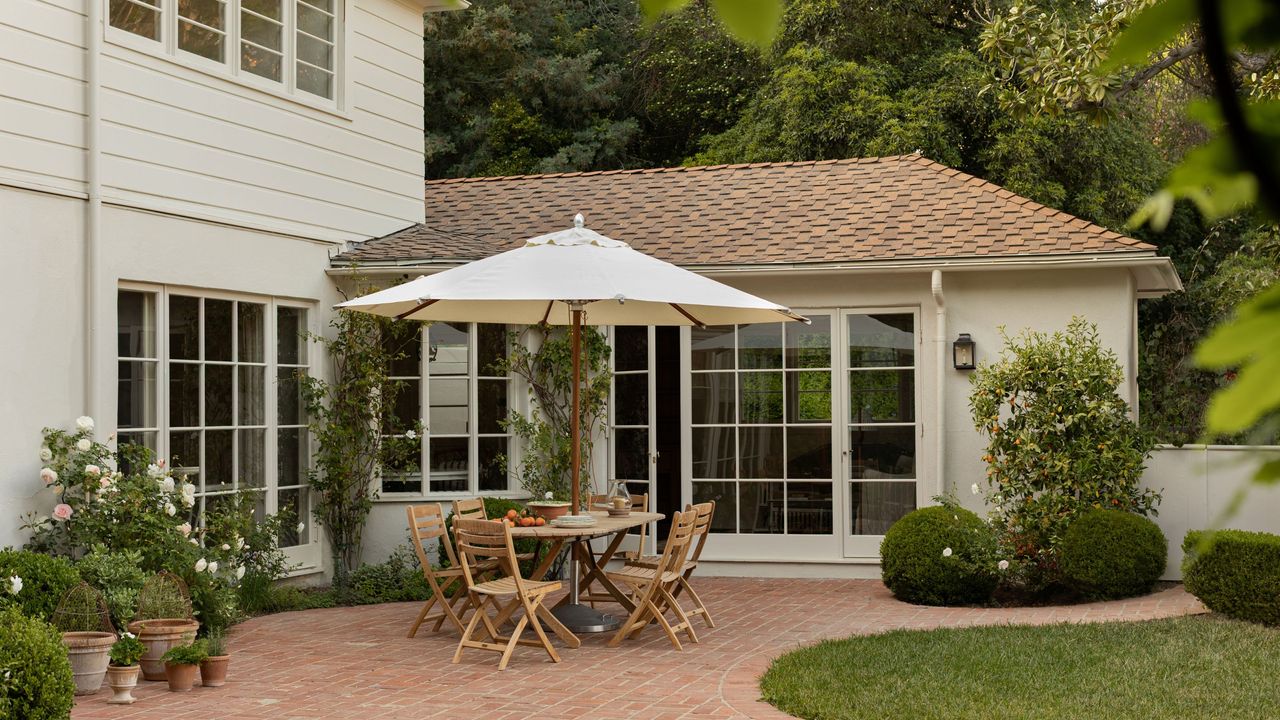
Set on a leafy, terraced plot, this 1939 home, originally designed by renowned California architect Wallace Neff, feels notably distinct from the rest of his portfolio.
While he is best known for his sun-drenched Spanish and Mediterranean-style house design, this property leans more traditional – a nuance that Alex Yeske Interiors embraced, guiding a renovation rooted in restraint.

'We wanted our work to feel like it had both always been there and could stand the test of time for many years to come,' says Alex.

Built in 1939, Alex focused on preserving the original character – uncovering plaster fireplaces and restoring built-ins while introducing a softer, more layered aesthetic influenced by English interiors, thanks to the husband's British roots.
'We were very fortunate that the majority of the home was intact and remained true to the original Neff plans,' Alex explains. 'Only a few spaces had been changed in the 2000s-era renovation.'
'Our renovation work focused on a new kitchen and updating bathrooms, but we threaded elements of Neff’s original designs throughout the house so our renovation work didn’t feel brand new or out of place. We aimed for everything to feel like a continuation of his original designs.'

That sense of continuity extends to the interiors, shaped by the clients’ love of English country style and their desire for a home that felt warm, inviting, and that would serve as a family gathering place.
Layers of pattern, antiques, and natural textures bring softness and familiarity, while the overall palette remains soft, echoing the garden just beyond.
Completed in just over eight months, the project is a testament to trust between client and designer. 'The clients were very hands-on in the renovation execution. They were on site frequently and wanted to learn about how the renovation work was executed, especially with it being a historical home,' Alex adds.

The home opens into a generous L-shaped living room with two distinct personalities cleverly built into it.
'On the lower level of the house, you encounter the large L-shaped living room, which wraps around a prominent corner fireplace,' Alex continues. 'We divided the room into two spaces – one formal and one casual.'
'The color palette connects the two spaces, with lighter grays, blues, and greens on the formal side and richer tones and patterns on the casual side. The custom extra-deep sofa is perfect for curling up to watch a movie by the fire,' she adds.
'It’s very subtle, but the living room ceiling is painted a beautiful pale blue-gray. It has such a pretty, calming effect when seen in person. The color is echoed in the soft furnishings, as well as the drapery.'

Perhaps the most transformative decision in the project was also the simplest: removing almost all overhead lighting.
'This was actually a preference of our clients, and we were thrilled to oblige. We achieved a softer lighting scheme by focusing on lamps, sconces, floor lamps, and a few strategically placed can lights. The key is having multiple light sources within a room to create a warm environment,' Alex explains.
In the living room, with no reliance on the 'big light', a thoughtful mix of lamps and sconces casts a soft, ambient glow across both spaces, enhancing the sense of warmth and intimacy and making the room feel equally suited to quiet evenings as it is to entertaining.

Positioned between the living room and kitchen, the dining room acts as a gentle bridge between indoors and out.
'We always design for everything to flow nicely together from room to room, so there are lots of repeated elements. The dining room's wallpaper can be seen from both the living room and kitchen, and it draws you into the space from either room,' says Alex.
'The pattern resembles the climbing roses growing right outside on the terrace, as does the faux bois console in the window. We used greens and blues throughout the entire house, as well as botanical patterns and natural fiber rugs,' she continues. 'Everything tied back to our original design intent of a calm, refined space, inspired by the gardens.'

The kitchen may be entirely new, but you’d be forgiven for thinking it had always been there. Designed to feel deliberately understated, the space avoids statements in favor of subtle references and enduring materials.
'The goal was for it to be understated and functional,' says Alex. 'The island is one of our favorite elements. It’s a generous 10 feet in length with deep drawer storage on both sides for dishware and open shelving at the far end for pots and pans.'
'Once we took off the 2000s-era fireplace facade in the living room, we discovered the original simple plaster fireplace and used it as a reference in our designs for the plaster hood in the kitchen, mimicking the shape and material,' she adds.

The kitchen island's deep green finish carries through into the adjoining breakfast nook, continuing the home’s nature-led palette.
Bathed in natural light and tucked into a gentle curve, the banquette is a quiet spot to spend the morning. A round pedestal table anchors the space, its silhouette echoing the home’s recurring oval motifs, while woven rattan chairs introduce warmth and a natural texture that nods to both British and Californian sensibilities.
'We found the breakfast nook botanical light fixture on a Swedish marketplace website for under $150 – such a steal,' Alex adds.

Just beyond the kitchen, a former sitting area has been reimagined as a light-filled home library.
'Our clients are avid readers with an impressive book collection, so we turned the sitting area off the kitchen into a library,' Alex says. 'This space is the main entrance to the backyard, so we went for a sunroom feel with the colors, rattan furniture, and a seagrass rug.'
'Many of the ground-floor rooms open up directly into the backyard, so we wanted to maintain that quintessential California indoor/outdoor flow,' she adds. 'We focused on fabrics and materials with botanical nods and used dozens of shades of green throughout the home.'

Unusually, the entryway is located on the home’s upper level, offering an immediate glimpse into its architectural character.
'The home is built into a hillside so the front door actually opens into the top floor of the home, where the bedrooms are, and you then go downstairs to access the public rooms of the home,' Alex explains of the layout.
'The entrance hall is a unique oval shape, with the original railings and light fixture, both with oval motifs. Ovals and round details play a big role in the house,' she adds.

The primary suite unfolds as a soft retreat. The bedroom is anchored by Bennison’s ‘Christmas Roses’ fabric, used on the bed to introduce a quiet, romantic pattern and 'bring a calm and relaxed feeling to the space.'
From there, the palette builds in gentle layers: warm creams, muted greens, and neutrals. 'Patterns are prominent throughout; however, they feel subtle and easy to live with,' Alex adds of the home's pattern story.
The room leans into comfort, with natural textures underfoot, relaxed linens, and a mix of classic silhouettes that nod to British style without feeling overly traditional.

Behind the scenes, the layout was thoughtfully reworked to better suit family life. What were once separate spaces have been combined into a primary bathroom suite with the added bonus of a cohesive dressing space, improving flow while preserving the home’s original character.
'The primary bathroom was formerly both a bathroom and dressing room; we reworked the floorplan entirely, but saved the original built-in cabinetry opposite the vanity,' Alex explains of this generous space.

Alongside the original cabinetry, the bathroom vanity becomes the focal point of the space, adding contrast to the otherwise subtle palette of the room. 'The custom vanity is a favorite element, with bardiglio stone in a beautiful shade of blue-gray,' Alex notes.
Twin sinks and pared-back hardware keep the look classic and unfussy, while traditional sconces introduce a soft, flattering glow in keeping with the home’s layered lighting approach.
Elsewhere, a freestanding tub adds a more traditional note, positioned to feel both functional and restorative.

Just off the entry, the upstairs sitting room was designed as a place to pause.
'The upstairs sitting room leads to two bedrooms, and we wanted this to be a cozy spot to hang out or read a book in,' says Alex. 'We designed a custom corner sectional, piled with pillows that echo the blue-green tones of the entrance hall. The vintage midcentury patterned rug was a favorite find.'
That idea of creating spaces to truly inhabit runs throughout the upper level. 'Nearly every room has a comfortable spot to curl up with a book,' Alex notes. 'We wanted everything to have that quintessential English ease to it – comfortable seating, layers of textiles, nothing too precious.'

In the adjoining guest bedroom, the mood shifts slightly but remains rooted in the same gentle palette.
'One of the guest rooms is enveloped in an Adelphi botanical paper, which completely transformed the space,' Alex describes. 'The historical pattern felt like an ideal way to bring in the greenery from outside.'
Paired with simple furnishings and soft textiles, the effect is cocooning rather than overwhelming. 'The adjoining guest bathroom was reworked to make room for a large built-in tub. The rounded shape of the vanity echoes the oval motif as well.'

Stepping outside, the home’s connection to its setting becomes even more apparent. Set across a gently terraced plot, the garden unfolds as a series of outdoor rooms.
'Nestled into the upper backyard is a hidden teahouse covered in wisteria,' Alex says. 'We imagined this as a place for our clients to spend time while gardening, entertaining, or unwinding. The hand-painted wood floor was inspired by the painted floors in Bunny Mellon’s homes.'
'With so many connection points to the outdoors, we brought in greens and blues as the dominant tones throughout the home. Everything needed to have a sense of softness, even the patterns we used. Our clients are understated individuals, and we wanted their home to reflect that. The color palette shifted slightly in each space, but they all flow together nicely and intentionally.'
Ultimately, it’s the quieter details that leave the most lasting impression. Among them are the original hand-drawn architectural plans by Wallace Neff, now carefully framed and displayed within the home. 'It was incredibly special to see the original plans and details he drew back in the 1930s. We had the drawings framed for our clients to preserve them for years to come,' says Alex.
'Returning elements from Neff’s original design back to their original states felt important and meaningful in a house like this,' she continues. 'We loved getting to bring them back to life after they had been covered up for years. With every project, we always try to stay true to the homes and honor their pasts as best we can.'
Love beautiful design ideas, expert advice, and inspiring decor trends? Sign up for our newsletter and get the latest features delivered straight to your inbox.