
Overheating in UK houses is a common issue during the summer and without air conditioning, ceiling fans or other ways to keep our houses cool, when a heatwave strikes many are stuck with no refuge for cooling.
I'm fortunate that my home has a few design features that help keep it cool in summer, but I do try to be mindful about minimising the possibility of overheating wherever I can.
When my partner and I replaced a single back door of my home with extra-wide patio doors leading to our courtyard garden, I was in two minds. The doors face west and receive afternoon and early evening light, which in turn could cause overheating in our open plan signing and kitchen area. But I've made two key decisions that help minimise the risk.
1. I used our existing landscaping shade our patio doors
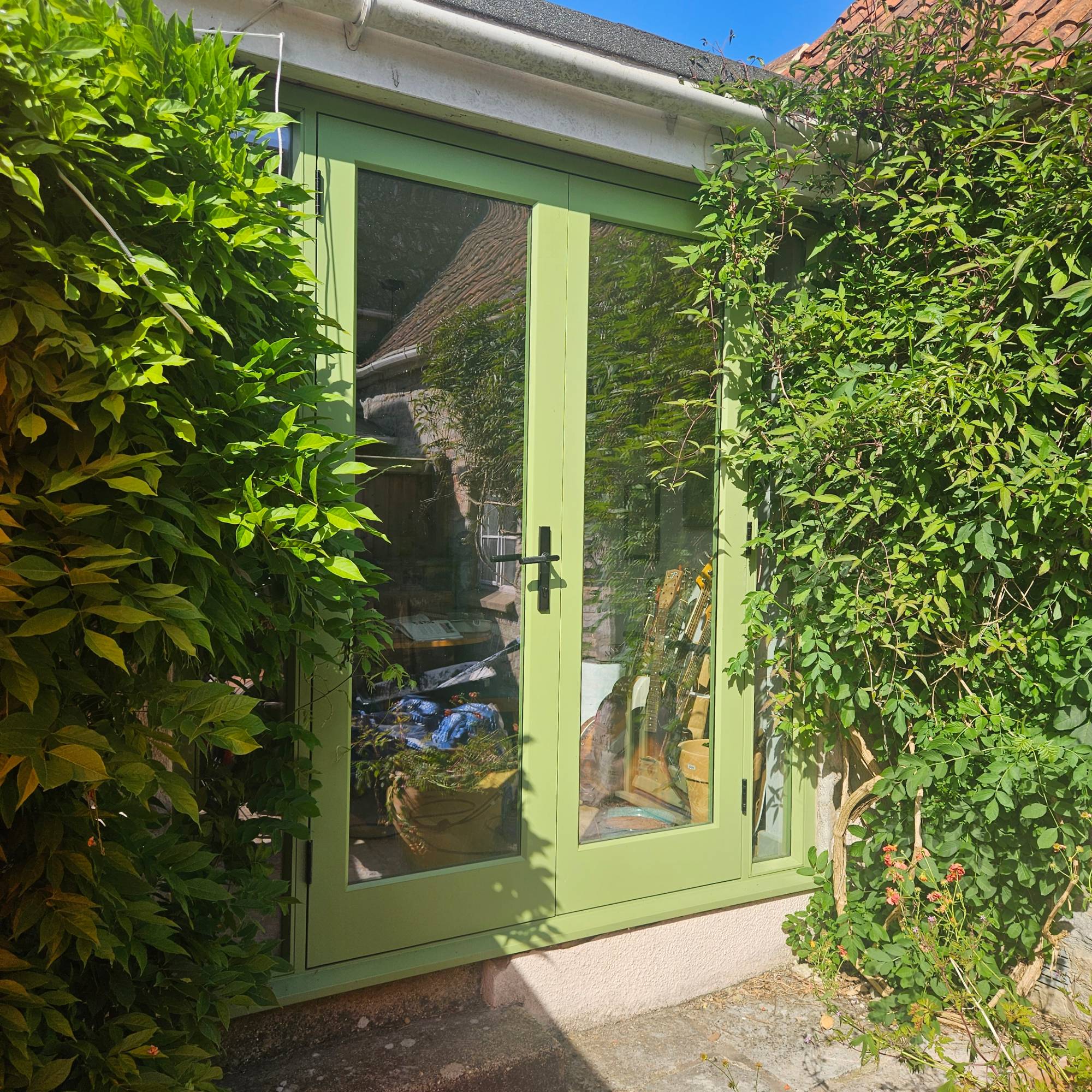
The old single back door was bookended by two well-maintained and established climber plants; a wisteria and a clematis. Both are absolutely stunning in the spring and autumn when in flower, but from February to November, the area is almost continuously shaded by their foliage.
So, when we knocked through to create our double patio doors with glazing panels, I let them go wild. While we do follow advice on pruning and pinning back, I’m not a stickler for keeping them small, in fact I positively love that they have grown so bushy and free. The resulting shade means by the time the sun hits our patio doors there is only about an hour or so before the next plant takes over shading duties.
Another bonus is that trees have been proven to reduce air temperature so even when the doors are open, cooler air is the closest to our interiors.
Although it is hard to age wisteria, I would estimate it to be at least 20 years old, which is why flowers are in abundance twice a year and it grows at an exponential rate. Similarly the clematis must be older than 15 years, given its thick and woody branches. Sadly, younger wisteria won’t produce the same amount of shading we have established and clematis spend their first few years establishing roots, rather than height, but faster growing climbers could be just the trick if you’re looking to emulate our effect.
2. I bought a sail parasol to catch the late afternoon sun
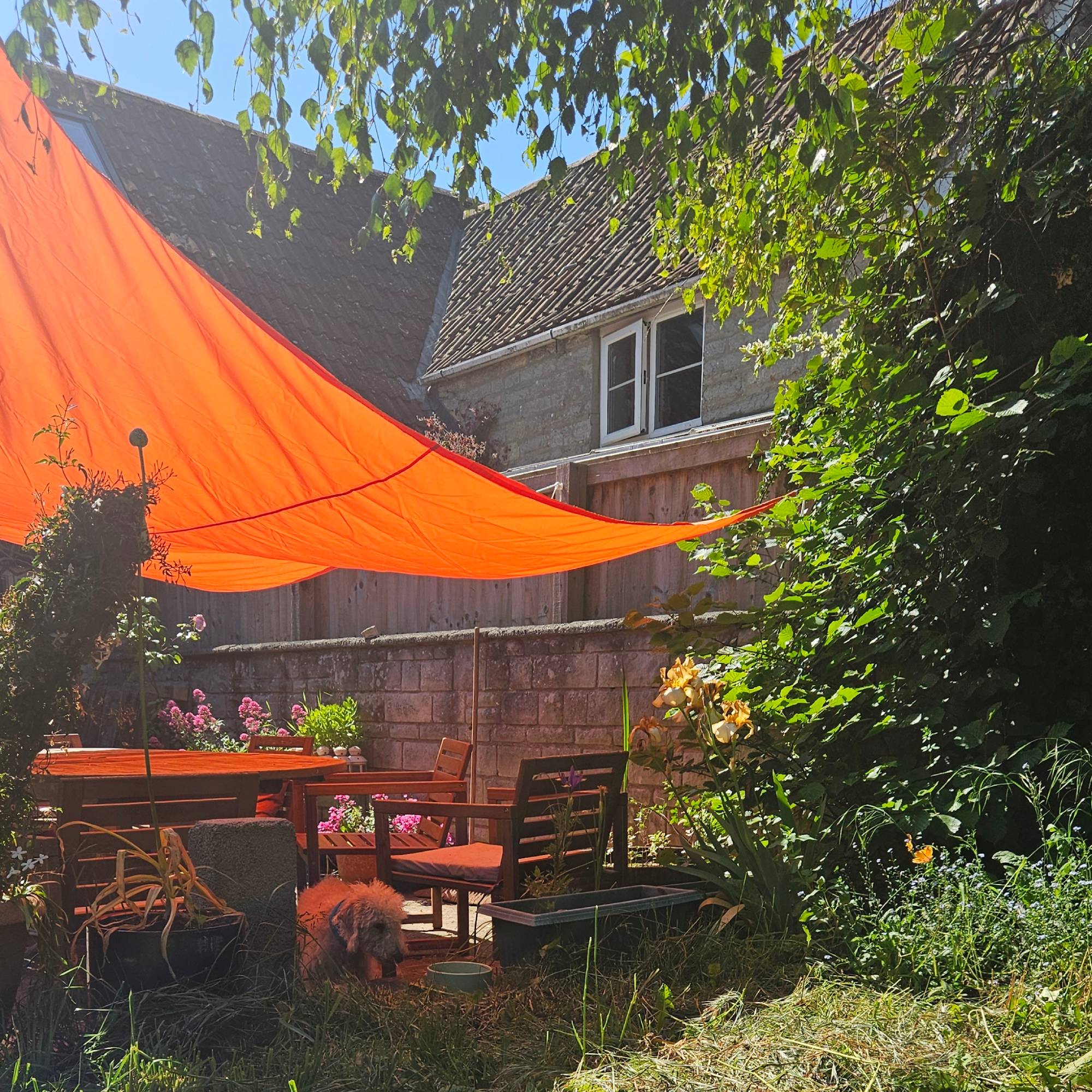
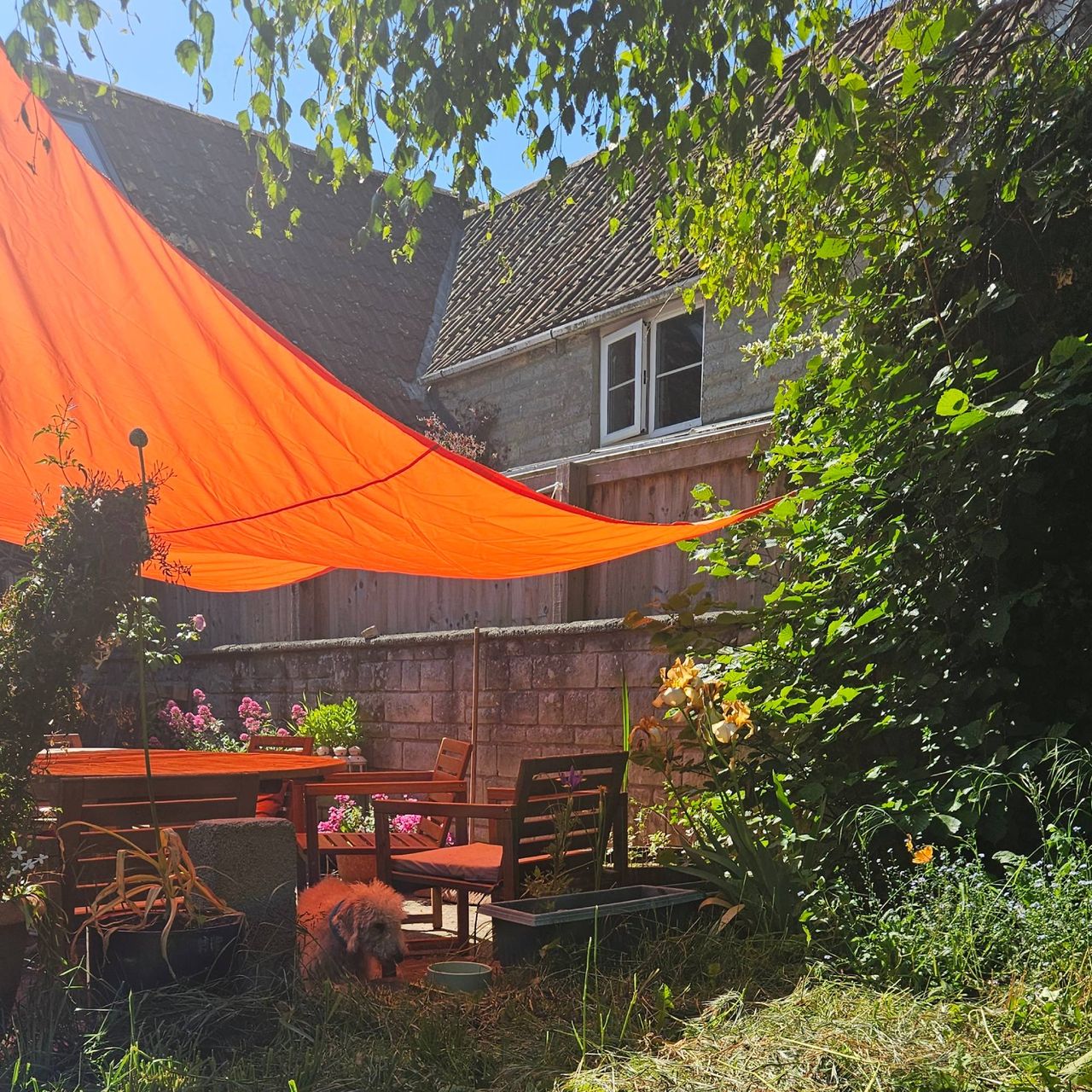
Despite the planting doing a fantastic job, there is a short period when the does hit the patio doors, so, in an effort to also shelter our courtyard garden from the melty highs of a heatwave, we installed a sail shade.
These designs as an option for garden shade have been growing in popularity for sun traps like ours. We learned the hard way that an umbrella-style parasol just doesn’t do the trick when the sun is high and we found we were continuously moving the shade. The sail parasol provides far better coverage and can be taken down really easily when the risk of heatstoke is less.
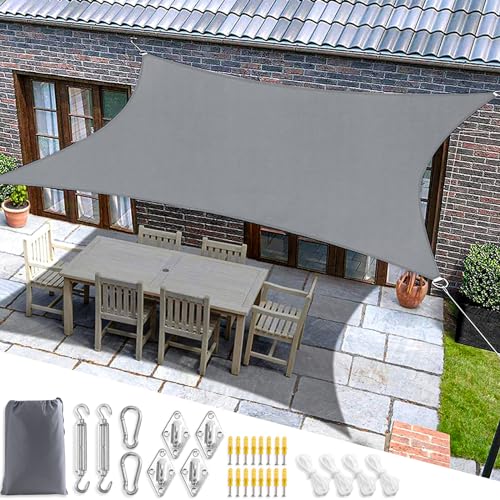
If you are looking for an affordable and non-permanent shading solution, a sail shade will be ideal. As well as providing shade and protection from UV rays, this one is also waterproof should there be a sudden downpour.
Happily for us, the sail shade also shields the patio doors when the sun is moving between the clematis and wisteria.
A more permanent option we might look into in the future is a pergola with climbers growing overhead or with a retractable shade. ‘I'd strongly suggest a wall-mounted or freestanding pergola with an adjustable louvred roof offers both shade and sun. You can also add a screen to the side(s) of the pergola to further combat low sun,’ explains Rob Mead, buying director at White Stores.
Alternatively, bringing out the flat roof when we come to replace it would also be a good investment in adapting our home to long-term climate changes.
‘External overhangs above large windows, heat pumps with a reverse cooling mode, tiled or stone floors for thermal mass, and deciduous planting to the south and west — shade in summer, sun in winter. These are all relatively simple interventions that make a real difference,’ adds Zaeem Chaudhary, director at AC Design Solution.
Why is overheating in UK homes a problem?

Unfortunately, UK housing stock in the last 50 years has predominantly featured small rooms with minimal ventilation or air circulation consideration and small windows, usually just on one wall. This means that, due to our focus on heat-retention in the winter, any heat that is let in during the day in summer, especially during a heatwave, keeps radiating from our walls.
‘British homes aren't bad at managing heat; they are just built exclusively for winters,’ explains Ali Mujtuba from The Historical Insights. ‘For generations, the goal has been maximum thermal retention. We use heavy brickwork, thick insulation layers, and tight envelopes to prevent heat from escaping. The problem is that during a summer spike, this architecture acts as a massive thermal battery. It absorbs solar radiation all day, holds it, and then slowly radiates that heat inward long after sunset.’
Therefore, the aim of the game in UK summers is to minimise the amount of heat able to penetrate your home, by keeping windows and curtains closed during the day and only opening them up at night.
However, as a nation in love with renovation and extensions, we have begun to include large-scale glazing within our home, which might be fine for 99% of the year, but could contribute to overheating during a heatwave.
‘Unlike southern European homes, UK homes rarely feature air-conditioning units or external shutters designed to block UV radiation before it hits the glass, which is why many homes often feel warmer than outdoors after a long sunny day,’ says Chloe Burrow from Laura James Homes.
‘In the UK, we often see massive windows facing the sun to let in light, but this creates a greenhouse effect. Short-wave solar radiation passes through the glass, hits the interior surfaces, and converts into long-wave infrared heat that gets trapped inside,’ concludes Ali Mujtuba.
Once you've made efforts to minimise how much sun is coming through your windows and doors, if you're still uncomfortably hot, you'll need to have one of the best fans or portable air conditioners, or it might even be time to consider fitted air conditioning.

If you enjoyed reading this, sign up for the Ideal Home newsletter for all the latest home decor trends and inspiration delivered straight to your inbox