
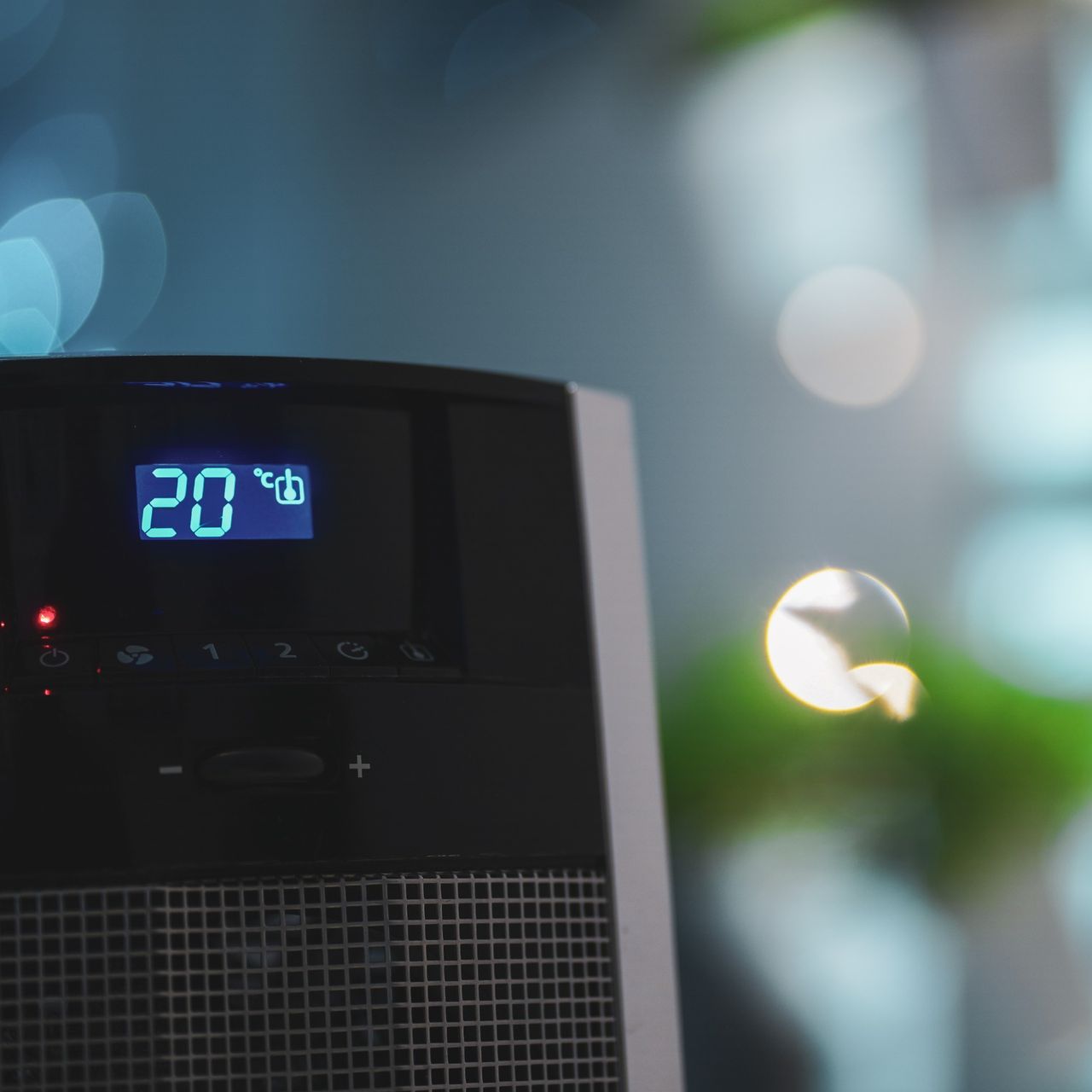
While you might be toasty warm with your central heating on at home, when it goes off, low outside temperatures mean you probably won't stay that way for long.
A popular solution is to complement your central heating with a portable electric heater than can provide a burst of heat as and when you need it.

But unless used tactically, these appliances can be energy hungry, which means electric heaters can be expensive to run. Fortunately, these expert tips will help you use it in the most energy efficient way possible and keep your bills under control.
1. Choose a model with the right features
Electric heaters of old would have had a simple on-off switch, maybe a couple of power settings, and a dial to adjust the temperature. And while there's nothing wrong with that in terms of functionality, it'll leave you with very little control over it's energy consumption.
'Beyond selecting the right size heater for your home, there are other features to look out for if you are looking to buy a heater. Choosing models with thermostats and timers can help avoid unnecessary energy use,' says Will Jones, Home Expert at Currys. Many modern models will also automatically switch off when the desired temperature is reached, and offer energy monitoring via app controls.
It's worthwhile also carefully considering the type of heat emitter you choose too. After all, there is a wealth of difference between electric heaters and oil-filled radiators. If you want instant heat and can cope with a bit of noise, then a fan heater may be all you need. However, this may not be the most energy efficient option, as Will adds: 'Alternatives like oil-filled radiators or ceramic heaters can also offer better heat retention and lower running costs.'
Models to consider
This electric heater can be controlled via the free Mill App, which also tracks your heater's energy usage. Plus it'll switch off if it detects an open window.
This ceramic tower fan is not only powerful enough to heat rooms up to 20m2, it'll also retain heat better than fan heater.
If heat retention is more important to you than a quick heat up time, then you might be better off choosing an oil-filled radiator like this Pro Breeze model.
2. Place it correctly
Correct placement is crucial whether you want your electric heater or oil-filled radiator to work more efficiently.
'Positioning the heater away from draughts, open windows and external doors helps the heat stay in the room for longer, improving efficiency and reducing wasted energy,' reveals Stuart Middleton, Consumer Energy Expert at So Energy.
3. Don't use it a primary heat source

To use your electric heater most efficiently, it's crucial that you don't use it as your primary source of heat.
'Think of portable electric heaters as a top-up rather than your main source of heating,' explains Stuart. 'They’re great for warming up a room for a short period, but pairing them with warmer clothing, blankets and simple energy-saving habits will keep you cosy while keeping your bills in check.'
Remember too that these appliances are designed to provide a boost of heat in the room you are in, rather than a whole-house solution. I use my electric heater to complement my central heating when I need to, and it's kept me cosy all winter.
4. Keep windows and doors shut
Using your electric heater to heat the room you are in is key to it running in the most energy efficient way. And so you'll need to keep doors and windows closed to keep the heat where you need it and prevent your heater from working harder than it needs to in order to warm a too-big space.
Small changes around your home can also help your heater work more effectively as Stuart explains: 'Closing curtains in the evening, blocking gaps around doors and windows, and using rugs on hard floors can reduce heat loss, meaning your heater doesn’t have to work as hard to maintain a comfortable temperature.'
Using a draught excluder will help keep the heat in the room you want, allowing you to make the most of it. Plus at £10, this one is a bargain.
Having a rug underfoot will help your room feel warmer and avoid chilly toes. That also means you won't run your electric heater for longer than you need to.
If you've got draughty window frames, make sure you resolve them before using your electric heater, otherwise you're paying for energy that's literally going straight out the window.
5. Make use of the right settings
Using any eco or smart settings your electric heater has will ensure you are using it in the most efficient way.
'Many electric heaters come with WiFi control to make scheduling even more convenient,' says Stephen Hankinson, heating expert at Electric Radiators Direct. 'These enable you to manage your heating no matter where you are in the world, so if you happen to pop out and leave the heating in your home office on, you can use your phone to switch it off.'
'Using built-in thermostat, timer or eco settings can further reduce running costs, agrees Stuart from SoEnergy. 'Setting the heater to the lowest comfortable temperature rather than running it at full power continuously, and programming it to switch off automatically, can prevent unnecessary usage.'
FAQs
Should you leave an electric heater on overnight?
From both a safety and energy consumption point of view, it's not advisable to run an electric heater overnight.
'Running an electric heater overnight – especially for consecutive nights – will undoubtedly increase your energy bills,' says Stuart. 'Electric heaters come in various sizes and levels of power which will impact how much energy they use. Our advice is to turn off all appliances when they’re not actively in use – including overnight when common spaces aren’t being used, or when you’re in bed and can add extra blankets for a boost of warmth.'
Make sure you know what you should know before buying an electric heater so that you can make the right choice for your home.