
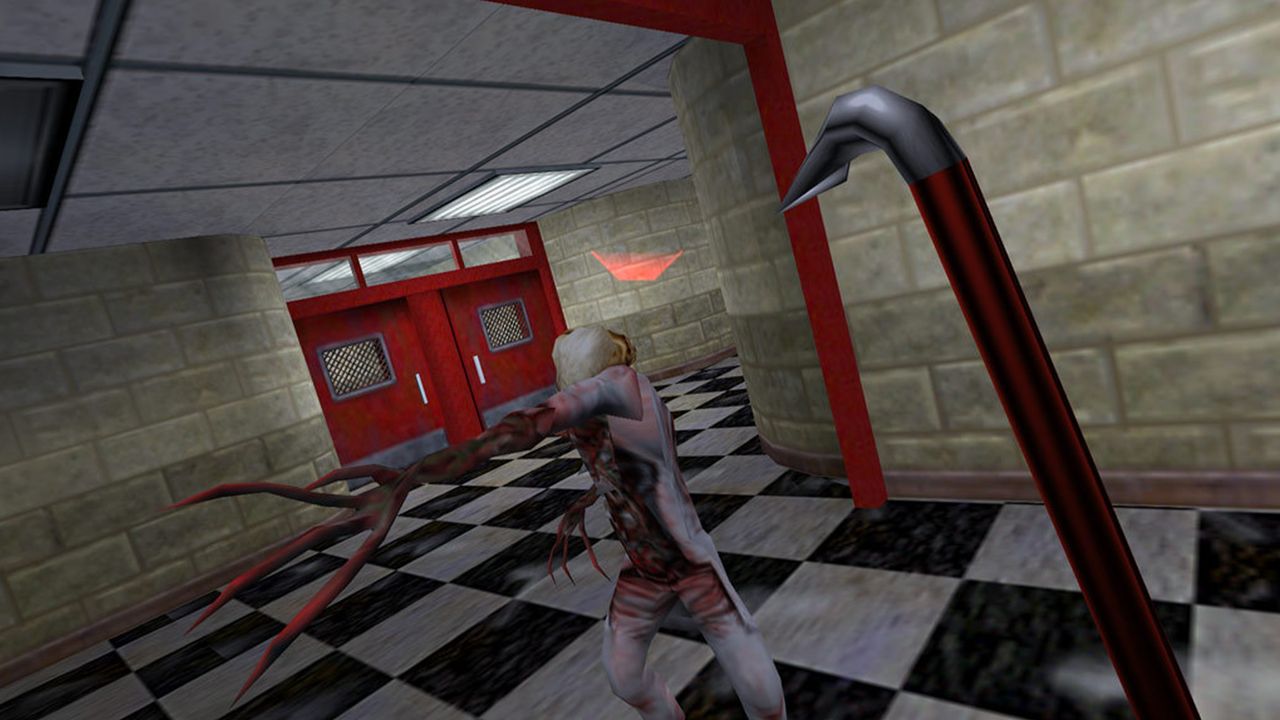
It could have all gone so wrong. We know you hear that a lot in game retrospectives, but this is serious. Yes, BioShock could have been about zombies in a Nazi bunker, Borderlands could have looked like gruel, and Tabula Rasa might have featured butterfly-winged men fighting each other with books. But Half-Life is more than just a game. It triggered a movement: a massive change not just in the way first-person shooters were made, but video games as a whole. It set new standards for player immersion, narrative quality, and combat AI, and opened the doors to modding in a more generous fashion than any other shooter had done before – in doing so, ultimately creating an unstoppable multiplayer phenomenon. In some ways, Half-Life is the most important game of the past three decades. And yet it might just have been a middling old Quake clone starring a guy called Ivan the Space Biker.
No, really. Ivan was a paunchy chap with a full beard and a flattop. He wore a bulky HEV suit and was, presumably, predisposed towards biking in or near space. One can only summon up that ever-mysterious deus ex machina known as 'the creative process' to justify how this blockily rendered slab of mid-Nineties cheese transformed into Gordon Freeman, the world's sexiest physicist, but there it is. Somewhere along the line, Half-Life went from embarrassing to exceptional. One of Half-Life's designers, Marc Laidlaw, attempts to explain: "We didn't so much 'pick' the current image of Gordon as just naturally develop it. Our artists reworked their concepts again and again and again until they had something we liked, and Ivan was just one of those concepts."