Welcome back to another edition of My Take 5. This week we are covering the US-Iran talks to end their war, the sudden kerfuffle between Ukraine and Poland, Ukraine’s increasing strikes on Russian-occupied Crimea, Keir Starmer’s resignation in UK, and the Fifa World Cup in the US doing pretty well. So, let’s get to it.
Get breaking news anytime, anywhere. Download the TOI app now!
US-Iran talks: US and Iran are finally talking. After signing an MoU to begin negotiations to end their war last week, top-level negotiators from both sides met at Burgenstock, Switzerland, to begin the process. US was led by Vice-President JD Vance, and the Iranians by Mohammad Bagher Ghalibaf. After the first meeting, predictably, there are contradicting reports and claims, with each side projecting strength and claiming the upper hand. Iran says US has agreed to unfreeze $12 billion in Iranian assets. But US says this is conditional, and the money will be put into a US-controlled escrow account, which will be used to buy US produce like soyabeans and wheat. Tehran, however, has asserted that only it can decide how the money will be spent.
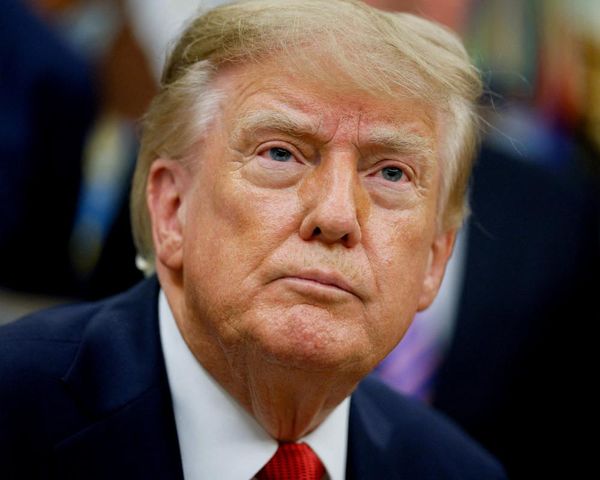
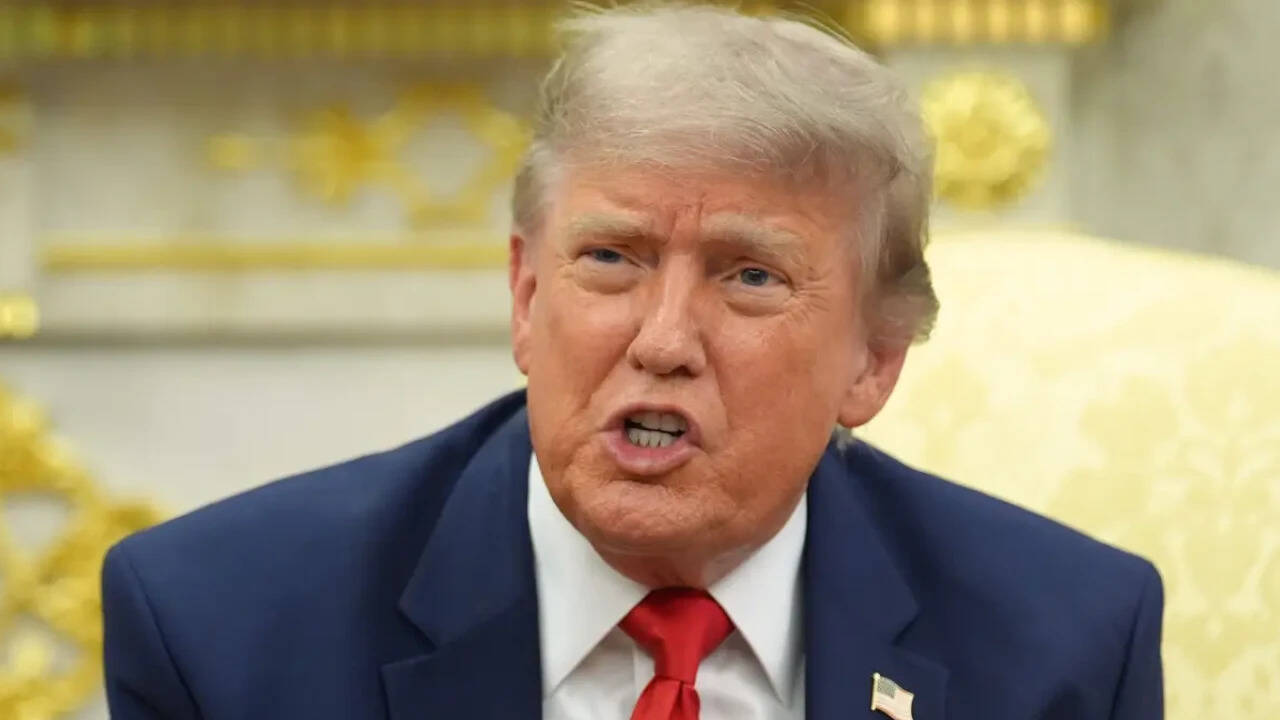
Trump says the Strait of Hormuz is now open and free, with the US navy lifting its blockade of Iranian ports. US has also temporarily lifted sanctions on Iranian oil for 60 days till August 21. But Iran insists that it, along with Oman, will control traffic through Hormuz, and levy management fees on ships transiting the strait. US, however, is dead against any toll on Hormuz shipping.
Meanwhile, US says Iran has agreed to allow back UN nuclear inspectors for infinity (Trump’s words), and it is on the basis of this that Washington is looking to ease Iranian sanctions during the period of negotiations. But Tehran says it has made no such commitment, and has no plans to invite back UN nuclear inspectors.
So, both sides are putting out very different versions of how the talks are going. And it is difficult to tell who is exaggerating. Perhaps both are. After all, each side needs to address their domestic constituencies. Plus, there is the Israel factor. Tel Aviv has said that it will continue to occupy southern Lebanon, and small-scale firing between the IDF and Hezbollah fighters is still continuing. That technically is a violation of the ceasefire deal between US and Iran.
Hence, given the way things are proceeding, we are bound to see more such contradictions, more bravado from both sides, and more exaggerations. But with both sides agreeing to a roadmap to negotiate and end the war in the next 60 days, the saving grace is that the active military phase of the conflict has stopped. But all of this hangs by a thin thread, and one false move, and it could be back to full-scale war.
Ukraine-Poland kerfuffle: An unexpected dispute has cropped up between Poland and Ukraine. Last week, Polish President Karol Nawrocki revoked Poland’s highest award previously conferred upon Ukrainian President Volodymyr Zelenskyy. The reason: Zelenskyy had approved the naming of a Ukrainian special forces unit after the World War II-era Ukrainian Insurgent Army (UPA). This raised hackles for Nawrocki and his supporters because the UPA was seen as responsible for the Volyn massacre of 1943-44, where the Ukrainian partisans targeted Polish people in Volhynia and Eastern Galicia. Poland back then was occupied by Nazi Germany.
Ukraine, meanwhile, has a slightly different reading of the history. At the time, what is today Ukraine was invaded and occupied by both Germany and the Soviet Union. Ukrainian nationalists were, therefore, fighting both invaders. Plus, in Volhynia and Eastern Galicia, Ukrainians had faced discrimination and persecution from local Poles even before the German Nazis came into the picture. Additionally, while Ukraine today doesn’t deny UPA’s historical actions, it also points to the fact that Ukrainians too had been killed by Polish underground forces.
The point is that the Volyn massacre is a painful chapter in Polish-Ukrainian history. But there have been attempts at reconciliation and facing the truth since the 1990s. And it is indeed an ongoing process. Fast forward to today, and Poland is perhaps the biggest supporter of Ukraine in its war against Russia’s aggression. Polish society has stepped up for Ukraine like no other people. It has provided massive aid to Ukraine, taken in 3-4 million Ukrainian refugees, provided warmth to Ukraine during harsh winters, and coordinated supply of Western weapons to Ukraine for its defence.
For, Polish society knows that Ukraine is not only fighting for its own freedom and sovereignty, it is also fighting for Europe and Poland. Every Russian tank, ship and aircraft Ukraine destroys is one less that Russia can point at Europe and Poland. So, for this controversy to erupt at this delicate moment is truly unfortunate.
Plus, here is something that Poland must consider. The request for naming the Ukrainian military unit came from Ukrainian soldiers themselves. Zelenskyy simply approved it. And if one thinks about it, he had no choice. For a country facing the fifth year of a Russia-imposed war, its people and soldiers understandably need all the motivation they can get. And for many Ukrainians fighting on the frontline the UPA nationalists are seen as heroes who fought for Ukraine’s independence. Hence, Zelenskyy has to go along with his soldiers’ wishes.
Of course, this doesn’t mean that Ukraine is trying to diminish the memory of the Polish victims of the Volyn massacre. Again, it has offered reconciliation and joint facing of the truth. But for the Polish president to make this an issue now only serves the interests of one party – Russia. Moscow is loving this rift between Kyiv and Warsaw, which if stretched to extreme can potentially impact Ukraine’s ability to fight the Russian invasion.
Poland, therefore, should recognise Russia’s tactics here. Russian bots are already amplifying the Ukraine-Poland rift in the social media space through lies and manipulations. Russia clearly wants to drive a wedge between Ukraine and Poland, and weaken both in the process. Thus, Ukraine and Poland have no choice but to continue working together to tackle their common enemy. Historical issues should not be politicised, especially at this point.
Ukraine targets Russian-occupied Crimea: In recent weeks, Ukraine has stepped up its strikes against Russian military facilities and logistics in occupied Crimea. This in turn has led to serious rationing of essentials and services on the peninsula that has been occupied by Russia since 2014. There is a shortage of electricity and water, while trains out of Crimea have significantly reduced in frequency.
Ukraine’s strategy appears to be to isolate the peninsula and turn it into an ‘island’. In other words, effectively cut off Crimea from Russia. This will likely serve two purposes: force Russia to divert military resources and attention from the war frontline in Ukrainian Donbas to Crimea, thereby easing pressure on the former, and degrade Russian military logistics and resources on Crimea itself so that they can’t be used for attacks against Ukraine.
The Ukrainian strikes also hold out the tantalising possibility of retaking Crimea. That in turn introduces a new strategic calculus in the overall Russia-Ukraine war, providing Kyiv with certain leverage.
Keir Starmer resigns: UK PM Keir Starmer resigned this past week under pressure from his own Labour party. Starmer quits less than two years after leading Labour to a landslide win in UK parliamentary elections. But a drubbing in local elections last month and the growing popularity of Nigel Farage-led far-right Reform UK party forced his hand. With this exit, the UK will have its seventh PM in a decade.
That’s the opposite of what Brexit promised a decade ago. The leave EU vote was supposedly for stability. But since then, UK leadership has become a veritable revolving door. The heart of the matter is, Brexit has been a disaster for UK. It has made the country poorer – GDP has reduced by 6-8% – and dramatically shrunk opportunities for British youth. In short, it was a big mistake. And no UK leader since Brexit has managed to make it work. So, instead of getting to the heart of the matter and accepting that Brexit was a big goof-up, the British political elite and a large section of the population are trying to deflect the blame onto other extraneous factors such as ‘immigration’. After all, human instinct is not to immediately admit to mistake. Thus, UK suffers and continues the charade.
Fifa World Cup lights up: There were apprehensions galore about the Fifa World Cup in Trump’s America. Fears about restrictions on incoming foreign football fans, lack of interest among the local American public, hostility towards some participating countries (Iran), and over-commercialisation of the game. But at the midpoint of the tournament, things have gone pretty well. The football action has been great despite the expanded number of teams, local Americans have taken a shine to visiting foreign fans – social media is awash with videos of Americans doing the Norwegian row or making merry with Scottish fans – and even tensions with Iran have reduced with certain restrictions on the participating Iranian football team being relaxed.
All of this is certainly welcome and goes to show that Americans are far from a monolith. While the dominant political discourse today may be Trumpian, there are many Americas, many of which are open, curious, hospitable and warm. It is these Americas that are carrying the World Cup through.