Get all your news in one place.
100's of premium titles.
One app.
Start reading
Medical Daily
Medical Daily
Cole Mercer

Virginia Confirms First Locally Acquired Dengue Case After a Single Mosquito Bridged Two People

Virginia has confirmed the first documented case of dengue acquired inside the state, and health officials say the transmission chain came down to a single mosquito that bit two people weeks apart.

The Virginia Department of Health announced the case on August 4, working with the Fairfax County and Loudoun County health departments. The patient, a Northern Virginia resident, had no known travel outside Virginia before becoming ill.
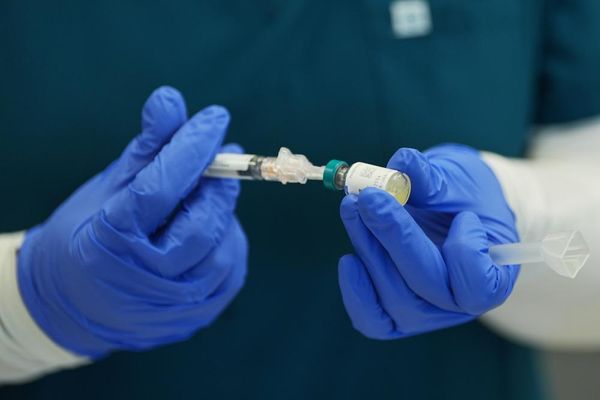
What makes the case notable is not its size but its mechanism. State Health Commissioner Cameron Webb wrote in a letter to clinicians that transmission likely occurred when a local mosquito bit an internationally acquired case while that person was infectious, then infected the second person. That is local transmission by definition, and it had never been documented in Virginia before.


Transmission Chain Officials Reconstructed

Virginia has recorded imported dengue cases for years in travelers returning from tropical regions. The new element is that the virus completed a full cycle here: from an infected person, into a local Aedes mosquito, and back into a second person who never left the state.

The two patients were connected, and the connection was household-level. Benjamin Schwartz, who directs the Division of Epidemiology and Population Health at the Fairfax County Health Department, told WTOP that the traveler returned from a country where dengue is common and was then bitten by a local mosquito, which went on to bite the second person, who was caring for him.

The two live in different counties. One patient lives in Loudoun, the other in Fairfax, according to Lucy Caldwell, communications director at the Fairfax County Health Department, which is why both county health departments are coordinating with the state. The infectious traveler was diagnosed roughly two weeks before the second case.

Dengue does not spread person to person. Transmission requires a mosquito, which is why officials focus on the insect population around the exposure sites rather than tracing human contacts the way they would with a respiratory illness. VDH notes that dengue has rarely been transmitted in laboratory or health care settings through blood transfusions, organ transplants or needlestick injuries, but those are not the ordinary route.


Local Risk Assessment and Surveillance Response

Officials have been consistent about scale. There is no evidence of continued transmission and no additional locally acquired cases have been identified. The department says the potential risk of acquiring dengue in Virginia remains low.

That assessment could change if surveillance turns up infected mosquitoes, which is why the state and both counties are trapping and testing mosquitoes in the affected areas while monitoring for additional cases.

National context helps calibrate. CDC data updated in late July showed 1,443 dengue cases nationwide for 2026, with Virginia reporting only four, nearly all of them travel-associated. Most United States dengue is imported by travelers returning from the Caribbean, parts of South America, Africa and Southeast Asia, where the World Health Organization estimates 100 to 400 million infections occur annually.

The department has not released further information about the patients, their specific locations or their conditions.


Symptoms and the One in 20 Who Get Severely Ill

Dengue ranges from asymptomatic infection to mild illness to a medical emergency. The typical incubation period is five to seven days. Symptoms usually begin with fever and can include severe headache, pain behind the eyes, nausea, vomiting, muscle and joint pain, and a rash, generally lasting two to seven days, with most people recovering in about a week. The joint pain is severe enough that the illness has long been called breakbone fever.

About one in 20 people with dengue develop severe dengue, which is a medical emergency, according to VDH, and symptoms can become severe within a few hours. The dangerous phase often begins as the fever breaks rather than at its peak, which is the part patients most commonly misread as recovery.

Warning signs that require immediate care include persistent vomiting, severe abdominal pain, bleeding from the nose or gums, blood in vomit or stool, extreme fatigue or restlessness, and signs of fluid accumulation or circulatory collapse.

One practical detail matters for anyone with a possible dengue infection: fever should be managed with acetaminophen rather than aspirin or ibuprofen, because those medications increase bleeding risk. Anyone who suspects dengue should raise it with a clinician before taking anything for pain or fever.


Steps for Households in Northern Virginia

The most effective prevention is eliminating where Aedes mosquitoes breed, and these mosquitoes do not need much. They lay eggs in water-filled containers as small as a bottle cap, meaning the risk sits in flowerpot saucers, clogged gutters, birdbaths, buckets, tarps, toys and unused tires rather than in ponds or streams.

VDH encourages residents to tip and toss standing water around homes and businesses at least weekly, and notes that the same steps reduce risk from West Nile virus, which is already established in Virginia and remains the more common local mosquito-borne threat.

Aedes mosquitoes bite during daylight hours, so evening-only precautions leave a gap. EPA-registered repellents, long sleeves during peak activity, and intact window screens are the standard measures.

Anyone traveling to a region where dengue is common should use repellent there as well, since an imported case can start a local chain. That is the practical lesson of Virginia's first known local transmission chain: protecting a returning traveler from bites protects the people around them.

Officials will continue mosquito surveillance and case monitoring through the remainder of the season. MedicalDaily will report any additional locally acquired cases or changes to the state's risk assessment.

The bottom line: the newest confirmed development is a single locally acquired dengue case traced to one mosquito; no continued transmission has been detected; risk across Virginia remains low; and the most useful household action is emptying standing water weekly.


Frequently Asked Questions

What does locally acquired mean? The person was infected inside Virginia rather than while traveling. A local mosquito picked up the virus from an infected traveler and passed it to someone else.

How were the two people connected? The second patient was caring for the returning traveler, according to the Fairfax County Health Department. They live in different counties, one in Loudoun and one in Fairfax.

Is dengue spreading in Virginia? Officials report no evidence of continued transmission and no additional locally acquired cases. The state says risk remains low and is conducting mosquito surveillance.

Can dengue spread from person to person? No. It requires a mosquito bite. Rare transmission has been documented through blood transfusions, organ transplants and needlestick injuries in laboratory or health care settings.

What are the symptoms? Fever, severe headache, pain behind the eyes, nausea, muscle and joint pain, and rash, typically lasting two to seven days after an incubation period of about five to seven days.

When is it an emergency? About one in 20 cases become severe, and symptoms can worsen within hours. Persistent vomiting, severe abdominal pain, bleeding from the nose or gums, blood in vomit or stool, and extreme fatigue require immediate care, often as the fever breaks.

Which pain reliever is safe? Acetaminophen. Aspirin and ibuprofen increase bleeding risk in dengue and should be discussed with a clinician first.

Sign up to read this article
Read news from 100's of titles, curated specifically for you.
Already a member? Sign in here
Related Stories
Top stories on inkl right now
One subscription that gives you access to news from hundreds of sites
Already a member? Sign in here
Our Picks
Fourteen days free
Download the app
One app. One membership.
100+ trusted global sources.