He Did Not Ask for Tolerance. He Rejected the Question.
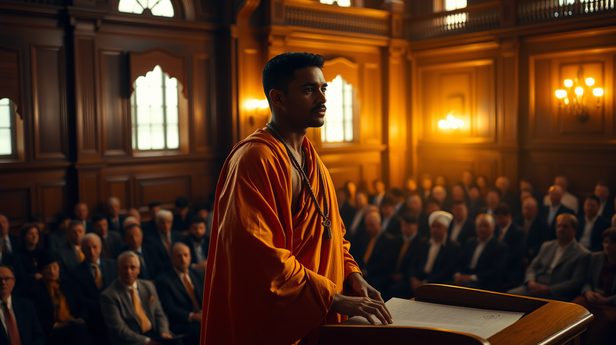
The line every Indian child memorises is "sisters and brothers of America." The applause lasted two minutes. What came after that opening is what the curriculum quietly set aside.Vivekananda's first real argument at the 1893 Parliament of the World's Religions in Chicago was not a plea for coexistence. It was a structural claim: that a religion which teaches universal acceptance is not being generous, it is being accurate. He quoted the Bhagavad Gita, Chapter 4, Verse 11: "As men approach me, so I receive them." His point was not that all religions are equally nice. His point was that if the divine receives every path, then the assumption that one path is the only true one is not piety, it is a category error.This is a harder argument than tolerance. Tolerance says: your religion is wrong, but I will put up with it. Vivekananda said: the framework that produces the word "wrong" in this context is itself mistaken. That is not a sentiment. That is a philosophical position, and it made a room full of missionaries deeply uncomfortable.