Get all your news in one place.
100’s of premium titles.
One app.
Start reading
Digital Camera World
Hillary K. Grigonis

The Supreme Court has turned down some Trump tariffs. What does that mean for camera prices?

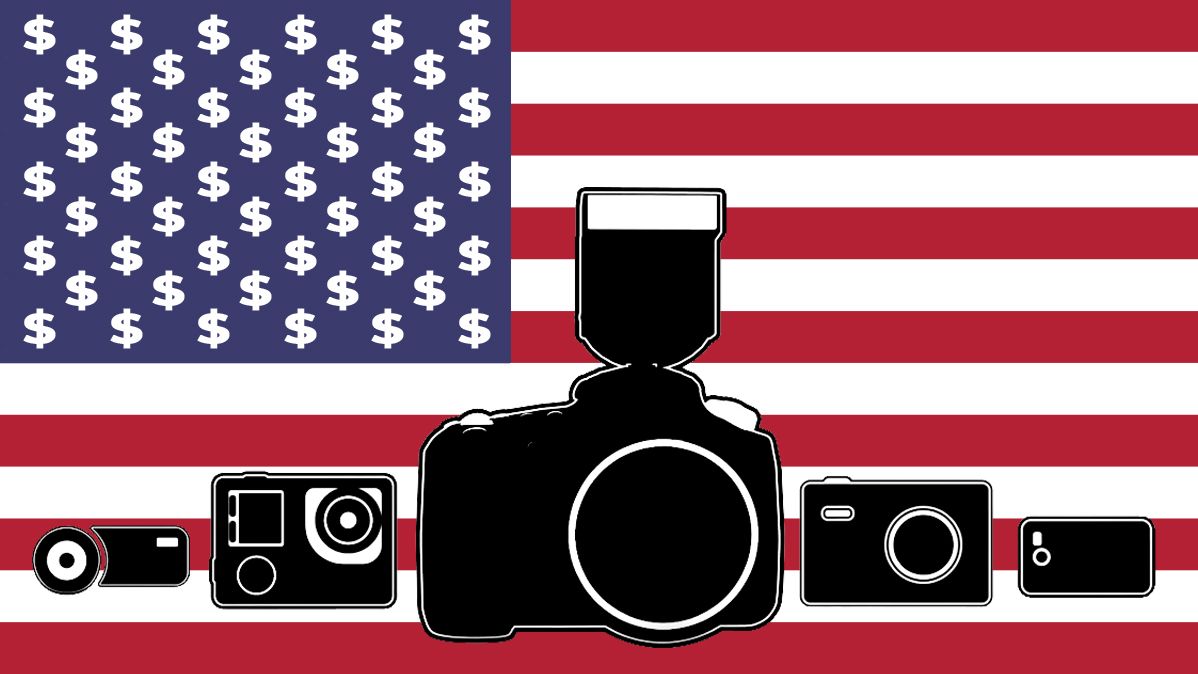
USA flag, with dollar signs replacing stars, with a camera silhouetted on top.

The Supreme Court has turned down around half of the tariffs imposed by the Trump administration in a key ruling issued on Friday, February 20.

In the ruling, the Supreme Court determined in a 6-3 vote that the 1977 International Emergency Economic Powers Act (IEEPA) does not give the US president the authority to levy tariffs. That bill is behind a significant portion – but not all – of the sweeping global tariffs that the US began levying just a few short months after Trump took office.
The judges ruled that the act, which does not include the word tariff but references “regulate…importation or exportation,” does not give the US president the power to levy emergency tariffs.

In response, US President Donald Trump has now said that he will impose a global 10 percent tariff under Section 122, under the 1974 Trade Act. That ten percent matches the baseline from the IEEPA tariffs, except the IEEPA tariffs had higher "reciprocal tariff" rates applied to certain countries, such as Japan's 15 percent reciprocal tariff deal. The Section 122 tariffs also require approval from Congress to last longer than 150 days.

Importantly, the Emergency Economic Powers Act is only behind some of the additional tariffs added to US imports since April 2025. NPR notes that the act accounts for about half of the total US tariffs and that other tariffs aren’t part of the Supreme Court ruling. According to research out of Yale, the removal of the IEEPA tariffs would mean an overall effective tariff rate of 9.1 percent on average, down from 16.9 percent.

Will camera prices change again?

The key ruling leaves a number of questions. For photographers in the US, the ruling likely raises a key question: Will the ruling help camera prices drop in the US?

While Trump has indicated an executive order will bring back a ten percent tariff, the IEEPA tariffs had a global 10 percent baseline but higher rates for certain nations. In Japan, for example, the rate was at 15 percent. Japan is a key country to watch as the tariff news unfolds, as a number of key manufacturers, including Canon, Nikon, Sony, and Fujifilm, are based in Japan. It’s unclear at this point if – or how – camera companies will respond.

Every major camera company has now increased prices in the US following the new import taxes added to US imports last year. Canon, Nikon, Sony, Fujifilm, Leica, and Sigma have all introduced adjusted list prices in the US. Many price increases sat around 10 percent, others were higher, particularly on popular compact cameras.

The added import costs were not inconsequential. For example, last month, Canon estimated that tariffs cost the company ¥45.4 billion (about $294 million / £214.1 million / AU$420 million) in the second half of 2025 alone.

Lowering camera prices after a tariff change isn’t unheard of – Leica did just that when the US rate on Chinese imports dropped. The Leica D-Lux 8, a compact camera made in China, went from $1,595 to $2,790 after tariffs, but then later dropped to $1,915 when those so-called reciprocal tariffs dropped from 145 percent to 30 percent.

While it’s not unheard of for brands to drop list prices after their import costs decline, MSRPs are ultimately up to the company itself, and a number of factors go into those costs. Rising demand for compact cameras and reduced supply – particularly as the cost of DRAM increases in the age of AI – could also influence camera prices.

The Emergency Economic Powers Act isn’t the only legislation used by the Trump Administration to levy new tariffs. For example, the new 25 percent tariff on semiconductors announced last month – which does not impact consumer electronics like cameras – was enacted under the Trade Expansion Act of 1962.

In a Tweet posted after the ruling, US Chief of Protocol Monico Crowley wrote that “President Trump has plenty of tools in the tariff toolbox.” Exactly which tool was made clearer by Trump's subsequent press conference and announcement of a 10 percent tariff under different legislation.

You may also like

Browse the best compact cameras or the best mirrorless cameras.

Sign up to read this article
Read news from 100’s of titles, curated specifically for you.
Already a member? Sign in here
Related Stories
Top stories on inkl right now
One subscription that gives you access to news from hundreds of sites
Already a member? Sign in here
Our Picks
Fourteen days free
Download the app
One app. One membership.
100+ trusted global sources.