Get all your news in one place.
100’s of premium titles.
One app.
Start reading
Tom’s Guide
Tom’s Guide
Technology
Frances Daniels

The simple metabolism hack that helps avoid 3am wake-ups — and it's the Blue Zone secret to longevity, too

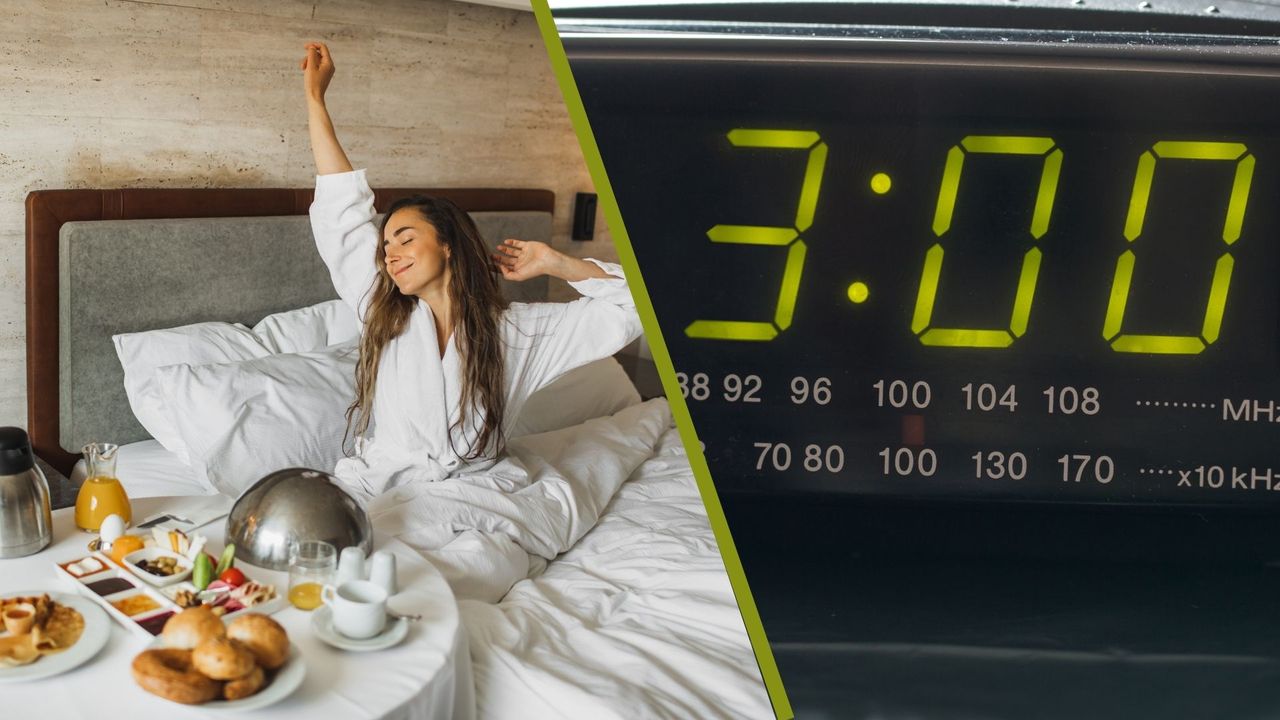
A woman stretches as she wakes up to a hearty breakfast after sleeping through the night. Next to this picture, there is an image of a digital clock displaying the time of 3am. .

It's no secret that diet and sleep are intertwined. A poor diet can lead to sleeping poorly, while poor sleep can lead to eating poorly.

On the other hand, getting good quality sleep curbs junk food cravings during the day, while a healthy diet leads to better sleep at night.

While a diet rich in wholegrains, fruits, and vegetables has been shown to improve sleep, there's another popular approach to eating that could be your golden tick to falling asleep fast and sleeping through the night.

The diet, which promotes the proverb "breakfast like a king, dinner like a pauper", has been shown to aid weight loss and longevity as the diet even aligns with the blue-zone way of life. But could it also aid sleep? I asked a registered dietician and a sleep expert to find out...

What is the “breakfast-like-a-king” food rule?

You may have heard of, "Breakfast like a king, lunch like a pauper, and dinner like a pauper." But what exactly does that mean?

Kathleen Benson, CSSD, CPT, RDN, a registered dietician-nutrionist at VNutrition, says that this is an eating pattern where calories are front-loaded earlier in the day.

(Image credit: Getty Images)

"So you might see something like 50% of daily intake at breakfast, around 30% at lunch, and then about 20% at dinner," she explain.

"The idea is that you eat your largest meal in the morning, a moderate lunch, and then keep dinner relatively light."

Benson calls the diet a "timing strategy" rooted in the idea that metabolism is stronger earlier in the day. "So, eating more in the morning and less at night could align better with circadian rhythm," she tells me.

How does it help you fall asleep faster?

According to Benson, a lighter meal in the evening can help a lot of people sleep better, especially those who often experience acid reflux or GERD.

"Lying down shortly after a large meal can increase reflux symptoms," she explains.

"Giving the body a few hours to digest (or having a lighter meal) before bed can help people feel more comfortable at night."

Lighter evening meals also prevent the physical discomfort associated with going to be after a heavy meal.

"So in certain contexts, a lighter dinner can reduce physical disruption that might otherwise interfere with sleep," she suggests.

(Image credit: Getty Images)

She also says that overnight fasting aligns with how microbial activity in the gut follows circadian rhythm.

Hannah Shore, Head of Sleep Science at Mattress Online, agrees. "The time of day we eat is also important; having set meal times can help anchor our circadian rhythm.

"When our circadian rhythm is entrained, we can find it easier to fall asleep quickly and wake up."

There's also the matter of body temperature, as digesting food can increase temperature. "In order to fall asleep, our core body temperature needs to decrease, so eating lighter, less complex meals in the evening helps make this process easier."

What are the drawbacks of this diet for your sleep?

Benson points out that while light evening meals improve sleep quality, some people simply feel restless if they’re hungry at bedtime.

"So while a lighter dinner can help some people sleep better, for others it may have the opposite effect if it leaves them under-fuelled or physiologically stressed," she warns.

In particular, two groups of people are more susceptible to the diet's drawbacks: those who train in the evening, and those with blood sugar regulation issues.

(Image credit: Getty Images)

If you partake in high-intensity interval training or strength work after work, a very small dinner might not support recovery very well," she tells me.

"Going to bed under-fuelled after a hard session can sometimes increase nighttime awakenings or make it harder to fall asleep."

"For people with blood sugar regulation issues, a very minimal dinner could also increase the likelihood of overnight drops in blood glucose, which can disrupt sleep," she adds.

Sleep expert Shore also points out that the diet may control the portions of what you eat, but it doesn't dictate what you eat.

"If you're eating foods high in caffeine and sugar in the evening, these actively block different receptors in your brain to make you feel less tired and boost wake-promoting chemicals, which can prevent you from falling asleep easily and perhaps cause more fragmented sleep,"she warns.

What should you eat for your "pauper's dinner" if you want to sleep well?

Benson warns that the perfect "pauper's dinner" for sleep can vary from person to person.

"For those with a history of overnight blood sugar lows or who are dosing insulin based on a consistent intake pattern," she warns. "Shifting a significant portion of calories earlier in the day without adjusting medication appropriately can create issues."

"And if someone trains hard in the evening, they may need more fuel at dinner to support recovery and stable sleep," she adds.

(Image credit: Shutterstock)

The nutritionist also explains that daily calorie intake counts more than the percentage, as whether 20% at dinner feels small or adequate really depends on total intake.

"For someone eating 1,500 calories, that might look more like a balanced snack," she explains. "For someone eating 3,000, that could still be a substantial dinner. So context matters more than the percentage alone."

However, no matter the context, Benson advises that an evening meal consists of plenty of nutrients.

"I would still recommend pairing a meal with fiber-dense carbohydrate, protein, healthy fat, and non-starchy vegetables regardless if someone was on a 1,500 calorie or 3,000 calorie diet."

(Image credit: Shutterstock)

Shore also recommends non-starchy vegetables (such as eating mushrooms, spinach, and broccoli, while avoiding potatoes, corn, and peas), but they should be prepared properly to aid digestion.

"Our fruits and vegetables should be easy to digest, so ensure they are cooked through and not raw to help with digestion. This makes the digestive process quicker and easier," she advises.

She suggest eating foods that our bodies can process easily and that are light, such as rice and pasta.

"The quicker our food is digested," she says. "The more time we have for our bodies to cool down before sleep, allowing us to fall asleep more easily."

Sign up to read this article
Read news from 100’s of titles, curated specifically for you.
Already a member? Sign in here
Related Stories
Top stories on inkl right now
One subscription that gives you access to news from hundreds of sites
Already a member? Sign in here
Our Picks
Fourteen days free
Download the app
One app. One membership.
100+ trusted global sources.