
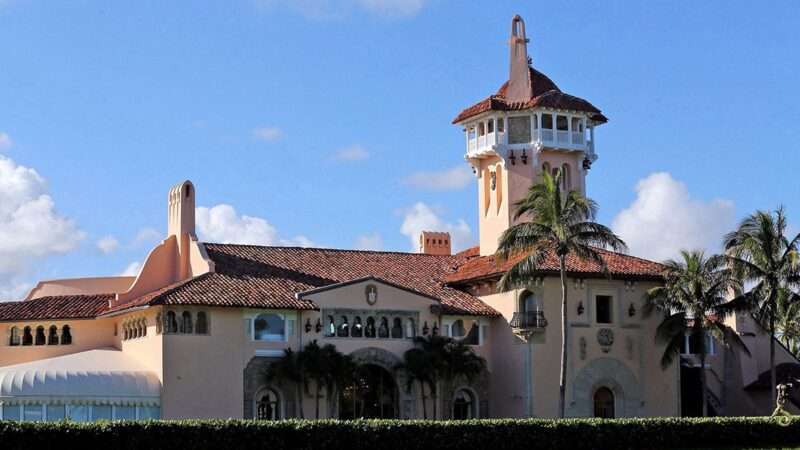
Because the public version of the Mar-a-Lago search warrant affidavit is heavily redacted, it does not resolve lingering questions about the FBI's justification for searching former President Donald Trump's residence at his Palm Beach resort. But the document does shed some light on the circumstances that led to the August 8 search, during which the FBI seized 11 sets of documents marked as classified, along with unclassified presidential records that belonged in the National Archives. The affidavit—which was unsealed by U.S. Magistrate Judge Bruce Reinhart, who approved the search warrant—also clarifies Trump's defense against possible criminal charges stemming from his retention of those documents.
According to the affidavit, which the Justice Department published today, the National Archives and Records Administration (NARA) first requested the return of missing presidential records on May 6, 2021, three and a half months after Trump left office. It "continued to make requests until approximately late December 2021," when "NARA was informed twelve boxes were found and ready for retrieval." Trump's representatives ultimately turned over 15 boxes in January, a year after President Joe Biden's inauguration.













