
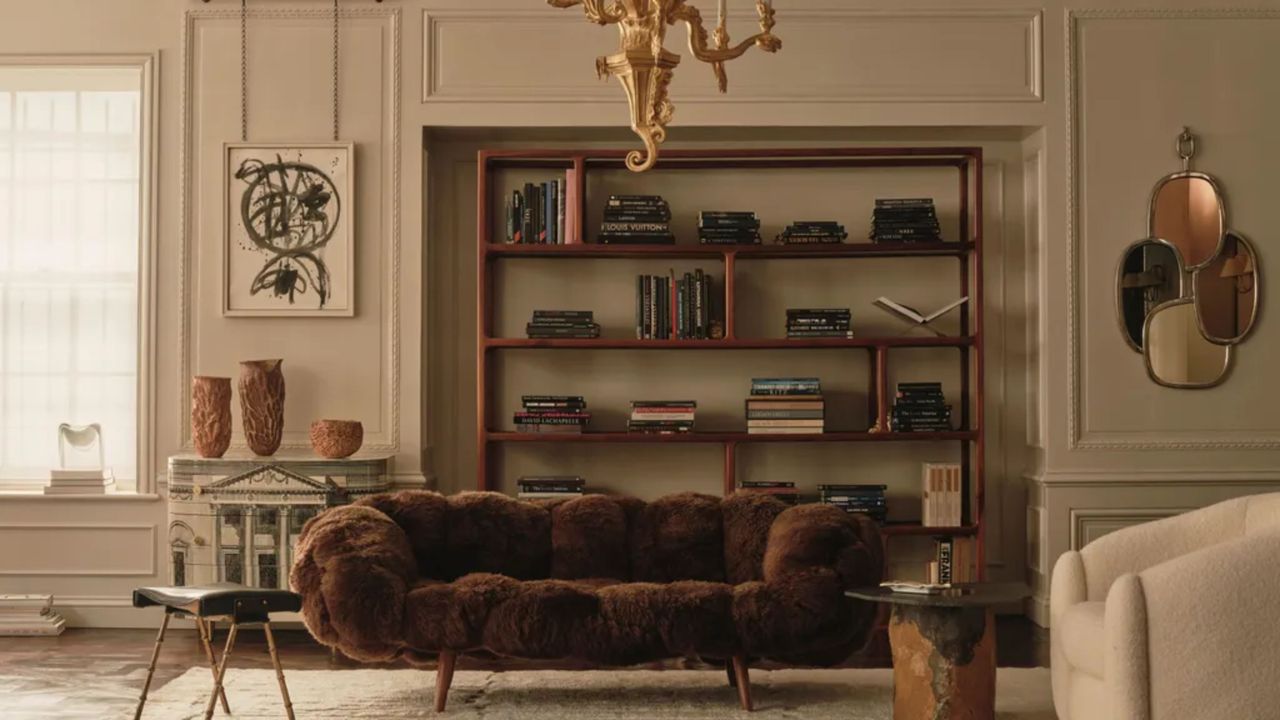
If you’ve ever wondered why a neutral living room looks dynamic on your favorite designer’s feed but falls flat when you recreate it at home in similarly subtle shades, the culprit is rarely color. It’s texture – or, more precisely, the absence of it. As palettes whisper even quieter heading into 2026, texture is what gives a space depth and tension without asking anything of color at all.
That makes this tactile-first interior design principle especially powerful for color-averse minimalists, but it matters just as much across every design style. Layering materials – including the ones you don’t immediately clock – is what makes a room feel richer, more characterful, and ultimately, well designed. It’s a principle that shapes not just how a space looks, but, quite literally, how it feels.













