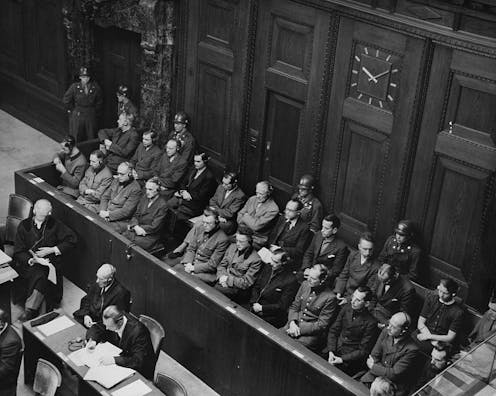
After World War II, Nuremberg, Germany, was the site of trials of Nazi officials charged with war crimes and crimes against humanity. The Nuremberg trials were landmarks in the development of international law. But one of them has also been applied in peacetime: the “Medical Trial,” which has helped to shape bioethics ever since.
Twenty Nazi physicians and three administrators were tried for committing lethal and torturous human experimentation, including freezing prisoners in ice water and subjecting them to simulated high-altitude experiments. Other Nazi experiments included infecting prisoners with malaria, typhus and poisons and subjecting them to mustard gas and sterilization. These criminal experiments were conducted mostly in the concentration camps and often ended in the death of the subjects.