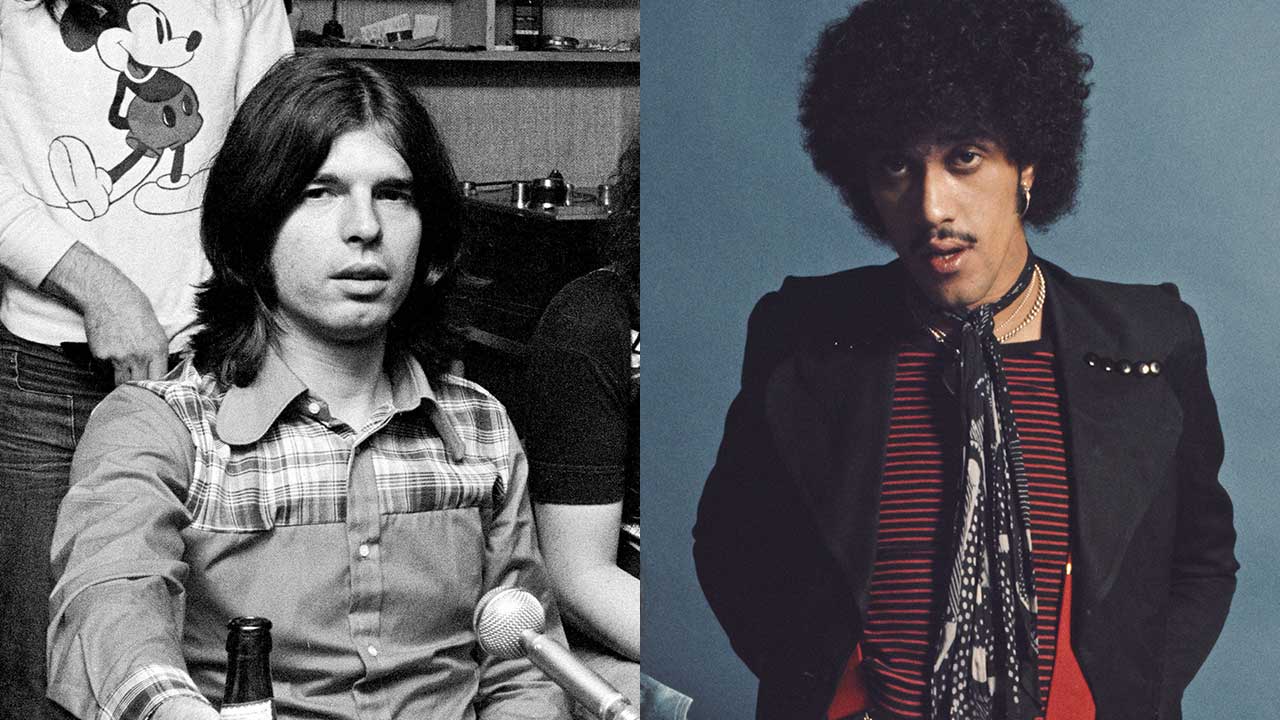
Tony Visconti had already worked with Thin Lizzy on 1977’s Bad Reputation when he agreed to again step into the production hotseat on its 1979 follow-up Black Rose. He probably had a good idea of what he was stepping into with Phil Lynott’s rabble then, aware that work in the studio would be accompanied by a lot of decadent playtime, usually instigated by party animal Lynott himself. “Tony was trying to keep a handle on everything,” the band’s Scott Gorham, an accomplice in Lynott’s pleasure-seeking, told Classic Rock’s Harry Doherty. “He was the voice of calm and reason, letting us know if we overstepped the mark.”
Little did Visconti know just how many times he’d have to point out where that mark was. Sessions in Toronto for Bad Reputation had been wild enough, but things went into overdrive in Paris, where the band were making Black Rose. Gorham remembers how, everywhere you looked in Thin Lizzy’s world at the time, there were drugs. “Mentally, everyone was upbeat,” he told Classic Rock. “But at the same time, sitting on the couch at the studio, you’ve got three dealers. One guy selling smack; the other guy selling coke; and the third guy selling hash… it was that way every night.”