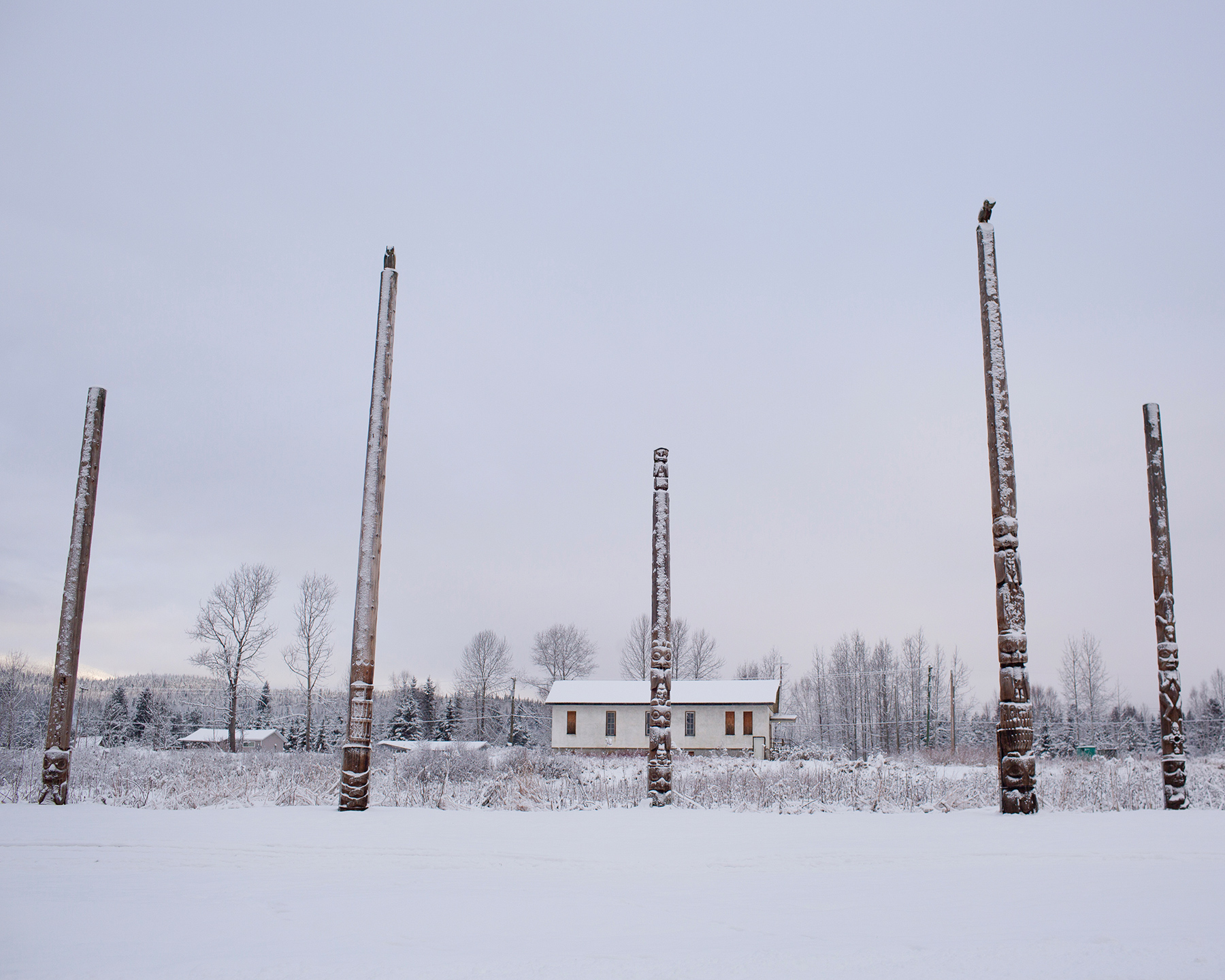
On a cold evening in October 2021, a social worker from the British Columbia Ministry of Children and Family Development knocked on the door of a house in Gitanmaax, a community in the traditional territory of the Gitxsan First Nation in northern BC. Two social workers of the MCFD had come to apprehend a six-year-old Gitxsan girl. Mia (a pseudonym) had been on a week-long visit to her matrilineal family, including her mother and her aunt, and that night she was due to board a plane that would take her more than 4,000 kilometres east, back to her foster home in Ontario.
Mia’s aunt answered her door. She told the social workers she didn’t know where Mia was. Listening closely from the street were members of the Gitanmaax Band, to which Mia belongs, and her wilp, or house group, the Git’luuhl’um’hetxwit. These two Gitxsan groups represent two systems—elected and hereditary—that had come together to stand up for one of their children.