
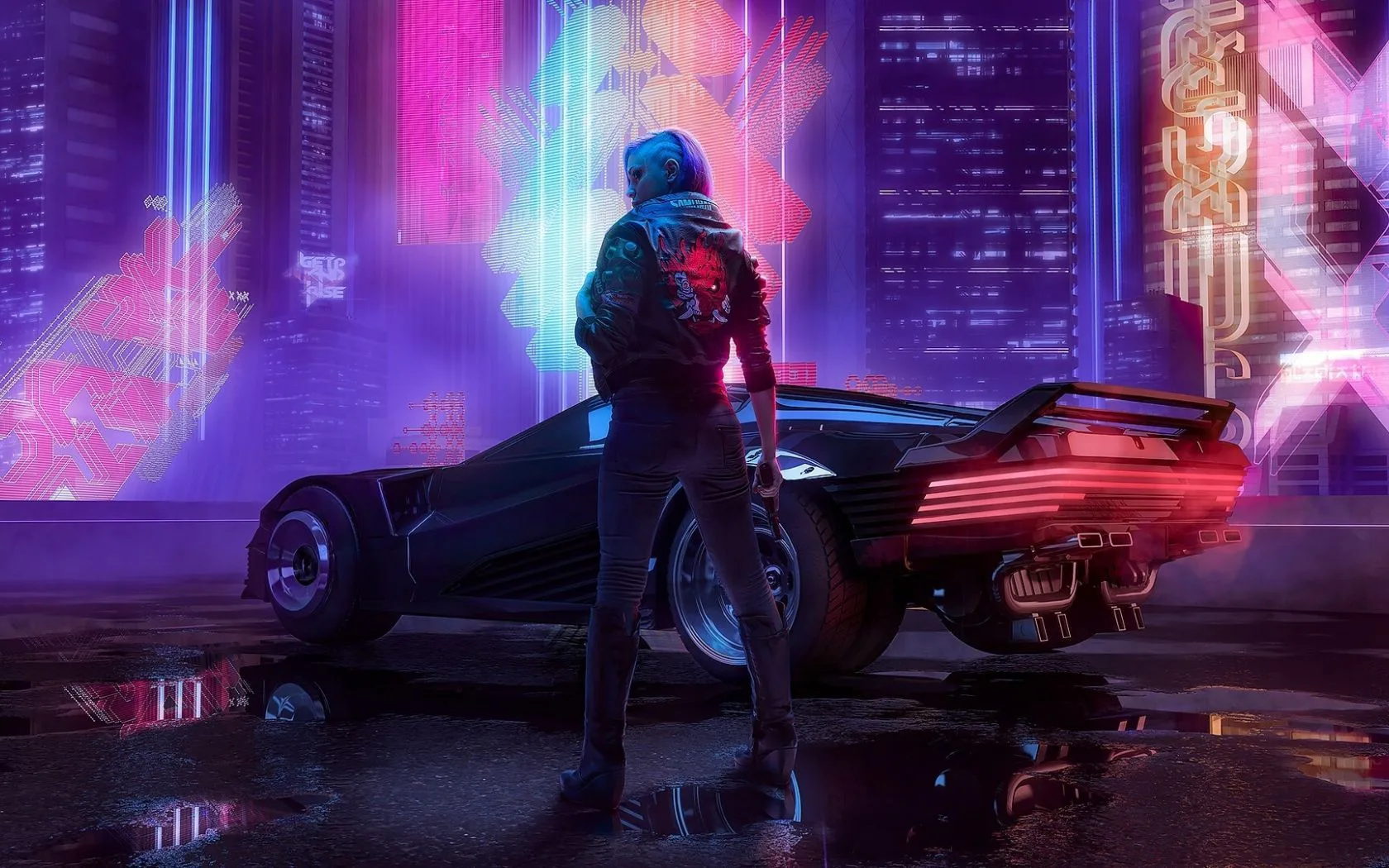
For generations now science fiction has been the domain of writers who want to look through speculative lenses at the state of human civilization, both in the present and the future. And is there any subgenre that exemplifies that better than cyberpunk? When William Gibson first published Neuromancer back in 1984, he had no way of knowing that it would lead to the rise of an entire literary movement defined by overpopulated neon-lit megacities, slowly encroaching mega-corporations, and transhumanist applications of technology. Over 40 years later, that movement has transcended the pages of literature and become one of the most predominant genres in all fiction — works like Akira, The Matrix, System Shock, and Ghost in the Shell are all foundational examples of it in other mediums.
In terms of video games specifically, this decade has given us one of the most high-profile works within the genre: the appropriately named Cyberpunk 2077. An immersive action RPG from Polish game studio CD Projekt Red (the team behind The Witcher series), Cyberpunk 2077 was one of the most anticipated games ever when it was first announced back in 2012. But, when it finally released 8 years later after numerous delays, it was met with a mixed response; while its worldbuilding was highly praised, the actual game suffered from countless bugs and glitches at launch. In the years since, however, the game has undergone a reappraisal (spurred on by CD Projekt Red retroactively fixing many of those issues), becoming cherished in its own right as well as one of the best-selling video games ever — and its retroactive success has been proven even more by the recent announcement of a film adaptation.













