Get all your news in one place.
100's of premium titles.
One app.
Start reading
Cycling Weekly
Cycling Weekly
Sport
Nigel Wynn

The Monuments: Cycling’s five biggest one-day races

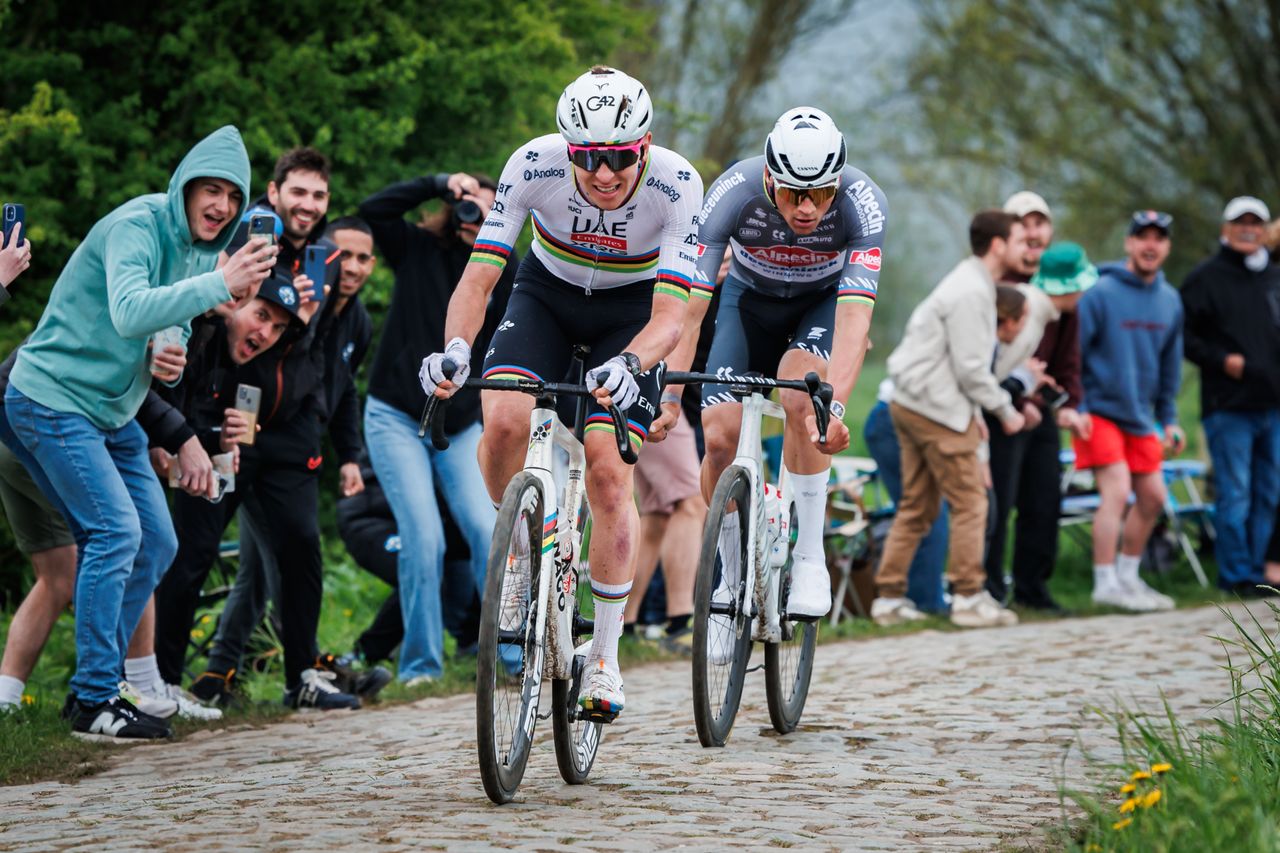
Tadej Pogačar and Mathieu van der Poel at Paris-Roubaix 2025.

The five oldest, longest and most prestigious one-day races in men's professional cycling are grouped together under the heading 'Monuments'.

Milan-San Remo, the Tour of Flanders, Paris-Roubaix, Liège-Bastogne-Liège and Il Lombardia all boast a rich heritage dating back over 100 years and are the races that every rider wants to have in their palmares.

Only the Grand Tours - the Giro d'Italia, Tour de France and Vuelta a España - and the UCI world championships command as much kudos. The women's calendar now hosts four of these races, with only the organisers of Il Lombardia not promoting a women's race.

Each of the five races has its own special character that marks it out among the long list of races in the UCI calendar. Such are their significance, that riders will tend to target them specifically, making one or more their main aim for the season. In recent years it was believed that the growing specialism in the pro peloton meant the cobbled classics like Paris Roubaix and the Tour of Flanders no longer suited a rider who could win the hillier races Liege-Bastogne-Liege and Il Lombardia.

Tadej Pogačar has blown this thinking out of the water however and he only needs to win Paris Roubaix to become the fourth rider to have won all five. The last rider to complete the set was Roger de Vlaeminck, the greatest classics rider of his generation. the Belgian won the Tour of Flanders in 1977 to complete the set. Before him Eddy Merckx and Rik van Looy had also won all five.

If Pogačar does with Paris-Roubaix in 2026 - having already won Milan-San Remo and the Tour of Flanders this spring, he will become the first rider to be the reigning champion in all five Monuments.

All five are part of the UCI's top-tier WorldTour race calendar, and as such they command a full field of the biggest teams and leading riders.

Milan-San Remo

The peloton hugs the coastline in northern Italy (Image credit: Getty Images)

Country: Italy
Time of year: Late March
Length: 299km
First edition: 1907
Also known as: La Primavera, The Sprinters' Classic
Rider with most wins: Eddy Merckx (seven wins)
Typically suits: Sprinters and classics riders
Famous for: The final climb of the Poggio and the route along the coast of northern Italy

As the first Monument of every season, Milan-San Remo always generates a huge amount of interest and excitement. The route is long, and does not feature the relentless hills and/or cobbled sections of other Monuments. This has often led to the race being contested by a reduced bunch sprint and has been won by pure sprinters like Jasper Philipsen and Mark Cavendish in the past.

There are however five climbs in the race, all that play their part. The first is the Passo del Turchino, the highest point of the race at over 500 metres. It's slopes are gentle however, and all it does is to serve as a marker for the halfway point. After this, the riders start to strip off and take more care over their position in the field.

Then come the Tre Capi; Capo Mele, Capo Cervo and Capo Berta. Three tiny climbs that come in quick succession and mark the beginning of the final stages of the race. At 276km the bunch hits the Cipressa the twin climbs of the Cipressa where sprinters have to hang on then next comes the Poggio.

This tight, twisty climb isn't hard or long enough to favour pure climbers - more powerful riders can sustain their effort on it's slopes - but always causes splits. The question is then whether or not the leaders can hold onto their advantage down the descent and along the flat final two kilometres to the Via Roma and the finish. The descent can prove decisive, as it did for Matej Mohoric's win in 2022, and always provides a thrilling finale.

Last three winners
2026: Tadej Pogačar (Slo) UAE Team Emirates
2025: Mathieu van der Poel (Ned) Alpecin-Deceuninck
2024: Jasper Philipsen (Bel) Alpecin-Deceuninck

Tour of Flanders

Wout van Aert at the 2026 Tour of Flanders (Image credit: Getty Images)

Country: Belgium
Date: First Sunday in April
Approx length: 263.7km
First edition: 1913
Also known as: De Ronde, Ronde van Vlaanderen
Rider with most wins: Mathieu van der Poel, Tadej Pogačar, Tom Boonen, Fabian Cancellara, Johan Museeuw, Achiel Buysse, Fiorenzo Magni, Eric Leman (all three wins)
Typically suits: Classics riders
Famous for: Cobbled climbs, Belgian fans, beers and frites

The Tour of Flanders is the youngest of the five Monuments and one of two in Belgium. Taking place entirely in the northern (Flemish) part of the country it is known for the cobbled and tarmac Bergs that litter the second half of the route.

Many of these climbs are on small, narrow roads with tight turns into them, making positioning in the bunch one of the most important factors of the race. The riders at the front of the peloton can sweep round a tight corner and maintain their momentum onto a climb while riders caught further back may be forced into a standstill as the 170 rider peloton struggles to fit through a four metre wide corner.

The route was altered significantly in 2012 when the organisers removed the formerly iconic last two climbs of the Kapelmuur and Bosberg to concentrate the race on a finishing circuit around Oudenaarde. The circuit features the Oude Kwaremont and the Paterberg which come in quick succession before the finish in Oudenaarde.


Last three winners
2026: Tadej Pogačar (Slo) UAE Team Emirates
2025: Tadej Pogačar (Slo) UAE Team Emirates
2024: Mathieu van der Poel (Ned) Alpecin-Deceuninck

Paris-Roubaix

Peter Sagan competing in Paris-Roubaix 2018 (Bernard Papon/AFP via Getty Images) (Image credit: AFP via Getty Images)

Country: France
Date: Second Sunday in April
Approx length: 255km
First edition: 1896
Also known as: Hell of the North, Queen of the Classics, La Pascale
Rider with most wins: Roger De Vlaeminck, Tom Boonen (four wins)
Typically suits: Classics riders
Famous for: Cobbled climbs, Belgian fans, beers and frites

Paris-Roubaix is arguably the biggest bike race outside the Tour de France, and has an evergreen appeal due to it's parcours. The Queen of the Classics takes the peloton over multiple sectors of cobbles (pavé in French) many of which would be unridable to most cyclists.

There are 30 sections in total (they count down from 30) starting with Troisvilles A Inchy with 162.5km still to go. Each section varies in distance and is graded on a five star system for their severity. The hardest of which is unquestionably the 2.3km Trouée d'Arenberg (The Arenberg Trench), section number 19 that comes after 163km of racing.

The two other five star sections are Mons-en-Pévèle - sector 11 at 48.6km to go, and Carrefour de l'Arbre - Sector 4 at 17.1km to go.

No matter the weather, there's always a challenge: rain makes the cobbles slippery and muddy; dry weather means the air is full of dust. The race finishes in Roubaix on the famous outdoor velodrome, where a front group of riders is often forced to sprint for the victory as they loop the track. There's simply no race like it.

Last three winners
2025: Mathieu van der Poel (Ned) Alpecin-Deceuninck
2024: Mathieu van der Poel (Ned) Alpecin-Deceuninck
2023: Mathieu van der Poel (Ned) Alpecin-Deceuninck

Liège-Bastogne-Liège

Liège-Bastogne-Liège 2020 (Photo by Bas Czerwinski/Getty Images) (Image credit: Getty Images)

Country: Belgium
Date: Late Sunday in April
Approx Length: 259.5km
First edition: 1892
Also known as: La Doyenne
Rider with most wins: Eddy Merckx (five wins)
Typically suits: Grand Tour riders and climbers
Famous for: Multiple long climbs

The climb-filled Liège-Bastogne-Liège takes on the leg-sapping ascents of the Ardennes in Southern Belgium. It's a race that is often contested by climbers and Grand Tour riders as much as Classics riders. It's also the oldest of the Monuments, having been first run in 1892.

The majority of the race's climbs are packed into the final 100km, providing a relentless barrage of climbing that barely allows any respite for tired riders. Despite its position as the final spring Classic, it can still be affected by bad weather to add to the riders' misery.

Last three winners
2025: Tadej Pogačar (Slo) UAE Team Emirates
2024: Tadej Pogačar (Slo) UAE Team Emirates
2023: Remco Evenepoel (Bel) Soudal-Quick Step

Il Lombardia

Tadej Pogačar on his way to a fifth win at Il Lombardia (Image credit: Getty Images)

Country: Italy
Date: Second Saturday in October 09
Length: 247km
First edition: 1892
Also known as: Giro di Lombardia, Tour of Lombardy, Race of the Falling Leaves
Rider with most wins: Fausto Coppi, Tadej Pogačar (five wins)
Typically suits: Climbers
Known for: Steep climbs and a first showing of the world champs bands

The only Monument to take place in the autumn rather than spring, Il Lombardia or the Tour of Lombardy is very different than its northern European cousins. The picturesque route takes riders around Lake Como in a testing war of attrition.

Like Liège-Bastogne-Liège, Il Lombardia has a reputation for being a climber's Classic, taking in longer ascents than the power climbs of the Tour of Flanders. It's often the final outing for Grand Tour riders seeking to take one final victory before the season ends.

Sign up to read this article
Read news from 100's of titles, curated specifically for you.
Already a member? Sign in here
Related Stories
Top stories on inkl right now
One subscription that gives you access to news from hundreds of sites
Already a member? Sign in here
Our Picks
Fourteen days free
Download the app
One app. One membership.
100+ trusted global sources.