Get all your news in one place.
100's of premium titles.
One app.
Start reading
The Times of India
The Times of India
World
TOI World Desk

The Marseille miracle: how cutting pollution brought the sea back to life

The resurgence of Posidonia oceanica seagrass meadows in Marseille represents an important example of marine resilience, demonstrating the ability of nature to recover if the pressures exerted by humans are mitigated. For years, untreated wastewater from the city decimated large sections of Posidonia oceanica meadows, which provide important ecosystem services like carbon storage and habitat for numerous marine species.

After the construction of a new major wastewater treatment plant in 1987, as well as the introduction of several industrial use restrictions, researchers have shown that recovery rates have been ‘exceptional’. The meadows were able to expand on their own at a low cost using a method called passive restoration, in contrast to the more costly method of planting seagrass seedlings. The underwater forests (the meadows) have now expanded over large portions of the seabed, creating a global model for coastal conservation and demonstrating the long-term success of implementing strict pollution control policies. This successful restoration highlights the immense value of protecting marine biodiversity, securing vital carbon sinks and revitalizing local fisheries for a sustainable blue economy.
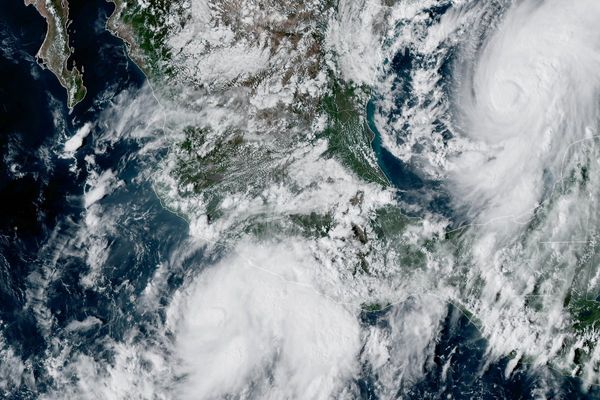
How cutting pollution brought seagrass back to life in Marseille, France

Research published in Marine Environmental Research highlights that the primary driver for the return of Neptune grass was the drastic reduction in organic matter and industrial pollutants. By 1987, the city of Marseille shifted its sewage system to utilise a treatment plant, which, in turn, created less turbidity in the area. As a result, light could penetrate to the bottom of the ocean and allow for the existing seagrass beds that had been dormant or receding for almost 100 years to spread naturally.

Why nature outperformed human intervention

The study in Marseille illustrates that passive restoration, as in removing the source of the degradation, was far more effective than human-directed planting efforts. Active restoration often results in much lower success rates and higher costs, but the natural recolonisation of Posidonia oceanica within the Bay of Marseille demonstrates that once water clarity and sediment quality are restored, the species has a great deal of resiliency.

How seagrass supports the mediterranean climate

The 'lungs of the Mediterranean Sea' are extremely important in providing the essential services of shoreline protection and carbon storage. The European Environment Agency has identified recovery of these meadows, particularly along the coast of France, as critical to achieving 'Good Environmental Status' (GES) under the Marine Strategy Framework Directive. The recovery of seagrass near Marseille is an important contributor to regional biodiversity, providing habitat for hundreds of different marine species.

How EU directives safeguarded Marseille’s marine life

The ongoing health of the seagrass is strongly correlated with compliance with the EU's Urban Waste Water Treatment Directive, as confirmed by the regular monitoring undertaken by the French Water Agency (Agence de l'Eau). Regular sampling of coastal waters near Marseille indicates a reduction in levels of heavy metals and nitrogen, which were previously causing algal blooms (eutrophication) that were choking seagrass populations.

Sign up to read this article
Read news from 100's of titles, curated specifically for you.
Already a member? Sign in here
Related Stories
Top stories on inkl right now
One subscription that gives you access to news from hundreds of sites
Already a member? Sign in here
Our Picks
Fourteen days free
Download the app
One app. One membership.
100+ trusted global sources.