
Get all your news in one place.
100's of premium titles.
One app.
Start reading
Digital Camera World
Sebastian Oakley

The Leica M camera refused to change for seven decades – and that might be its greatest strength

Leica M11 Monochrom digital camera.

There are very few cameras that could survive seven decades without completely reinventing themselves, but the Leica M is one of them.

While the rest of the camera industry moved from rangefinders to SLRs, then DSLRs and eventually mirrorless cameras packed with autofocus, subject detection, and increasingly clever electronics, Leica has spent much of the past 70 years refining essentially the same idea, as Mike Chudley has recently discussed in this YouTube video.

Leica MP (Image credit: Future)

The story begins with the Leica M3, launched at Photokina in 1954 and the camera that established the M-System as we know it today. It introduced Leica's bayonet M-mount and combined its viewfinder and rangefinder into a single window, creating a design that would become instantly recognisable. Remarkably, that basic concept remains alive today – Leica even points out that an M lens dating from 1954 can still be fitted to its latest digital cameras.

Of course, the M has evolved along the way. The M2 introduced 35mm frame lines, the M6 brought integrated exposure metering, and the digital era eventually delivered cameras such as the M9, the first full-frame digital M rangefinder, followed by the CMOS-powered M (Typ 240) and today's 60MP M11 generation. Yet despite enormous changes beneath the skin, the traditional M shooting experience remained wonderfully familiar: manual-only focusing, physical controls and that unmistakable optical rangefinder.

And that is really what makes the Leica M so unusual. With a rangefinder you can see beyond the frame lines and watch subjects enter your composition, while there is no viewfinder blackout when the shutter fires. There is no eye-detection autofocus deciding where the camera should focus, either. You are responsible for distance, focus, exposure and timing, and I think that is exactly why the M continues to appeal in an age when almost every other camera is trying to make photography easier.

Leica M2 (Image credit: Future / Sebastian Oakley)

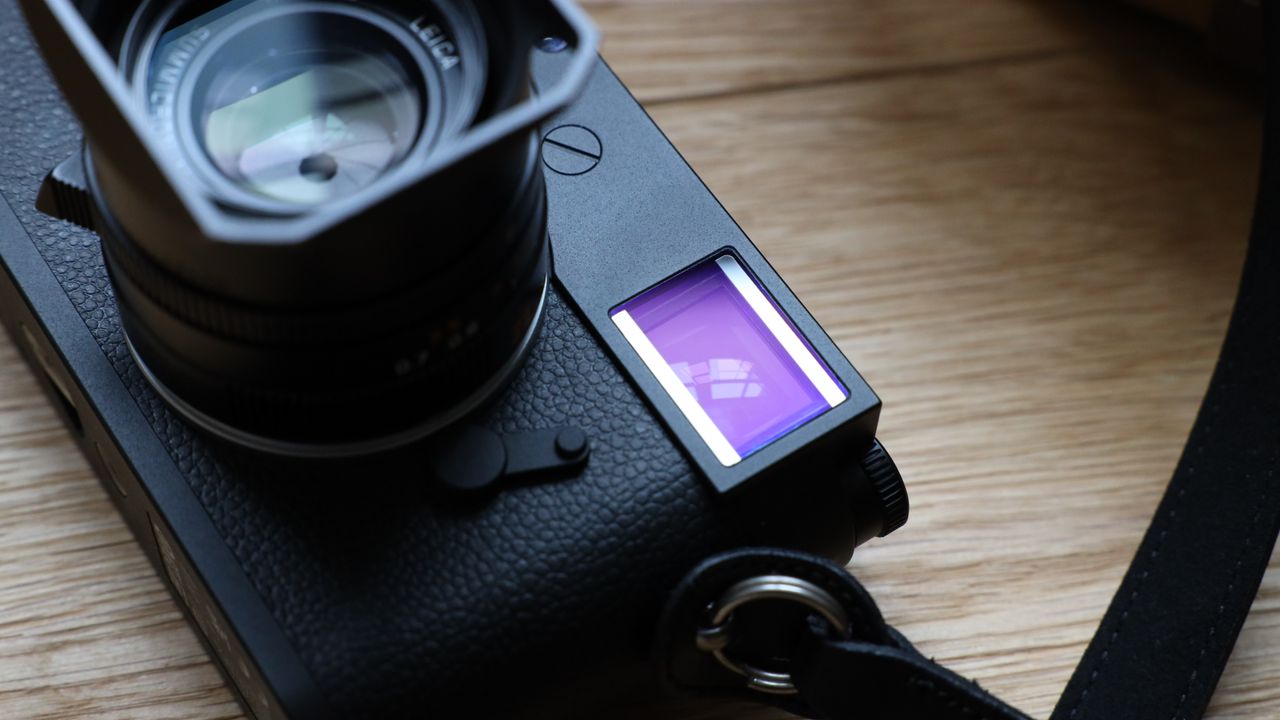
Ironically, Leica has now shown that even its most sacred traditions are not completely untouchable. The Leica M EV1, launched in October 2025, became the first M camera to replace the traditional optical rangefinder with an integrated electronic viewfinder.

It still uses manual-focus M lenses and retains the familiar M form, but adds a 5.76-million-dot EVF, focus peaking and magnification to make accurate manual focusing considerably easier. It is probably the biggest change to what we consider an M camera since Leica entered the digital age.

Leica M EV1 (Image credit: Future)

Yet even the M EV1 proves the wider point. Leica has changed sensors, added meters, introduced digital technology and now even experimented with an EVF, but it has stubbornly protected the fundamental idea behind the M-System: a compact, beautifully built camera that puts the photographer firmly in control.

Modern Canon, Nikon and Sony cameras will beat a traditional M on almost any specification sheet, but that has never really been the point. After more than 70 years, perhaps the Leica M's greatest achievement isn't that it refused to evolve – it's that Leica knew exactly which parts were worth changing, and which ones were better left alone.

Sign up to read this article
Read news from 100's of titles, curated specifically for you.
Already a member? Sign in here
Related Stories
Top stories on inkl right now
One subscription that gives you access to news from hundreds of sites
Already a member? Sign in here
Our Picks
Fourteen days free
Download the app
One app. One membership.
100+ trusted global sources.