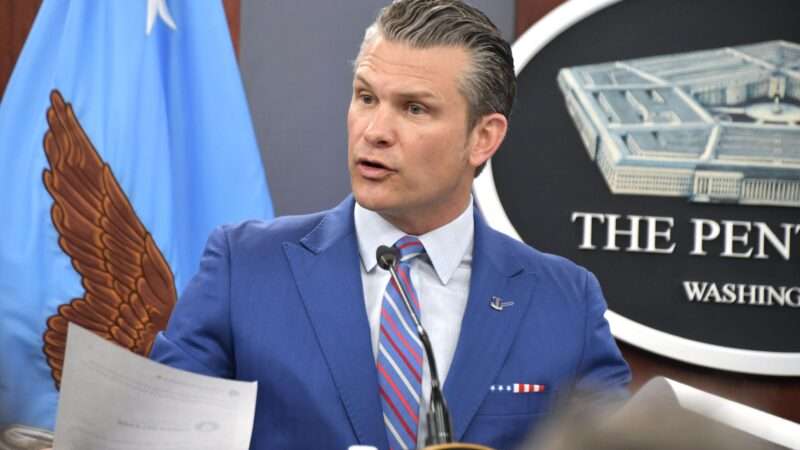
The Trump administration disputes The Washington Post's report that Defense Secretary Pete Hegseth instructed U.S. forces to "kill everybody" on a suspected drug boat in the Caribbean last September, which allegedly resulted in a second missile strike that blew apart two survivors of the initial attack who "were clinging to the smoldering wreck." But even President Donald Trump seems to agree that such an order would be problematic, and so do the Republican legislators who have promised to investigate the incident. If the Post report is accurate, a group of former military lawyers says, "the giving and the execution of these orders" would "constitute war crimes, murder, or both."
Although that much seems clear, attempts to apply the law of war in these circumstances are complicated by the atypical features of the "armed conflict" that Trump says justifies his bloodthirsty anti-drug strategy, which so far has killed 83 people in 21 attacks. Supplying illegal drugs to Americans, the president avers, amounts to "an armed attack against the United States," which supposedly makes boats believed to be carrying those drugs legitimate military targets. But the resulting violence is notably one-sided, to the point that the government's lawyers claim it does not qualify as "hostilities" under the War Powers Resolution because U.S. military personnel face no plausible risk of casualties.