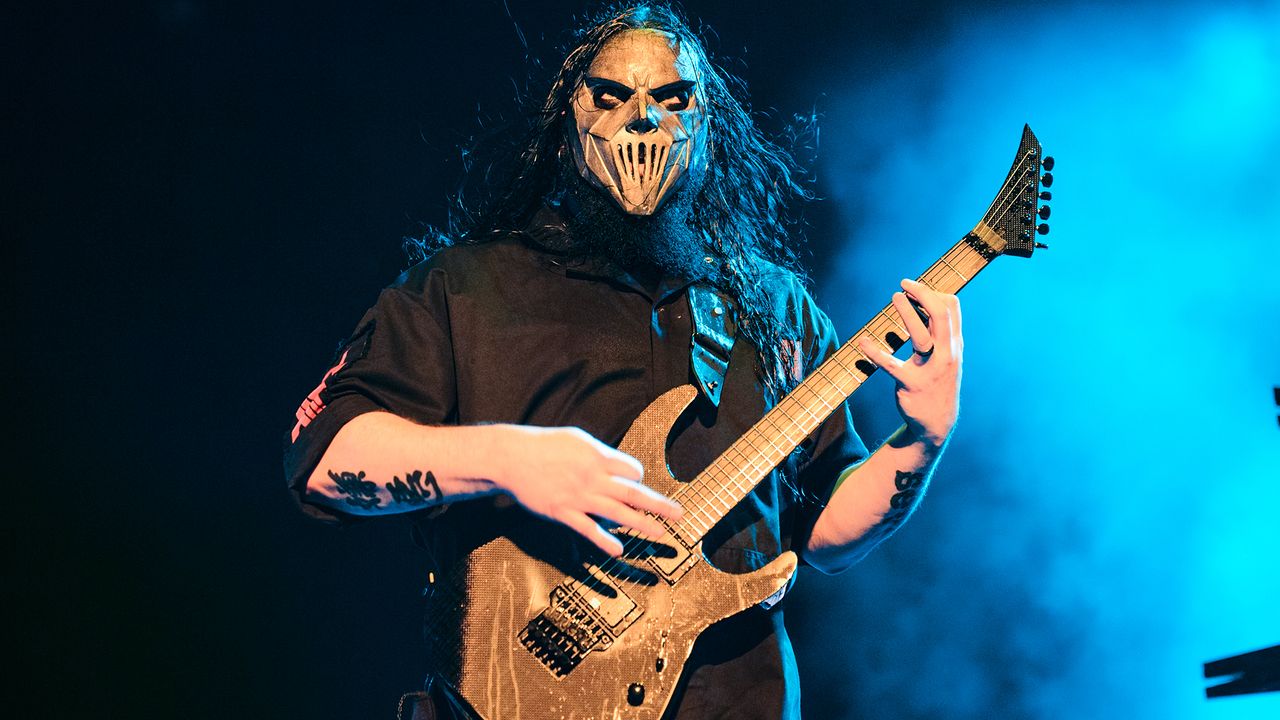
When Slipknot released their self-titled debut on Roadrunner Records, precisely on June 29, 1999, singer Corey Taylor, percussionists Shawn “Clown” Crahan and Chris Fehn, drummer Joey Jordison, bassist Paul Gray, turntablist Sid Wilson, sampler/keyboardist Craig Jones, guitarist Mick Thomson, and original guitarist Josh Brainard altered not only the sound but also the very image of heavy metal as it entered the new millennium.
And while breakthrough single Wait and Bleed was pivotal in introducing Slipknot to the masses and opening the floodgates to nu metal, as Thomson said in a 2014 Guitar World interview, it wasn’t quite the musical trajectory the band wanted to follow for the rest of their career.

“For a long time, I resisted anything that had melodic choruses. I was very anti anything like that,” he said.
“I mean, I thought it was great how Wait and Bleed ended up on the radio. It’s a great song. But when we were having success with that on our first record and the label says, ‘Yeah, we need five more Wait and Bleeds, I was like, ‘Go fuck yourself!’”
Thomson went on to clarify why he had that immediate reaction – despite the single’s international success. “‘You want five songs that can be radio singles? Well, we’re really not that band. You sell our records, and we’ll make them, okay?’”
The guitarist even pointed out that the radio edit was significantly different than the album version – the label’s attempt at making Wait and Bleed more “commercial” and palatable for the mainstream.
“The more melodic sing-songy part of the chorus, which is on the radio edit, was different on the album,” he asserted.
“It was a background vocal, made lower, that Corey barked over. But then the fuckin’ label gets a hold of it, and they want a radio single, so they ended up having it remixed so the brutal vocal drops and the melodic vocal is now on top. But that’s not what you get when you see us live.”
As Thomson very aptly described the band’s core ethos – especially at the time – in a 2024 interview, “People didn’t fucking know what to think or do with us early on. But our thing always was, ‘Fuck your labels – just listen to the shit. Do you like it?’ You don’t have to categorize it and this and that. Just ask yourself, ‘Is it cool?’”
Elsewhere in the 25th anniversary retrospective, Thomson revealed why all of his solos were cut from the final record, and gave Guitar World a peek into the chaotic and intense recording sessions that made Slipknot such an iconic album.